




















Dummy Message Xbox App Floods Notifications — Immediate Impact on Users and an Apology

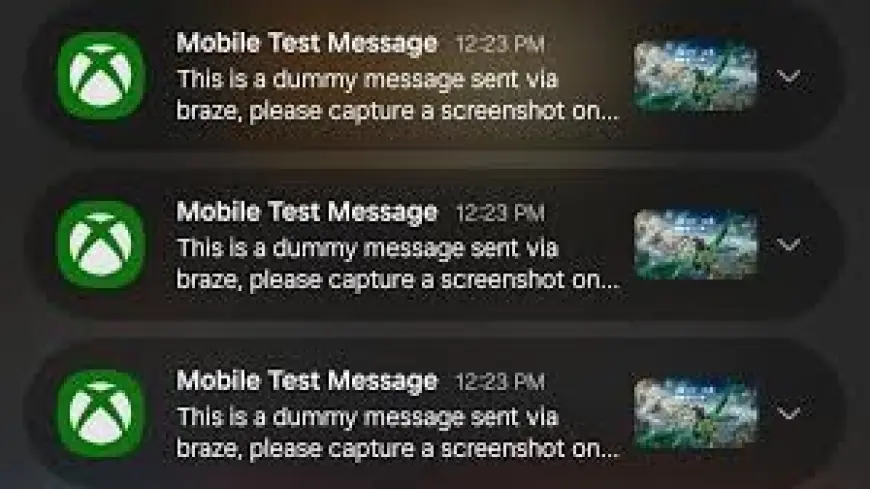
The Dummy Message Xbox App event matters because it hit users where they notice first: their phones. A broad wave of test notifications — labeled in coverage with the phrase "Just a moment... " — left many users confused and annoyed, and prompted a public apology once the origin was identified. For anyone relying on timely alerts, the interruption raises questions about notification controls and trust in system prompts.
Who felt the impact and how it showed up
Notification overload was the primary effect: people reported multiple unexpected alerts from the Xbox app, creating friction for users who treat push messages as trustworthy. Here’s the part that matters — when routine communications suddenly behave like spam, users are the first to notice, and sensitivity to accidental or test messages increases sharply.
Dummy Message Xbox App: the messages, the labels and immediate signals
Coverage described the incident as a spamming of notifications. The messages were characterized as test or "dummy" messages, and the simple headline "Just a moment... " emerged in coverage as a shorthand for the disruption. Early signals show the alerts came through the official app notification channel rather than SMS or email, which amplified the perceived intrusion.
Apology issued after test messages were sent
An apology followed the message flood. The public response acknowledged that test messages were sent to users and that the outreach should not have reached end users in that form. Details about corrective steps were limited in available coverage; this remains a developing matter where follow-up confirmations could clarify fixes and timelines.
Technical origin described in coverage: Braze and an AI platform
Reports tied the test notifications to a messaging integration identified as Braze and referenced a dummy message originating from an AI platform. Specifics about whether this was a configuration error, a test pushed to production, or an automated routine are unclear in the provided context. The interaction between an AI-generated message and the messaging tool is a central technical thread noted in coverage.
Immediate takeaways, affected groups and signals to watch
- Users who rely on app notifications were directly affected and may expect clearer opt-out or throttling controls.
- Developers and product teams using third-party messaging integrations may revisit staging versus production safeguards.
- Confirmation that fixes are in place and that users won’t receive repeat test alerts will be the clearest signal this is resolved.
- Public-facing apologies reduce immediate confusion but do not by themselves restore trust; communication about steps taken is the next practical move.
It’s easy to overlook, but the simplest visible string — the headline-style phrase "Just a moment... " — captured why this felt jarring: the message looked like a placeholder, not a polished notification. The real question now is how messaging flows that mix automated AI content and third-party delivery get gated to prevent accidental pushes to end users.
For now, the situation is developing; follow-up confirmations and technical details remain limited in available coverage. Users who want to avoid further surprises should review their notification settings in the app and watch for official updates clarifying what went wrong and what safeguards will be added.