
























Wisconsin Vs Oregon: Late-night West Coast test raises seeding stakes for Badgers

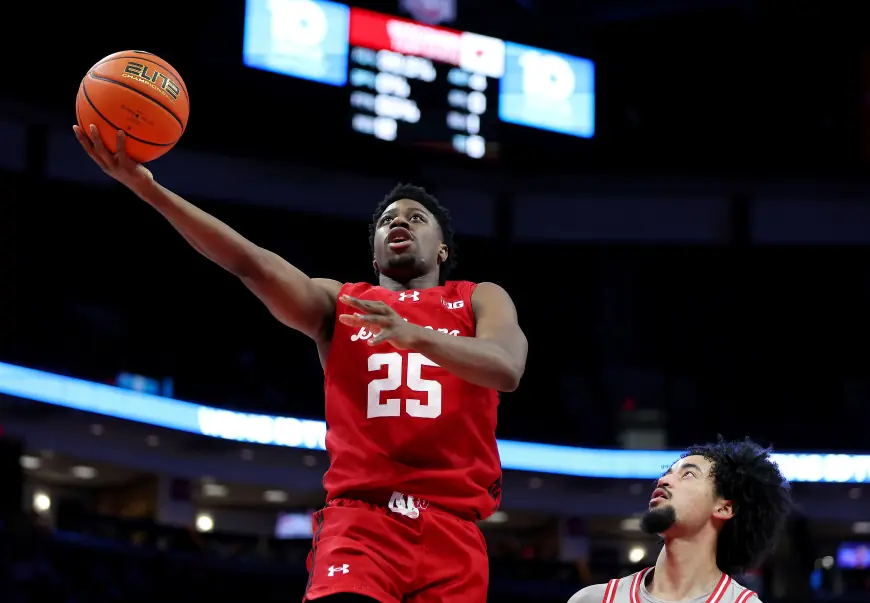
The Badgers' trip west matters because a single late-night game can ripple through their remaining schedule and seeding hopes — Wisconsin Vs Oregon arrives with Wisconsin 19-8 overall and 11-5 in conference, four regular-season games left, and a clear push for a top-four Big Ten seed. They head west off an 84-71 win over Iowa; the Ducks arrive with a thin record and injury wear that shifts the matchup's dynamics.
Impact on seeding, rotation and momentum: Wisconsin Vs Oregon through the lens of consequence
This matchup affects who feels pressure first: roster depth and late-game execution. Wisconsin is hunting a top-four finish with just a handful of games remaining, so each road result now has an outsized effect on bracket positioning and rotation patterns. Oregon’s struggles and injury list change how Wisconsin might manage minutes and who they need to neutralize to protect that position.
Here’s the part that matters: the Badgers come off a strong team performance that included a near triple-double from their lead guard and efficient scoring from role players. That momentum collides with a Ducks squad that has not had consistent health or offensive rhythm, so the question is whether Wisconsin can close the road contest while conserving energy for a tight finish to the regular season.
- Wisconsin’s record stands at 19-8, 11-5 in conference; four regular-season games remain and a top-four seed is the stated near-term objective.
- Tip-off is set for 10: 00 p. m. CT on Wednesday — a late start that impacts recovery and travel plans for a team making its first West Coast trip this season.
- Recent form: Wisconsin won 84-71 over Iowa on Sunday, with the lead guard posting 27 points, 10 assists and nine rebounds; secondary scoring and three-point shooting were key features.
- Oregon arrives at 10-17 overall with listed conference struggles and injury disruptions, including the loss of a point guard late in December and a center who missed multiple games earlier in the year.
It’s easy to overlook, but the late tip-off plus a scheduled back-to-back road swing — with a later Saturday afternoon game on the coast following this matchup — compresses practice windows and could force the Badgers to rely more heavily on trusted lineups.
Game specifics and available roster signals
Game details from the lead-up: Wisconsin earned a confidence-boosting win against Iowa on Sunday that strengthened their tournament positioning and seed projections. That outing featured the primary playmaker nearly reaching a triple-double and efficient contributions from key bench pieces, including a guard returning from illness and a forward who has had intermittent availability due to a persistent illness.
Oregon’s season narrative in the context supplied shows a team that began with higher expectations but has been derailed by injuries and stretches of poor conference results. The Ducks have registered two wins in their last three games after a long conference losing run; offensively they’ve struggled, and the team plays at a slower pace with defensive lapses in the points-allowed area.
The Badgers face a compact window to protect seeding and preserve energy for the remaining slate. They will then travel again for a Saturday afternoon game, meaning this Wednesday night contest is effectively a double-duty test: protect a lead in the moment and limit the emotional and physical toll before a quick turnaround.
Micro timeline:
- Late December — Oregon lost its point guard to a season-ending issue, changing their rotation.
- Sunday — Wisconsin secured an 84-71 victory over Iowa; the performance reinforced their current tournament positioning.
- This week — Wisconsin makes its first West Coast trip of the season, with a Wednesday night game followed by another road contest on Saturday afternoon.
Key takeaways:
- Wisconsin’s seeding ambitions amplify the importance of this single road result.
- Late tip-off timing increases the premium on depth and post-game recovery.
- Oregon’s injury-led roster shifts reduce predictable matchups but complicate scouting and rhythm disruption.
- Immediate follow-up travel to another road game raises the value of efficient minute management.
The real question now is whether Wisconsin can protect its momentum with smart rotation choices and finish the week without slipping in the conference pecking order. Recent updates indicate roster availability and the late start time will be factors; details may evolve as the teams finalize lineups.
What’s easy to miss is how a single late-night road win — or loss — can tilt both internal confidence and external seeding models when only a few games remain.