














Unclear Motive and Conflicting Details After Weapons Found at Manchester Mosque — Security Gaps and Community Alarm

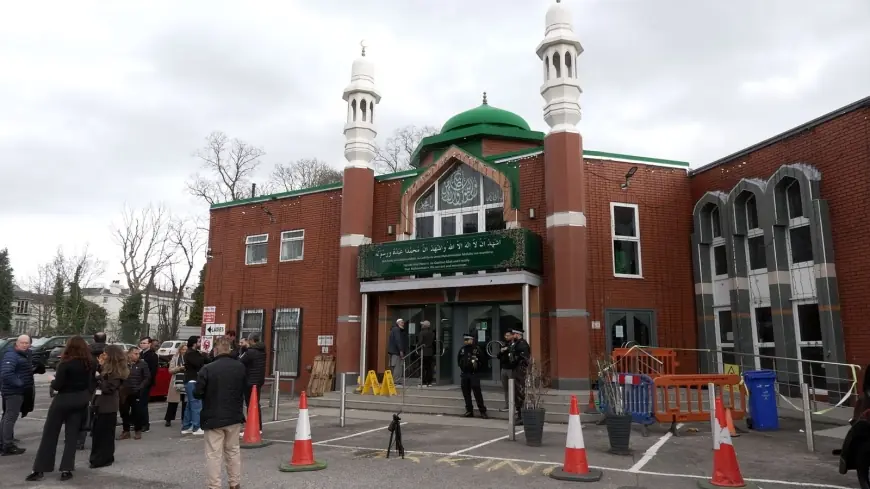
The uncertainty around the incident at Manchester Mosque is the main story: differing accounts of who was there, what they carried and how many worshippers were inside have left the community and investigators with more questions than answers. That uncertainty matters now because it shapes immediate security steps at the mosque during Ramadan and frames claims of Islamophobia and political blame that are already being raised.
What remains unclear after the incident at Manchester Mosque
Official statements and witness accounts disagree on multiple basic facts: the suspect’s age is variously described as in his 40s and as a white man in his 50s; the time of entry is reported at about 20: 40 GMT (8: 40pm), 8. 40pm and 8. 30pm; and the number of worshippers present is cited as about 2, 000 in one account and approximately 5, 000 in another. These contradictions are central to how the incident is being framed and investigated, and they are delaying a single, settled narrative about what occurred.
What was inside the building and how volunteers reacted
The place was Manchester Central Mosque on Upper Park Road in the Victoria Park area of Rusholme. Multiple accounts say a man entered during Ramadan prayers (described specifically as Taraweeh in one account) carrying weapons: an axe is consistently mentioned, while other items reported include a knife, a hammer and a suspicious bag. Mosque volunteers noticed the items and intervened—described in reports both as escorting the man into a side room and as ushering him into an office—and kept him talking until police arrival.
A witness says four people restrained the suspect and that a fire extinguisher was used against him; another account says volunteers held conversation to avoid escalation. One report adds the suspect was wearing high-visibility clothing. Investigators are also said to have recovered materials described as relating to World War Two and some newspaper cuttings.
Arrest, alleged offences and the search for a second person
A man is in custody, with descriptions of his age and appearance differing across accounts (in his 40s in one statement; a white man in his 50s in another). He is held on suspicion of carrying an offensive weapon and possession of Class B drugs. Police have said no one was injured and that there was no suggestion that any threats were made.
Officers are looking for a second man reported to have been acting suspiciously and who left before police arrived. That person is described as a black man in late 40s, with an athletic build and stubble, wearing a grey hoodie beneath a navy jacket (both hoods up), blue tracksuit bottoms and white trainers. Senior investigators are reviewing CCTV and body-worn video as part of enquiries.
Operational response, timelines and scale of the scene
An off-duty special constable who was part of the congregation is cited as having called the police; one account says officers responded within 15 minutes. Reports differ on crowd size—again, about 2, 000 in one account and around 5, 000 in another—and one witness said roughly 15 police vehicles attended. Police say they are working with detectives from Counter Terrorism Policing North West while not having formally declared the incident to be terror-related; representatives from the mosque have questioned that classification choice.
Community reaction, political comments and practical takeaways
Local elected officials and community leaders have responded. An MP for the area described the episode as a consequence of far-right scapegoating of Muslims and called it Islamophobia. The mosque’s leadership has warned of a broader rise in threats and hostility toward the Muslim community and said greater resources are needed to address those risks. A national political leader expressed concern and thanked volunteers and emergency services for their response.
- Volunteers and an off-duty officer were central to preventing escalation; their actions (escorting the man to a side room/office and keeping him talking) are consistently noted.
- Weapons reported include an axe (present in all accounts), with additional references to a knife, a hammer and a suspicious bag.
- Official uncertainty covers time of entry, the suspect’s age, crowd size and whether the incident will be treated as terror-related.
- Police are pursuing a second person described in detail and are reviewing CCTV and body-worn footage as part of their enquiry.
- Materials described as relating to World War Two and newspaper cuttings were said to be in the possession of investigators.
Here’s the part that matters: the inconsistent details—on timing, numbers and the suspect’s description—will shape public confidence and how quickly investigators can present a clear account.
What’s easy to miss is how many separate threads investigators must reconcile: witness statements, volunteer actions, off-duty police involvement, physical evidence and divergent crowd estimates all need combining before a definitive picture emerges. The real question now is whether those threads will converge into a single, verifiable timeline or remain disputed; recent updates indicate aspects remain unclear and details may evolve.