
















How a 100-year-old veteran and his San Diego ties were placed center stage when the President presented a Medal Of Honor at the State of the Union

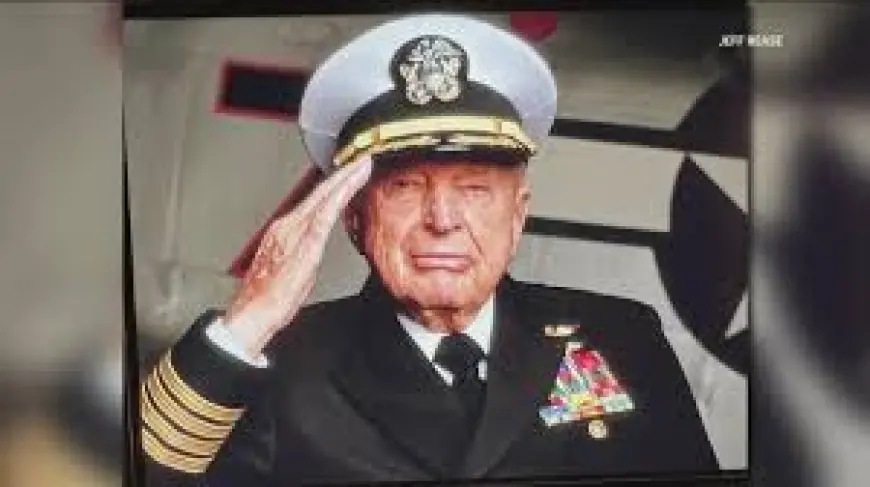
Who feels the effect first: the honoree, his local community and the lawmakers who pushed the paperwork. The President awarded E. Royce Williams the medal of honor during the State of the Union, making this the first time a president has presented that decoration during the address. The moment put a 100-year-old retired Navy captain and his San Diego-area connections visibly at the center of national attention.
Immediate impact on Williams, his neighborhood and the political backers
Here’s the part that matters: the presentation instantly elevated a private story into a national moment. E. Royce Williams — who is 100 years old and retired as a Navy captain — was honored in the chamber, and first lady Melania Trump placed the medal around his neck after he stood to receive it. Republican Rep. Darrell Issa of California, whose San Diego-area district includes Williams's home, had pressed for this award; his office framed Williams's actions as lifesaving for fellow pilots, shipmates and crew. The recognition also follows a recent Navy Cross award for Williams, a reminder that local advocacy and congressional action moved a decades-old military episode into today's headlines.
Medal Of Honor presentation at the State of the Union: what unfolded
President Trump honored E. Royce Williams during the speech. He told the chamber, "Tonight, at 100 years old, this brave Navy captain is finally getting the recognition he deserves. He was a legend long before this evening. " Williams stood as the first lady placed the medal around his neck. The plan for the presentation was first revealed earlier Tuesday. Mr. Trump called Williams earlier this month. Updated on: February 24, 2026 / 11: 30 PM EST.
What Williams did in 1952 and why it stayed secret
Williams was part of what is described as the longest aerial engagement in U. S. Navy history: a roughly half-hour dogfight in 1952 against seven Soviet MiG fighter jets, during which he shot down four. At the height of the Korean War, Williams and another American pilot were flying off the coast of the Korean Peninsula when they encountered seven Soviet MiG-15s; the Soviet aircraft opened fire. He later recalled, "Since they started the fight, " he said, "I shot back. " He struck one MiG while a fellow pilot pursued another; then flying alone he engaged the remaining aircraft and downed three more while maneuvering through what military accounts later described as hundreds of rounds of incoming fire.
After his own aircraft was struck, Williams guided the damaged plane back to an American aircraft carrier at high speed, saying he had considered ejecting but judged the frigid conditions over the water too perilous. He was instructed to keep the clash secret and for decades spoke of it to no one, not even his wife. Details surfaced only years after the collapse of the Soviet Union, when archival material and military histories became public.
Recognition path: Navy Cross, congressional waiver and Issa’s advocacy
Three years ago Williams received the Navy Cross, the highest combat award for members of the Navy or Marine Corps for valor in combat. Last year, lawmakers authorized the President to bestow the decoration despite the longstanding five-year limit on awarding it; that waiver cleared the way for the current presentation. Representative Darrell Issa pressed for the pilot’s Medal of Honor; earlier this month he wrote, "The heroism and valor he demonstrated for more than 35 harrowing minutes almost 70 years ago in the skies over the North Pacific and the coast of North Korea unquestionably saved the lives of his fellow pilots, shipmates, and crew. "
Forward signals and remaining questions
The real question now is how this moment will shape public memory of the incident and of Williams’s career. The timing of the medal presentation is notable as Mr. Trump is set to award the Medal of Honor to a — unclear in the provided context. What’s easy to miss is that the formal waiver and recent Navy Cross award were essential prerequisites; without them the presidential presentation could not have proceeded as it did.
What could confirm the next turn: further ceremonial scheduling around Williams, any follow-up statements from lawmakers in San Diego, or official military releases expanding on the previously classified records would signal how this recognition is consolidated into the historical record.
Writer’s aside: It’s easy to overlook, but the fact that Williams kept the clash secret for decades — not even telling his wife — adds a layer of personal restraint to an already extraordinary wartime episode.