

















Medal Of Honor presented to 100-year-old Navy captain during State of the Union

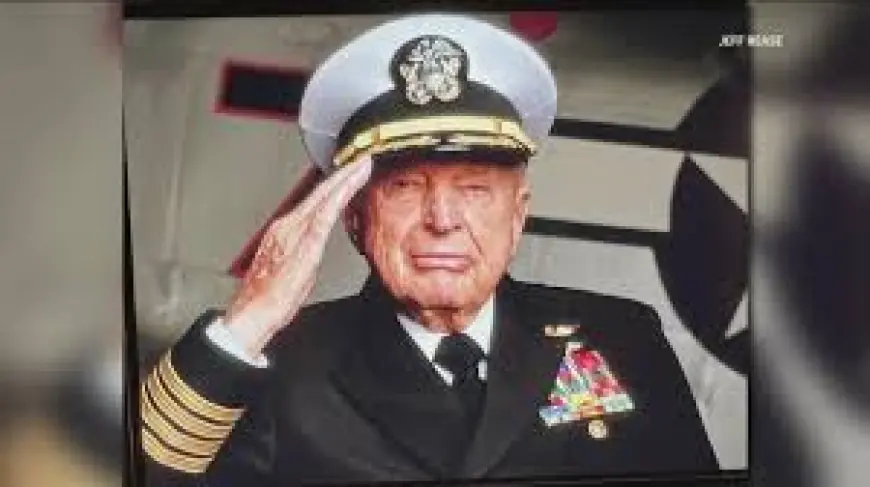
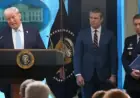
President Trump honored 100-year-old E. Royce Williams with the medal of honor Tuesday night, presenting the decoration during the State of the Union and making it the first time a president has awarded the U. S. military's highest honor for valor in combat during that address. The plan was first reported earlier Tuesday; Williams rose as first lady Melania Trump placed the medal around his neck.
Updated timeline: presentation during State of the Union
Updated on February 24, 2026 at 11: 30 PM ET, the White House presentation singled out Williams, a retired Navy captain, for actions tied to a secret mission in the Korean War. President Trump told the chamber, "Tonight, at 100 years old, this brave Navy captain is finally getting the recognition he deserves. He was a legend long before this evening. " Williams stood as the first lady placed the medal around his neck.
E. Royce Williams and a 1952 half-hour dogfight
Williams is best known for a prolonged aerial engagement in 1952 in which he fought seven Soviet MiG fighter jets and shot down four during what is described as a half-hour dogfight. At the height of the Korean War, Williams and another American pilot were flying off the coast of the Korean Peninsula when they encountered seven Soviet MiG-15 fighter jets. He later recalled, "Since they started the fight, " he said, "I shot back. " Military accounts later described his maneuvers through hundreds of rounds of incoming fire as part of the longest aerial engagement in U. S. Navy history.
Strike, solo combat and a high-speed carrier landing
Williams struck one of the MiGs while his fellow American pilot pursued it; then, flying alone, he engaged the remaining aircraft and downed three more Soviet planes. After his aircraft was struck, he turned back toward an American aircraft carrier and guided the damaged plane in for a landing at high speed. He later said he had considered ejecting but concluded the frigid conditions over the water made that decision perilous.
Secrecy, declassification and the Navy Cross
Soviet involvement in the encounter was top secret at the time, and the records were classified for decades. Williams said he was instructed to keep the airborne clash a secret — a rare and politically fraught confrontation between American and Soviet forces when the two Cold War adversaries were intent on avoiding open war — and for decades he spoke of it to no one, not even his wife. Details of the operations surfaced only years after the collapse of the Soviet Union, as archival records and military histories were made public. Three years ago Williams was awarded the Navy Cross, the highest combat award that can be given to a service member of either the Navy or Marine Corps for valor in combat.
Medal Of Honor waiver, congressional action and Rep. Darell Issa
Last year, lawmakers authorized the president to bestow the decoration, waiving the longstanding requirement that it be awarded within five years of the act of valor. Republican Rep. Darell Issa of California, whose San Diego-area district includes Williams' home, pressed for the retired Navy pilot to receive the Medal of Honor. Issa wrote earlier this month, "The heroism and valor he demonstrated for more than 35 harrowing minutes almost 70 years ago in the skies over the North Pacific and the coast of North Korea unquestionably saved the lives of his fellow pilots, shipmates, and crew. "
Voices and recent reflections
In a 2022 interview, Williams said, "In the moment I was a fighter pilot doing my job. I was only shooting what I had. " The presentation followed a call from Mr. Trump to Williams earlier this month and the onstage recognition during the State of the Union. He is widely identified with the dogfight against Soviet jets in the Korean War, and the medal of honor presentation ends decades of official secrecy and recent steps to upgrade his decorations.