
























Who Is The Designated Survivor Tonight: What to Know About the Role as Trump Delivers the State of the Union

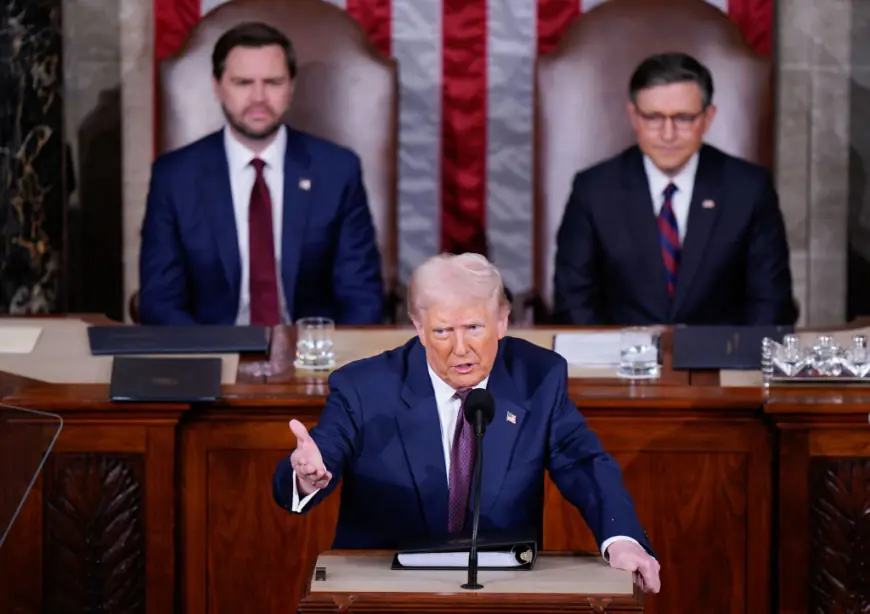
Who Is The Designated Survivor Tonight matters for continuity: when President Donald Trump delivers the State of the Union on Tuesday evening, one member of his Cabinet will be absent because they have been tapped to serve as the designated survivor. Democrats have named California Rep. Mike Thompson as their designated survivor, but the designated survivor chosen by the President has not yet been revealed. The role exists to preserve the presidential line of succession in the event of a catastrophic incident that incapacitates leadership.
Who Is The Designated Survivor Tonight — President's Pick Not Yet Revealed
The designated survivor for the President has not yet been revealed. Democrats say House Minority Leader Hakeem Jeffries chose Mike Thompson to serve as the Democrats' designated survivor for the State of the Union, and Thompson said he would watch the address from a secure, undisclosed location. Recent coverage notes that Thompson's communications director, Lauren Ott, said Democrats have tapped Thompson to serve as a designated survivor each year since 2020. Beyond the Democratic selection, the President's pick remains unknown and details may evolve.
What the Designated Survivor Role Entails
The designated survivor is an official in the presidential line of succession selected to skip events that convene the federal government in one place — such as the State of the Union, inaugurations, or a joint congressional address. That person is kept in a secure, undisclosed location away from the area so the full government would not be wiped out if a catastrophic event were to occur. The practice is intended to preserve the presidential line of succession, established by the Constitution, if the President and other leaders in the Administration and Congress are incapacitated.
There is no official constitutional or procedural requirement for a designated survivor or an explicit process for choosing one. It is believed the President and/or the President's chief of staff typically make the selection. The designated survivor must be eligible under the Constitution to serve as President, which means being a natural-born American citizen and at least 35 years of age.
How Congressional Leaders Participate
In recent years, congressional leaders have also selected lawmakers to serve as designated survivors. Some trace that practice to the aftermath of the September 11, 2001 attacks. Those lawmakers chosen as designated survivors are not tapped to potentially succeed the President; their selection is intended to ensure the legislative branch could continue functioning if a catastrophic incident struck the gathering of congressional leadership.
How Past Designated Survivors Describe the Experience
Those who have served as designated survivor describe a mix of low profile and stark responsibility. Historically, many started the day as low-profile Cabinet secretaries and ended it the same way, though the thought of being catapulted unexpectedly into the presidency can bring adrenaline and solemn reflection. James Nicholson, who was the veterans affairs secretary under President George W. Bush and served as designated survivor during a past State of the Union, said the role "focuses your mind" and heightens the hope that a catastrophic scenario does not occur.
The concept has long captured public imagination, combining a fascination with danger and the notion of an everyday official suddenly assuming the presidency. Historian and journalist Garrett M. Graff has argued the idea's appeal and is the author of a book exploring plans to preserve government continuity titled Raven Rock: The Story of the U. S. Government's Secret Plan to Save Itself — While the Rest of Us Die. The idea has also been dramatized in novels and a network series starring Kiefer Sutherland that aired from 2016 to 2019.
Examples of Where Designated Survivors Have Stayed
- Before the September 11, 2001 attacks, designated survivors often had more control over where they went. In 2000, President Bill Clinton's energy secretary, Bill Richardson, moved up a planned weekend trip to Oxford, Maryland — a waterfront town about 80 miles (130 kilometers) away — to be there during the State of the Union.
- Dan Glickman, President Clinton's agriculture secretary, was tapped during the 1997 State of the Union. His hometown of Wichita, Kansas was too far away, so he chose New York, where his daughter lived; he described the experience as exciting rather than perilous and said he was not warned to be careful.
- Alberto Gonzales, President George W. Bush's attorney general, served as the designated survivor during the 2007 State of the Union. The White House chief of staff called a few days before with options; Gonzales chose to be in flight and arrived at what was then called Andrews Air Force Base in Maryland to find members of every major department and agency there to ride with him. They carried thick binders filled with memos and protocol instructions.
- When President Trump addressed a joint session of Congress last March, Veterans Affairs Secretary Doug Collins served as the designated survivor.
Why the practice exists: it likely began during the Cold War, when the government feared a nuclear strike from the Soviet Union. The U. S. Constitution does not explicitly require a designated survivor or describe the selection process, but the practice has continued and evolved — especially after major events that reshaped national security thinking.
For now, Who Is The Designated Survivor Tonight remains partly answered: Mike Thompson will be the Democrats' designated survivor and will watch from a secure, undisclosed location, while the President's selection has not been announced and may be revealed later.