























Discord Cuts Ties with Persona, Delays Global Age Verification Rollout

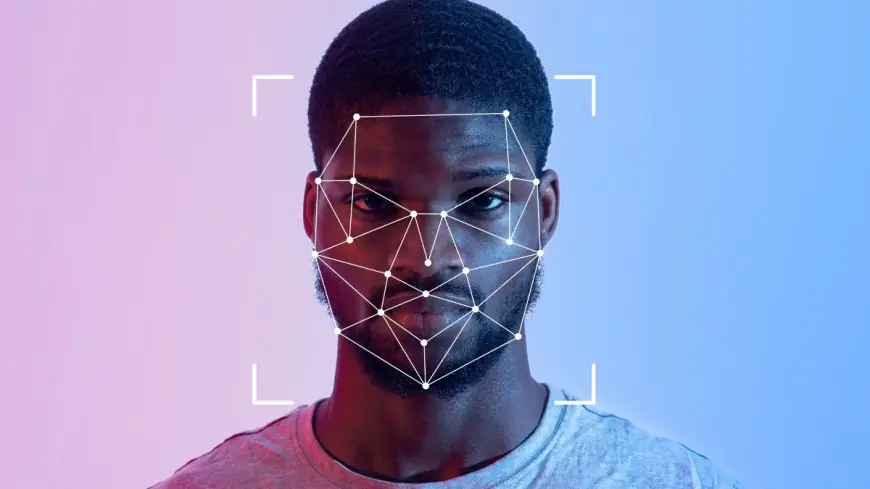
Discord has paused a planned global age-verification rollout after a wave of user backlash and the disclosure of exposed identity-verification code tied to vendor Persona. The reversal matters now because it halts a program that would have required biometric or ID scans and follows findings that the vendor’s systems exposed extensive surveillance and retention capabilities.
Global development details
Discord’s co-founder and chief technology officer Stanislav Vishnevskiy announced the platform will delay a planned rollout, originally scheduled to begin in March, until the latter half of this year. The company says fewer than 10% of accounts will need to complete formal verification when the program resumes, and that most users’ ages can be inferred from existing internal signals such as account age, payment methods on file, server membership and activity patterns.
In response to the backlash, Discord said it will expand verification options beyond facial and government ID scans, developing alternatives that include credit card verification and other methods. The company also pledged to publish its age-determination methodology before a global launch and to meet applicable legal obligations in jurisdictions with new youth access rules.
Separately, Discord has ended its partnership with Persona Identities, the identity-verification vendor it briefly tested. The partnership lasted less than a month and the test involved only a small number of users, the company has said; Discord added that information submitted during that pilot could be held for up to seven days before deletion. Independent analysis of Persona systems found an exposed frontend on a U. S. government–authorized endpoint containing 2, 456 accessible files and roughly 53 megabytes of material that spelled out far broader checks than simple age estimation.
Context and escalation
The controversy escalated after the community reacted against a proposal to default accounts into teen-safety settings until a user’s age was verified. That plan, intended to restrict access to certain features unless a user completed verification, collided with widespread mistrust of tech firms and unease about biometric data handling. Vishnevskiy acknowledged the sensitivity of the project and said the company should have offered more detail about its intentions and processes up front.
Analysis of Persona’s codebase and documentation revealed the vendor’s platform runs 269 distinct verification checks, performs facial recognition against watchlists, screens for politically exposed persons, and flags “adverse media” across 14 categories including terrorism and espionage. The Persona toolset also captures a wide range of identifiers—IP addresses, device fingerprints, government ID numbers, phone numbers, names and facial images—and runs a battery of “selfie” analytics such as pose repeat detection and age-consistency checks. Researchers also noted that Persona’s platform can retain collected data for extended periods in some configurations.
What makes this notable is the contrast between an onboarding safety effort and the technical capabilities uncovered: a system framed as a youth-safety check contained surveillance and financial-intelligence features more commonly associated with Know Your Customer and anti-money-laundering workflows.
Immediate impact
The immediate consequence is a pause that affects a platform with roughly 200 million monthly users, many of whom had expressed concern about biometric verification. Fewer than 10% of accounts are expected to encounter the verification requirement when the program relaunches, and those users would face restricted access to age-restricted channels until they complete verification. During the pilot with Persona, Discord said only a small cohort participated and that data from that trial could be retained for up to seven days.
The episode also revives memories of a previous incident in which hackers accessed government IDs connected to users who complied with Discord’s earlier age-verification process; more than 70, 000 government ID records were implicated in that third-party breach. Officials inside Discord have framed user privacy and security as a priority in light of those exposures.
Forward outlook
Looking ahead, Discord has set two clear signals: it will publish its age-determination methodology before attempting another global rollout, and it is developing additional verification options that do not require facial or ID scans. The company maintains it will meet legal requirements being implemented in places such as the UK, Australia, the EU and Brazil and in various U. S. jurisdictions. Persona will continue providing services to other platforms, while Discord moves to replace the vendor relationship.
The timing matters because regulators and lawmakers are actively introducing rules aimed at restricting minors’ access to online services, and those obligations shaped Discord’s original plan. The next concrete milestones are the publication of the age-determination methodology and the rescheduled rollout window in the latter half of the year.