





















Cartels in Mexico Rock Baja California as El Mencho Killing Triggers Nationwide Violence

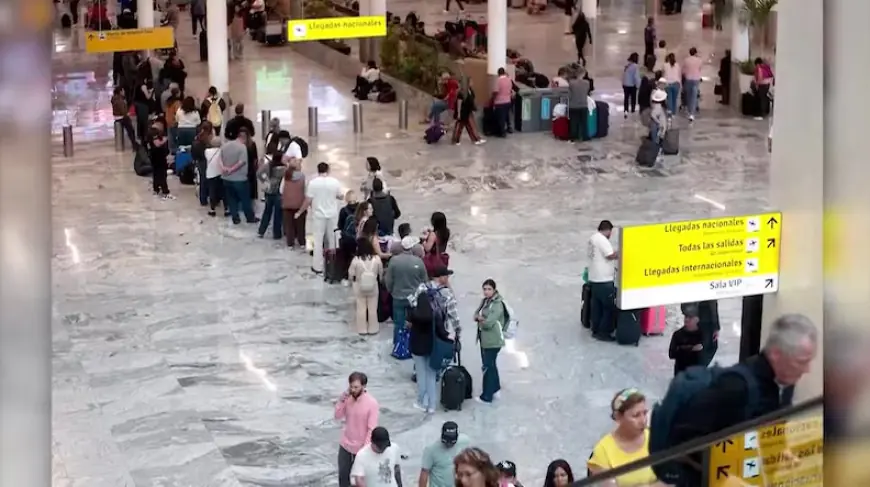
The cartels in Mexico set off a nationwide crisis this week following a historic military operation that killed one of the most wanted drug lords in the country. Baja California Mexico found itself in the crossfire despite being hundreds of miles from the operation's origin — and the fallout is still unfolding.
Cartels in Mexico: El Mencho Killed in Military Raid
Mexican security forces, backed by United States intelligence, took out the leader of the Jalisco New Generation Cartel, known as CJNG, on Sunday in the mountainous town of Tapalpa, Jalisco. Nemesio Rubén Oseguera Cervantes — known throughout Mexico by his alias "El Mencho" — was gravely wounded in the operation and died during transfer.
During the raid, cartel gunmen used high-caliber firearms and heavy weaponry to repel the assault, and a military helicopter providing aerial support was struck by gunfire, forcing an emergency landing. Eight CJNG members were killed in the operation itself. The death of El Mencho immediately triggered one of the most violent retaliatory waves Mexico has seen in years.
Baja California Mexico Hit by Cartel Retaliation
The violence did not stay contained to Jalisco. Baja California Mexico, along the U.S. border, was struck within hours of the news breaking despite having no direct role in the operation.
In Baja California, nearly two dozen incidents of burning vehicles and buildings were observed across four municipalities — including Tijuana, Mexicali, and Tecate — as CJNG operatives responded to their leader's death with coordinated chaos. The cartel's reach into the border region demonstrated how deeply the organization's networks extend throughout Mexico.
In-person classes across Baja California were canceled, with educators switching to virtual lessons for the day. The U.S. Consulate in Tijuana suspended visa processing and services, with employees instructed to work from home.
Cartels in Mexico: Nationwide Scope of the Violence
The retaliatory attacks by cartels in Mexico stretched well beyond Baja California, painting a picture of just how organized and geographically dispersed the CJNG had become under El Mencho's leadership.
CJNG members shut down Guadalajara's international airport by forcing passengers off a commercial airliner before setting the plane on fire. Similar violence erupted in Jalisco, Quintana Roo, Guanajuato, Guerrero, Michoacán, Oaxaca, and Baja California. Officials recorded 62 deaths throughout Mexico tied directly to the retaliatory attacks.
Twenty-five members of Mexico's National Guard were killed in six separate attacks in Jalisco following the operation. Around 30 cartel members were killed in Jalisco and four in Michoacán. More than 1,000 visitors were stranded overnight at the Guadalajara Zoo as the city effectively shut down.
Baja California Mexico: U.S. Response and Travel Warnings
The U.S. government moved swiftly to protect American citizens caught in the chaos spreading through Baja California Mexico and other affected states.
The U.S. State Department advised that Baja California — including Tijuana, Tecate, and Ensenada — had returned to normal conditions within 24 hours of the initial violence, though citizens in Puerto Vallarta, Guadalajara, and Ciudad Guzmán were still told to shelter in place. Hundreds of Americans stranded in Mexico called a State Department crisis hotline that was activated within hours of the raid.
The Mexicali Valley inside Baja California is currently designated a no-travel zone for U.S. government personnel, tied to ongoing cartel activity including cross-border smuggling routes and targeted violence along remote farm roads and canal corridors.
What Comes Next for Cartels in Mexico
The killing of El Mencho does not guarantee peace — experts warn it may accelerate the power struggle already reshaping the criminal map in Mexico and Baja California specifically.
The CJNG and the Sinaloa Cartel have long fought to dominate illegal drug trafficking routes, and the Mexicali area of Baja California is a known zone of intense competition between both groups. Roadblocks were erected there by cartel factions in the immediate aftermath of El Mencho's death.
Analysts say CJNG's growth was driven as much by strategy as brutality, describing how the cartel normalized the worst horrors of the Mexican drug wars — and the organization's future direction will depend on whether its remaining commanders can unify or splinter in the coming weeks. The world is watching closely to see whether this moment marks a turning point — or the beginning of a prolonged new cycle of cartel violence in Mexico and along the Baja California border.