



















Jake Guentzel and the player fallout: who feels the impact from Jack and Quinn Hughes’ White House call

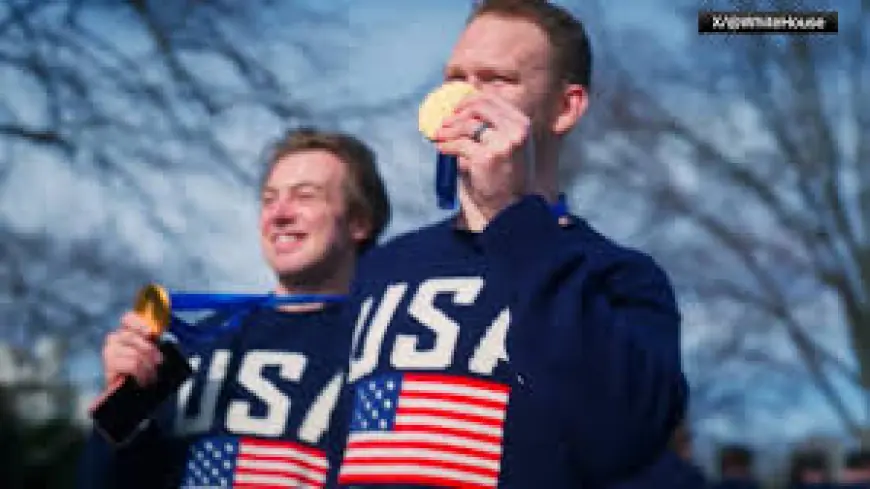
The immediate impact has landed on players’ public reputations and the routines of both U. S. Olympic hockey teams — not on partisan debate alone. jake guentzel appears in this headline as an exemplar of how other American players can be swept into the conversation; the provided context contains no mention of any direct connection to him, and that connection is unclear in the provided context. Here’s the part that matters: teammates, leagues and collegiate schedules are the first to feel logistical and reputational ripple effects.
Jake Guentzel and the ripple on teammates, schedules and public exposure
The call between President Donald Trump and the U. S. men’s hockey team, which surfaced on social media after the men’s gold-medal win over Canada, has shifted attention from on-ice achievement to how players navigate high-profile public moments. Jack and Quinn Hughes have addressed the backlash around the exchange, stressing support for the women’s team and noting negative reactions on social media. jake guentzel is not named in the context; any real-world association is unclear in the provided context.
Event details embedded: what happened in and after the locker-room call
- The men’s team won the gold-medal game against Canada, a 2-1 result.
- A postgame locker-room call with President Trump was recorded; on that call Trump invited the men’s team to the State of the Union and the White House and said he would also bring the women’s team, a line that drew laughter from some players.
- FBI director Kash Patel made the call from the dressing room and later came under criticism for flying to Italy and partying with the men’s team following the victory.
- Jack Hughes scored the game-winning goal in the gold-medal game and has publicly defended the men’s support for the women’s team, saying the locker-room knew how proud they were of the women.
- Quinn Hughes said on a morning television interview that the men were excited about attending the State of the Union and expressed happiness for the women’s team; he also referenced social media discussion surrounding both teams.
Timeline and schedule items (mini timeline)
- After the men’s win, both teams celebrated together in the cafeteria at 3: 30 a. m.
- On Feb. 19 the U. S. women completed a 7-0 run through the Olympic tournament with an overtime victory against Canada.
- The men’s call with President Trump led to invitations: the men were invited to the State of the Union and to the White House the following Thursday, one day before the NHL resumes its regular season.
- Professional Women’s Hockey League play resumes on Thursday; the league’s Olympic representation includes 16 American players spread across five of eight rosters, and the U. S. Olympic roster contains seven NCAA players with some scheduled to play on Friday.
- Forward signal: whether the White House event will proceed as an organized team appearance is unclear in the provided context; indications suggest NHL teams expected American Olympians to travel to Washington for some amount of time before returning to clubs.
Reactions, logistics and stated reasons for nonattendance
There was public criticism of both the phrasing used by the president and the men’s reaction in the locker room; some viewers interpreted the exchange as begrudging toward the women’s invite, while others saw the men’s response as disrespectful to a women’s team that also won gold. A spokesperson for the women’s team expressed gratitude for the invitation but said they were unable to attend the State of the Union because of timing and previously scheduled academic and professional commitments.
USA Hockey expressed appreciation for the acknowledgment of the women’s achievement. The Professional Women’s Hockey League’s schedule and the NCAA players’ commitments shaped the women’s inability to accept the invitation.
Uncertainties, governance and next signals
It remains unclear in the provided context whether the White House appearance for the men had been formally scheduled, and whether any players would attend the White House event or the State of the Union appearance in full. Trump’s public schedule shows a 12: 30 p. m. State of the Union luncheon on Tuesday; the schedule for Wednesday was not released in the provided context. The sentence about the NHL deputy commissioner Bill Daly was cut off and unclear in the provided context.
Here’s the real question now: will the logistical constraints of pro and collegiate calendars damp future cross-team appearances, or will leagues and federations change how they handle invitations and public-facing moments? The real test will be whether the planned White House interaction and the resumption of pro schedules proceed without further public controversy.
It’s easy to overlook, but the overlap of international tournament timing, professional league calendars and college commitments is the practical limiter here — not just the headline politics.
Micro takeaways: players and leagues are the first stakeholders feeling the effect; the women’s team could not attend because of timing and commitments; FBI director Kash Patel took the president’s call and later faced criticism for postgame travel and socializing; both Jack and Quinn Hughes publicly affirmed support for the women; scheduling and official confirmations remain unclear in the provided context.