

























Rep. Ted Lieu and Democrats Fight Back as NPR Faces Existential Crisis After CPB Dissolution

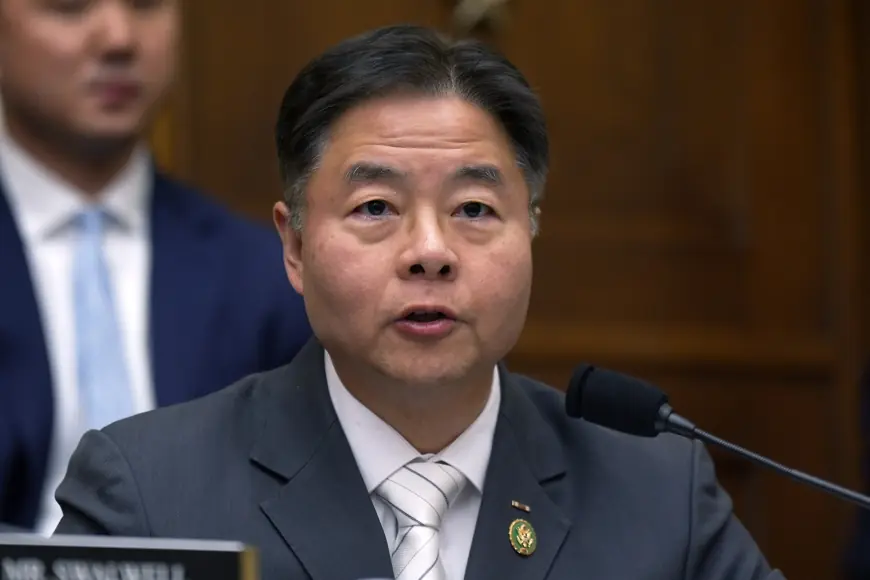
The federal defunding of public broadcasting has triggered one of the most significant media battles in modern American history, with Rep. Ted Lieu (D-CA) and House Democrats squarely in opposition as NPR, PBS, and more than 1,500 local stations scramble to survive after the Corporation for Public Broadcasting officially dissolved in January 2026.
NPR and the Corporation for Public Broadcasting Collapse
The Corporation for Public Broadcasting — the 58-year-old federal nonprofit that channeled government funds to NPR, PBS, and local public radio and television stations nationwide — voted to dissolve itself on January 5, 2026. The move came after Congress, at the urging of President Donald Trump, passed a rescission package in July 2025 that clawed back more than $1.1 billion in funding earmarked for fiscal years 2026 and 2027.
CPB President and CEO Patricia Harrison framed the closure in stark terms: the organization's final act, she said, was to protect the democratic values of public media by dissolving rather than remaining open as a defunded shell, vulnerable to further political interference.
Ted Lieu's Response to the Public Broadcasting Defunding
Rep. Ted Lieu, House Democratic Caucus Vice Chair representing California's 36th congressional district, has been among the most vocal Democratic opponents of the Trump administration's broad dismantling of federal institutions and public services. Lieu condemned the Venezuela military action in January as illegal and has repeatedly challenged the administration's funding cuts across federal programs.
On the defunding of NPR and public broadcasting, Lieu and his Democratic colleagues argued the rescission package was not a cost-saving measure but a targeted attack on independent journalism. Every Democratic member of the House voted against the rescission bill, which passed only 214-212 — a margin so thin that a handful of Republican defections nearly defeated it.
What the CPB Dissolution Means for NPR and Local Stations
The consequences for public media have been swift and severe, falling hardest on local stations rather than the national NPR and PBS networks.
| Sector | Impact |
|---|---|
| NPR (national) | Approx. 1% of revenue came from CPB; continuing operations with cuts |
| PBS (national) | Approx. 15% of revenue from CPB; reducing dues for affiliates by 15% avg. |
| Local NPR stations (246) | Many received up to 50% of budgets from CPB; facing layoffs and closures |
| Local PBS stations (330+) | Rural stations hardest hit; some announcing plans to go dark |
| Rural and tribal broadcasters | Described by Sen. Lisa Murkowski as facing an "emergency" |
NPR CEO Katherine Maher warned that stripping public broadcasting funding posed "a real risk to the public safety of the country," noting that public radio and television are embedded in the emergency alert systems of nearly half of all U.S. states.
The Broader Battle Over Independent Media
The CPB defunding is part of a wider Trump administration campaign to reshape the country's information landscape. House Speaker Mike Johnson called CPB funding a "misuse of taxpayer dollars," while the White House characterized NPR's journalism as "radical, woke propaganda." Democrats, including Ted Lieu, counter that the cuts are designed to silence accountability journalism, not save money.
Philanthropic groups led by the Knight and MacArthur foundations launched a $50 million emergency fund to support the most vulnerable stations. Larger urban outlets like Boston's GBH launched major multi-year fundraising campaigns, but smaller rural stations have no equivalent donor base to fall back on.
NPR's Mission Continues — But the Road Is Uncertain
NPR's leadership has pledged that the organization's commitment to free, reliable, and independent journalism remains unchanged. But with the CPB gone and federal funding permanently cut, the long-term financial picture for the public radio ecosystem — particularly its local affiliate network of more than 1,300 stations — remains deeply uncertain. Democrats like Ted Lieu have vowed that a future Congress will restore public media funding, but for now, NPR and its partners are navigating an era of austerity with no federal safety net beneath them.