















Panama Canal Ports: Panama Seizes CK Hutchison Terminals at Balboa and Cristobal After Court Ruling

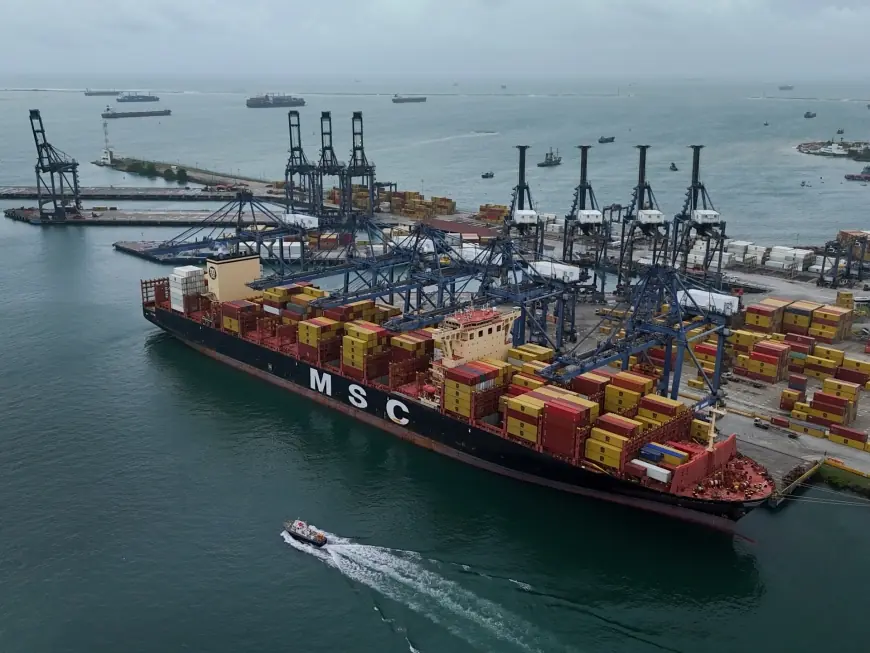
The Panamanian government has taken administrative and operational control of two Panama Canal ports, thrusting the dispute over the waterway into a new phase. Panama Canal Ports are now being occupied by state authorities after a Supreme Court decision, a government decree authorises a maritime agency to assume control and the move has intensified an ongoing geopolitical standoff.
Panama Canal Ports
CK Hutchison says Panamanian authorities made direct physical entry into the terminals at Balboa and Cristobal and assumed administrative and operational control of the two Panama Canal Ports. The company described the takeover as unlawful and said it reflects the culmination of a campaign by the Panamanian state against its subsidiary, Panama Ports, following a Supreme Court ruling last month.
How the takeover unfolded
A government decree authorises the Panama Maritime Authority to occupy the ports for "reasons of urgent social interest. " The decree also grants the maritime authority the right to take over port property, including computer systems and cranes. Panama's move followed a Supreme Court determination that found the concession to operate the two terminals unconstitutional despite a prior renewal of that concession in 2021 for another 25 years.
Legal backdrop and timeline
The legal dispute has advanced through litigation that reached the courts in 2025. The Supreme Court ruling last month declared the concession unconstitutional. CK Hutchison says the state action came after a sustained campaign targeting its Panama Ports subsidiary; the company characterises the immediate takeover as unlawful. Details of the judicial reasoning are unclear in the provided context.
Geopolitical stakes and international reactions
The state takeover is part of a wider, yearlong saga involving China, the United States, and Panama. The dispute intensified after the return of US President Donald Trump to the White House last year. Starting in December 2024, Trump alleged the Panama Canal was being operated by China and promised to "take it back, " including the use of military force if necessary, as part of a broader push to reassert US influence in the region.
The Chinese government's Hong Kong and Macao Affairs Office described the court ruling as "absurd" and "shameful, " and warned that Panama would pay "heavy prices both politically and economically. " Panama’s President Jose Raul Mulino strongly rejected that warning, insisted his country upholds the rule of law, and emphasised that the judiciary is independent of the central government.
Commercial consequences and replacements
The state takeover marks a turning point for the terminals at Balboa and Cristobal. A Danish company will replace the Hong Kong-based firm after the dispute escalated following claims about foreign control. How that replacement will be implemented and the timing of transitions are unclear in the provided context. The decree’s grant of authority over port systems and cranes signals broad state control during the occupation.
What comes next
Expect heightened diplomatic friction and legal contention. The occupation of the Panama Canal Ports by the maritime authority formalises immediate state control but leaves open questions about long-term management, commercial continuity, and international responses. The litigation record, the operational handover process, and the actions of the replacement Danish operator will shape the next chapters of this dispute. Details may evolve as further legal and political steps unfold.