






















Supreme decision leaves $175 billion and supreme uncertainty for consumers and markets

The Supreme Court struck down the White House’s use of the International Emergency Economic Powers Act to impose sweeping tariffs, an outcome that has left roughly $175 billion in potential refunds tied up in litigation and added fresh volatility to markets. The supreme ruling matters now because Treasury officials, economists and trade officials say the money may be in dispute for years and that the path to refunds is unclear.
Supreme Court ruling rejects IEEPA tariff authority and prompts weekend scramble
The court’s decision on Friday concluded that President Trump could not use the IEEPA to levy duties on trading partners, a ruling described in context as unlawful for the Oval Office’s sweeping global tariffs. The ruling followed months in which IEEPA-based tariffs were imposed on China in February 2025, extended a month later to Canada and Mexico, and included April’s "Liberation Day" tariffs under the same authority. The decision prompted weekend updates from the White House as officials scrambled to find new legal footing to continue collecting import duties.
Treasury Secretary Scott Bessent warns refunds may never reach consumers
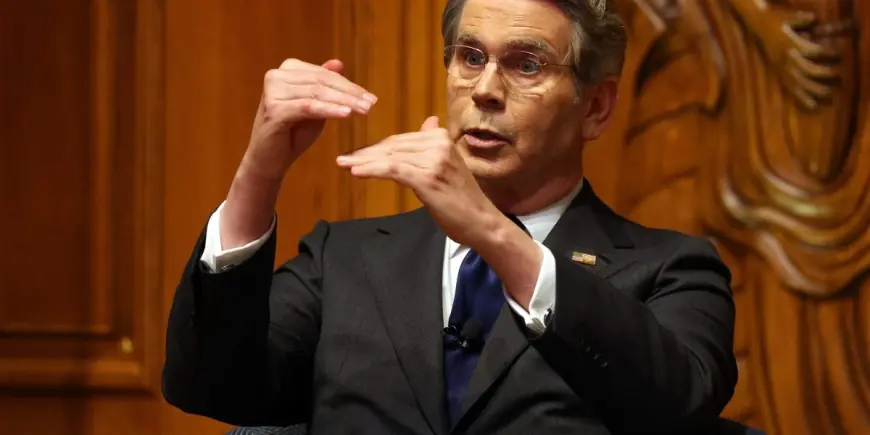
Treasury Secretary Scott Bessent has said the funds generated under the IEEPA are unlikely to return to consumers. Speaking at the Economic Club of Dallas in the aftermath of the ruling, Bessent said the Supreme Court had not ruled on how IEEPA-generated funds should be handled and that that question will be pushed back to international trade courts. He warned the process "could be dragged out for weeks, months, years, " and added that while alternative authorities such as Section 232 (a national security justification) and Section 301 (unfair trade practices) could keep tariff revenue generation from dropping, "I got a feeling the American people won’t see it. "
How big is the pool of disputed money: Penn Wharton, economists and separation issues
Economists and budget analysts have pegged the potential refunds at roughly $175 billion, a figure tied to cumulative IEEPA collections. The Penn Wharton Budget Model’s latest analysis projects up to $175 billion in potential refunds, reflecting cumulative IEEPA collections of roughly $164. 7 billion by January 2026, with collections running at about $500 million per day. Precisely how much the American people are missing remains up for debate because IEEPA funds must be separated from customs duties and levies already in place under previous and new trading agreements.
Market reaction: Dow plunges, S&P and Nasdaq slide amid tariff uncertainty
U. S. stocks retreated on Monday as investors digested the Supreme Court rebuff of the tariffs and mounting tariff-policy uncertainty. The Dow Jones Industrial Average fell roughly 1. 7%, a drop of over 800 points, while the S&P 500 dropped 1% and the Nasdaq Composite decreased 1. 1%. The court’s invalidation on Friday initially fueled trade hopes and briefly buoyed stocks, but markets reassessed after President Trump said on Saturday the U. S. would lift the baseline tariff rate on imports to 15%, effective immediately. The European Union pushed back, saying "a deal is a deal" and calling on Washington to clarify the steps it will take.
AI shock, corporate moves and private-credit stresses add to volatility
The so-called AI "scare trade" returned to markets after a technology firm announced an AI tool designed to automate analysis and tasks. Shares of IBM sank 13% while Accenture and Cognizant also fell, and industries including software, real estate and logistics were hit in recent sessions. Nvidia was a rare green spot as the AI chipmaker prepared to report results on Wednesday, which market commentary flagged as the earnings highlight for the week. Meanwhile, Blue Owl Capital’s stock was punished after the firm suspended redemptions from one of its private credit funds; Blue Owl shares have fallen roughly 8% over the past month. Bank of America said there is "a significant level of misinformation weighing on OWL and the private credit industry, " creating a "particularly attractive buying opportunity for OWL and the credit heavy Alts, " and an analyst noted Blue Owl’s investment history "is solid to strong across all"—an observation that is unclear in the provided context.
Policy paths and business expectations remain in flux
White House officials have signaled they have a number of options to continue generating tariff revenue, but the funds initially collected under the IEEPA are in dispute. Some optimists have suggested refunds could act as economic stimulus if U. S. importers receive cash infusions and corporations pass savings to consumers, but UBS chief economist Paul Donovan warned clients that such hopes may be naive: "Tariff rebates will increase the U. S. fiscal deficit, and act as a fiscal stimulus. Any rebates will be paid to U. S. importers (as they are the ones who made payments to the U. S. Treasury). With new tariffs coming in, it seems unlikely anyone will rush to lower prices to their customers. "
The supreme uncertainty over who ultimately gets the IEEPA collections and how long litigation will last has left policymakers, businesses and markets facing a prolonged period of legal and economic ambiguity.