























Jack Hughes Teeth and a Gritty OT Winner: How a Bloody Mouth Helped Deliver U.S. Olympic Hockey Gold

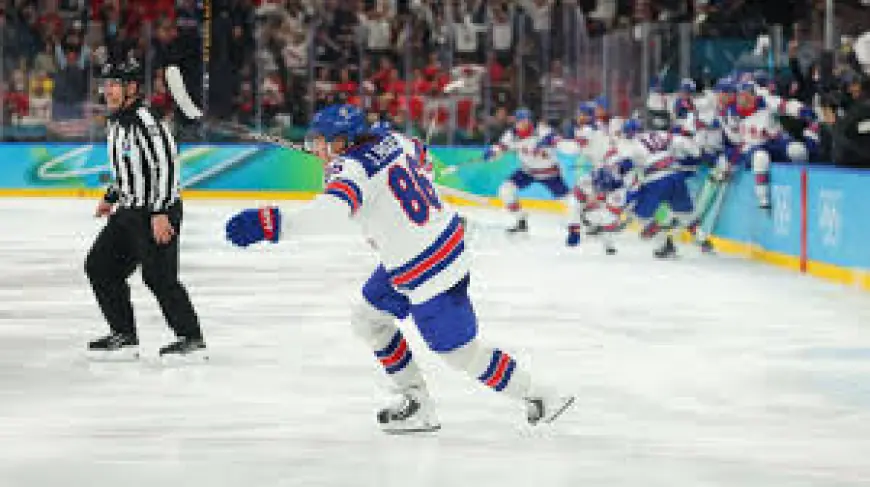
Why this matters now: The phrase jack hughes teeth captures more than an injury detail — it symbolizes a turning point for Team USA and for viewers who watched a forward finish a championship push while visibly hurt. That image will shape conversations about toughness, goaltending and a long-awaited American men’s hockey gold, and it lands first for teammates, fans and the player himself.
Immediate impact: teammates, fans and a generation feel the moment
Jack Hughes’s bloody mouth and missing front teeth became an instant emblem of the U. S. victory, changing how the win will be remembered. For teammates, the scene underscored a narrative of sacrifice; for fans it provided an indelible playoff-style memory during an Olympic final. The win also offered closure to a generation still linked to the 1980 Miracle on Ice — this is the country’s first men’s hockey gold since that team.
Jack Hughes Teeth: the injury, the goal and what happened on the ice
Team USA beat Canada 2-1 in overtime to win men’s hockey gold at the Milan Cortina Games. Jack Hughes scored the decisive overtime goal past Jordan Binnington; one account places that goal less than three minutes into 3-on-3 overtime, while another notes it came a little more than 1 1/2 minutes into extra time (time detail unclear in the provided context). Hughes had taken a stick to the mouth earlier in the game—identified as a high-stick by Sam Bennett in the third period—and left play with a bloody mouth and missing front teeth. He had previously lost a tooth in an NHL game a few years earlier.
Connor Hellebuyck was credited as the game’s star in net, stopping 41 of 42 shots and making a critical stick save on Devon Toews at the doorstep. The combination of Hughes’s decisive goal and Hellebuyck’s performance sealed the 2-1 overtime result.
Roster and personal notes tied to the moment
Hughes, identified in the context as a 24-year-old forward for the New Jersey Devils, shares the roster spotlight with his older brother Quinn Hughes, a 26-year-old defenseman who was on the U. S. team and praised Jack’s passion and impact. Teammates signaled confidence that Jack would recover from the injury; the U. S. players also honored Johnny Gaudreau in the celebration, skating with his jersey and bringing his children onto the team photo after a tragic event that cost Gaudreau and his brother their lives.
Other headlines from the day and the final Olympic cadence
- Two weeks and 116 medal events later, the 2026 Winter Olympics concluded.
- Norwegians dominated the medal table to extend their lead as the all-time winningest nati (end of sentence unclear in the provided context).
- Across sports that day: a PGA Tour first win for Jacob Bridgeman, a NASCAR note about Tyler Reddick opening 2026 with back-to-back victories after a winless previous season, and a contract extension for Curt Cignetti at Indiana paying $13 million per season through 2033 — matching compensation levels only shared with two other college coaches named in the provided context.
Here’s the part that matters: the image of Hughes playing through a dental injury and finishing the job frames this gold as one rooted in resilience rather than clean comfort.
- Hughes’s physical state at the final whistle — bloody mouth, missing front teeth — will be a lasting image tied to the winning goal.
- Hellebuyck’s 41 saves, including a last-ditch stick stop, were central to the victory.
- The U. S. ended a decades-long gap since the 1980 Miracle on Ice with this gold medal performance.
- Teammates publicly honored Johnny Gaudreau in the celebration after a tragic loss affecting him and his brother.
Short micro-timeline
- 1980 — The United States previously won men’s hockey gold in the so-called Miracle on Ice (this is the earliest referenced predecessor in the provided context).
- 46 years later — The context notes a parallel between the two improbable U. S. victories.
- Feb. 22, 2026 — The overtime goal in Milan clinched the 2-1 win and the Olympic gold (date appears in image captions in the provided context).
What’s easy to miss is how the game combined individual heroics and collective depth: a bloody, injured scorer and a goaltender who faced 42 shots made for a classic final. The real question now is how that image — jack hughes teeth and the overtime winner — will shape roster narratives and fan memory going forward.
Note on uncertain or truncated items in the provided context: one sentence about Norway’s medal-table lead is incomplete in the material provided, so its final wording is unclear in the provided context.
Writer’s aside: The bigger signal here is that Olympic hockey moments often hinge on small margins — a high stick, a single goaltender save, or a timely finish — and this final had all three.