












Tottenham Vs Arsenal: Derby thrashing exposes Spurs’ slide — form, injuries and a four-point danger zone

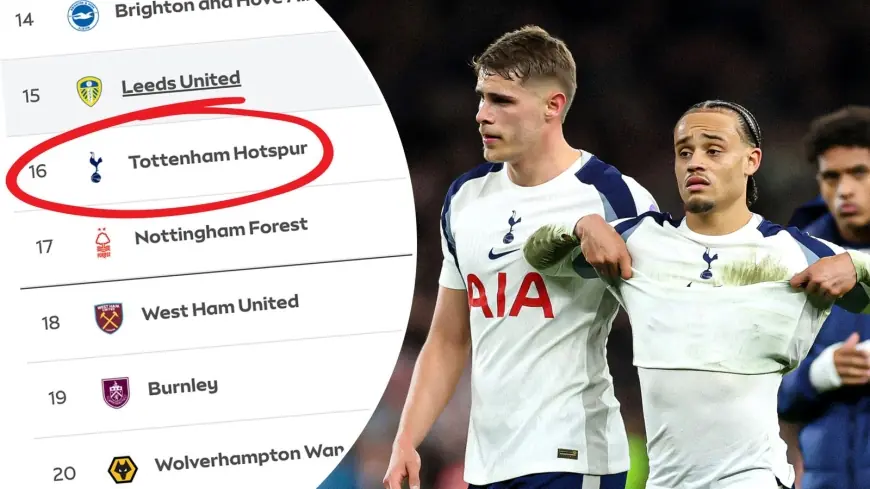
Why this shift matters now: the north London derby's outcome sharpens a clear performance trend — Tottenham’s Premier League position, form and squad depth are all under strain after the 4-1 defeat that left them four points above relegation danger. The loss magnified tactical weaknesses under new boss Igor Tudor and added urgency to a run of results that has the club looking over its shoulder with 11 games to go.
Market momentum — what the derby did to Spurs' league picture
Tottenham are sitting in 16th place and are just four points above the relegation zone after the heavy defeat. With 11 games to go, the position is fragile: the team has not won any of their last nine top-flight matches and across the past dozen matches Tottenham have the worst form in the division, taking seven points in that spell. Nottingham Forest and West Ham — the sides immediately below Spurs in the standings — have each recorded 12 points across the same period, making up a five-point swing on Spurs.
Squad strain compounds the on-field slide. Tottenham currently have 11 unavailable players, more than any other top-flight club, and the captain Cristian Romero was suspended for the derby. Long-term absences include Dejan Kulusevski and James Maddison; Mohammed Kudus and Wilson Odobert are also missing. The club must juggle a Champions League knockout bid alongside what is now a palpable relegation battle.
Tottenham Vs Arsenal — tactical and statistical snapshot
The match finished 4-1 to Arsenal. Arsenal created 20 chances to Spurs’ six and outplayed Tottenham for long periods, running away with the game in the end. In the first half the contest was closer, but Arsenal’s most potent threat came down their right-hand side, where Bukayo Saka and Jurrien Timber were dominant. Timber was often left free on the right and had time to pick passes, including the pass that found Viktor Gyokeres for Arsenal’s second goal; Sarr was left to deal with Saka in the left-back position and could not stop the cross that led to Arsenal's first goal.
Spurs' 3-5-2 shape under Igor Tudor, and the decision not to sit in, opened space for Arsenal to exploit in forward areas. That system left Xavi Simons, playing as a second striker, and Pape Matar Sarr covering long distances to get back; on occasion Micky van de Ven had to provide cover. The result was spells where players unfamiliar with defending in those areas were left one-on-one and unsure who was doing what, a reactive pattern that Arsenal repeatedly punished.
Wider narratives and match moments
The derby also carried narrative weight beyond the scoreboard. There was a period early on when it seemed like a close-run thing, but Spurs’ haplessness ultimately trounced the idea that the league leaders might bottle the game. Arsenal were level at half-time, which was notable given that, for the third league game in a row — and the fourth in the past six — they conceded within 10 minutes of scoring. Declan Rice’s contrasting moments in the match — from urging teammates to stay switched on to a later apology after giving the ball away for Spurs’ equaliser — captured the emotional swings of the game.
Home fans poured out after Viktor Gyokeres had made it 4-1. Pre-match, on-pitch announcer Paul Coyte had rallied supporters with the notion that something remarkable could transform “a small flame” into “a roaring fire. ” That mood collided with a reality in which Tottenham’s squad and mentality look stretched; the only small consolation for Tudor was that West Ham, Nottingham Forest and Leeds did not win either.
What's easy to miss is how the stadium detail underlines expectations — the club’s home ground is presented as high-spec and the contrast between infrastructure and current squad performance creates a sharper sense of mismatch.
Implications, affected groups and short signals to follow
- Spurs’ immediate priorities are clear: arrest the nine-game winless run in the league and address a stretched squad while managing a Champions League knockout phase.
- Players on the margins and those filling defensive wide roles (Djed Spence cover, Sarr, Simons dropping back) will be tested most in upcoming fixtures.
- A short sequence of results — wins in the next handful of games or continued poor form — will make the final stretch (including trips to Chelsea and a home game with Everton) decisive for survival hopes.
- Evidence of tactical tightening from Tudor and fewer long-distance recovery runs by attacking midfielders would signal an early corrective; continued reactive defending would confirm the downward trend.
Here’s the part that matters: the combination of tactical exposure, a thin squad and a run of poor league results has converted a single derby loss into a broader performance crisis. The real question now is whether Igor Tudor can steady a team that has the worst form in the division across the recent sample while navigating key absences and Champions League demands.
Brief rewind: Tottenham’s six-season run finishing above Arsenal ended in 2022. That longer arc helps explain why current fans and observers feel this moment more keenly.