

























Supreme Court Strikes Down Trump Tariffs, Threatening His Trade Agenda

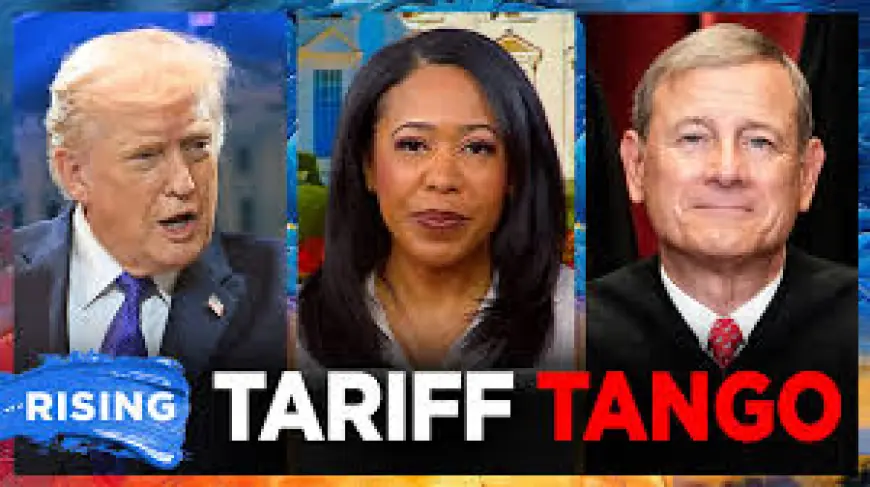
A high‑court decision published 1 hour ago invalidated the tariffs that have been central to the administration’s trade posture, a ruling that immediately puts that agenda at risk. The supreme legal reversal arrives alongside coverage from earlier in the day that emphasized the president’s unwillingness to back down and a separate European Union move to pause a U. S. trade deal.
Supreme Court ruling on tariffs
The most recent headline—"Trump tariffs struck down by Supreme Court — agenda in jeopardy?"—was published 1 hour ago and communicates a direct effect: the tariffs have been struck down and the broader agenda is now uncertain. That judicial action removes the policy’s legal underpinning, creating a clear cause → effect sequence: the court’s invalidation of the tariffs causes immediate questions about whether the administration can continue to rely on those measures to shape trade policy.
What makes this notable is the timing: the ruling follows two other developments earlier in the same reporting cycle, compressing legal, political and diplomatic friction into a short window.
Trump won’t blink on tariffs
A separate piece published 15 hours ago framed the president’s posture bluntly as "Trump won’t blink on tariffs — because he can’t. " That wording captures an asserted cause: constraints on the president’s position—described in that coverage as an inability to relent—lead to an unyielding stance on tariffs. The effect is a hardened policy line that, in light of the subsequent court decision, now faces legal reversal.
The sequence—first a depiction of an inflexible political stance, then a court ruling nullifying the policy—highlights how political commitments and legal outcomes can collide. If the administration lacks latitude to change course, the ruling forces a choice between accepting the judicial outcome and seeking alternative paths that are not described in the provided coverage.
European Union Hits Pause on U. S. Trade Deal
A third piece, published 3 hours ago, carried the headline "The European Union Hits Pause on Its U. S. Trade Deal. " That development introduces a diplomatic and market consequence separate from domestic legal action: the European Union’s pause affects the momentum of a pending U. S. trade arrangement. The EU’s decision to pause is an action that, by cause → effect logic, slows or halts negotiations and complicates the broader landscape for U. S. trade policy while domestic legal disputes play out.
Taken together, the three headlines and their publication times—15 hours ago for the stance story, 3 hours ago for the EU pause, and 1 hour ago for the court ruling—map a compressed chronology of political assertion, international recalibration and legal disruption.
Headlines and publication times: 15 hours, 3 hours, 1 hour
The full set of distinct items in the recent coverage is: the headline "Trump won’t blink on tariffs — because he can’t, " published 15 hours ago; the headline "The European Union Hits Pause on Its U. S. Trade Deal, " published 3 hours ago; and the headline "Trump tariffs struck down by Supreme Court — agenda in jeopardy?", published 1 hour ago. Each headline names a principal actor or institution—Trump, the European Union, the Supreme Court—and each specifies an action that produces immediate consequences for policy and diplomacy.
Immediate implications for tariff policy
With the supreme legal challenge resolved against the tariffs, the immediate measurable impacts are procedural and strategic: the tariffs no longer stand as a legal instrument, the administration’s stated refusal to relent is now constrained by that judgment, and the European Union’s pause complicates any parallel diplomatic avenue. The combined effect is a narrower set of options for advancing U. S. trade objectives unless new legal or policy measures are introduced—details that are unclear in the provided context.
The sequence underscores a simple editorial judgment grounded in the available facts: legal rulings can overturn politically entrenched policies, international partners can independently slow deals, and a president’s public posture can be rendered moot by courts. The broader implication is that the administration’s trade agenda faces simultaneous pressure from domestic law and international reaction, all shown in the recent headlines and their tight publication timeline.