







How Many Episodes In A Knight Of The Seven Kingdoms? Finale Confirms Season One Is Six Episodes

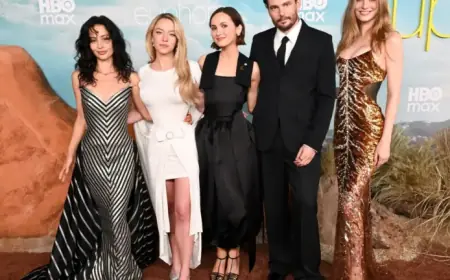
The season-one finale, "The Morrow, " confirmed that How Many Episodes In A Knight Of The Seven Kingdoms is a six-episode arc, and delivered revelations that reset the central relationships between Dunk, Egg and the Targaryen family. The closing hour rewrites familiar beats from the source material and leaves several character questions unresolved as the series heads toward a potential second season.
Episode Six, "The Morrow, " and its new scenes
"The Morrow"—identified as episode six of season one—introduced scenes not present in George R. R. Martin’s novella "The Hedge Knight, " including a flashback that places Dunk at Ser Arlan of Pennytree’s side as the older knight lies pale and babbling against a tree. That flashback is filmed on the same hillside used in the season opener, the same slope where Dunk later buries Arlan’s body.
The finale’s departures from the novella are deliberate: two of the added moments carry major implications for Dunk and Egg’s future adventures, altering how the pair’s relationship and Dunk’s past will be interpreted going forward.
Ashford Meadow’s joust and the Trial of Seven
The central event of season one is the jousting tournament at Ashford Meadow. At the tournament, a sequence of confrontations escalates: Aerion attacks a puppeteer, Aegon intervenes on behalf of the hedge knight he had secretly been squiring for under the alias of Egg, and Daeron—found drunk nearby—falsely accuses Ser Duncan "Dunk" the Tall of kidnapping his youngest brother.
Aerion then challenges Dunk to a "trial of seven, " in which the accused and the accuser each recruit six champions for combat. Prince Baelor joins Dunk’s side; after a hard-fought contest Dunk compels Aerion to withdraw the charge. The sequence of accusations and combat directly produces the conditions that expose deeper family fractures and set the finale’s tragic turn in motion.
Prince Maekar Targaryen’s actions and aftermath
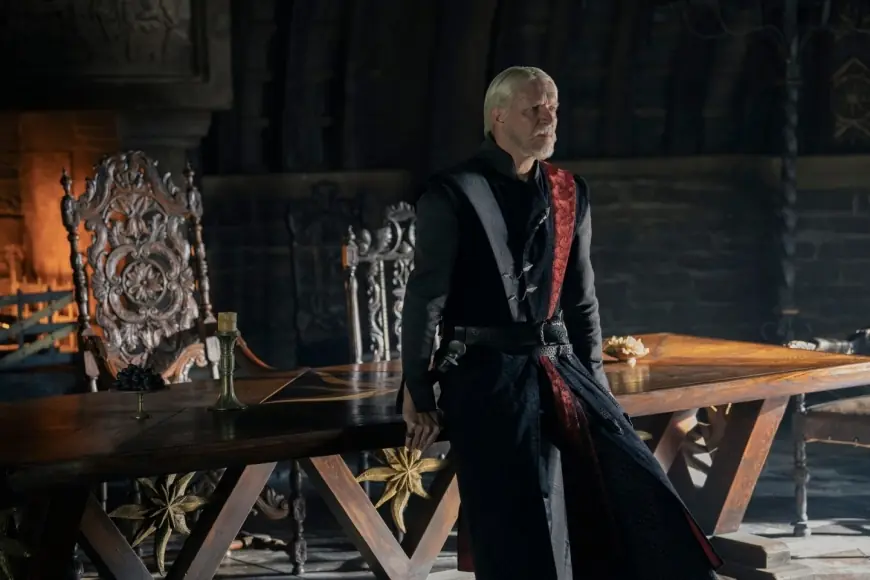
Prince Maekar Targaryen, who serves roughly 90 years before the original series and nearly 80 years after House of the Dragon, appears as a widowed single father who has struggled in raising his three sons—Daeron, Aerion and Aegon ("Egg"). After Baelor unexpectedly drops dead from a fatal head wound received at Maekar’s hand, Maekar insists the Gods know it was an accident. Sam Spruell, who plays Maekar, says the prince is vulnerable to self-delusion and views such appeals to divine judgment as a means of personal absolution: "Maekar is so susceptible to self-delusion. How handy that you can refer to the Gods knowing it’s an accident to absolve you of your crimes?"
In the immediate aftermath Maekar offers Dunk a home at Summerhall so Dunk could train Egg as his squire and complete his own training under the castle’s master-at-arms. Dunk cites royal exhaustion and refuses the offer, instead asking whether he might take the boy on the road with him—an idea Maekar rejects because he will not allow his royal blood to live like a "peasant. " One line of context reads, "[Aegon] is his last chance to have an heir that’s worth anythin"—unclear in the provided context about the sentence’s completion.
Ser Duncan 'Dunk' the Tall and the knighthood question
The finale and the season drop repeated hints that Dunk was only ever a squire and may have lied about being knighted. A flashback shows Dunk asking Arlan why he never knighted him; Arlan gives no answer. Dunk’s oft-repeated tale—that Arlan knighted him with "only a robin, up in a thorn tree" as witness—is unverifiable when tournament officials tell him to find a lord or knight to vouch for him and virtually no one remembers Arlan.
Small scenes and dialogue underline the ambiguity. When Dunk first meets Egg, the boy tells him bluntly, "You don't look to be a knight. " In episode four, when Raymun Fossoway asks to be knighted to fight in Dunk’s Trial of Seven, Lyonel Baratheon urges, "Go on, Ser Duncan. Any knight can make a knight. " Dunk still hesitates, raising questions about whether he is protecting a friend or whether he does not know the formal words of knighthood.
Ira Parker, adaptation choices and a stray server message
Showrunner Ira Parker framed the darker, ambiguous beats as intentional: he wanted the question of Dunk’s knighthood to be open to interpretation and said the show gets "pretty, pretty close" to Dunk saying the truth but that it is "not said in black and white. " The adaptation leans on material from Martin’s "Tales of Dunk and Egg" and intersects with references that touch the wider history that appears in works such as "The World of Ice & Fire. "
On a different note, a digital encounter tied to coverage of the series displayed an error message with the line "Short and stout, this is my handle, this is my spout. "
Separately, Sam Spruell—who previously appeared in Fargo season five and shot a pair of episodes of Dune: Prophecy before his Fargo role—was asked whether Maekar will return for season two; that question is noted but the answer is unclear in the provided context.
What makes this notable is how the finale uses a single event at Ashford Meadow to shift loyalties, reveal private deceptions and force characters into choices that will shape any continuation: a single death produces offers, refusals and the possibility of exile or mentorship that will define Dunk and Egg’s next chapters.