




















Nbc Olympics Figure Skating: Alysa Liu’s Closing-Ceremony Fatigue Caps a Breakneck Olympic Run

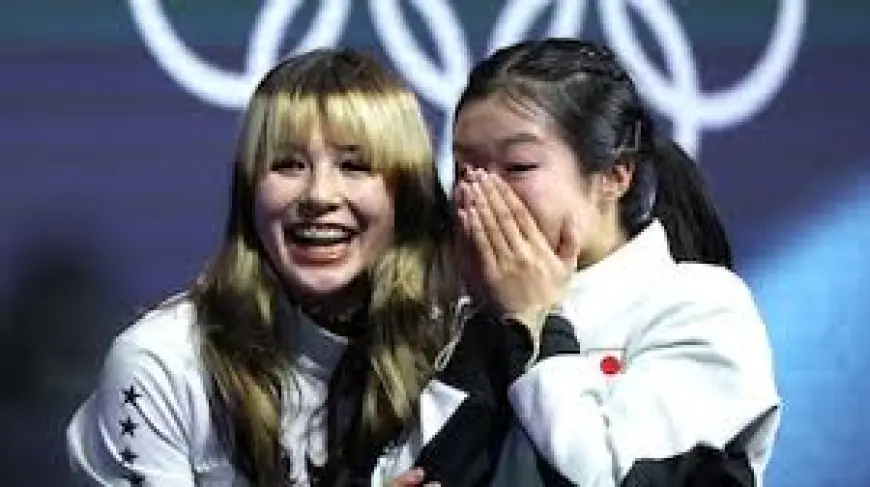
Alysa Liu’s yawning and brief rests captured during the 2026 Winter Olympics closing ceremony crystallized a whirlwind Games that combined two Olympic gold medals with intense public scrutiny. Broadcast images on nbc olympics figure skating coverage showed the 20-year-old visibly tired after days of competition, exhibitions and media obligations, drawing sharp contrasts in public discussion with another high-profile Chinese American athlete.
Nbc Olympics Figure Skating: Development details
Liu, a 20-year-old from Clovis, California and the 2025 World Figure Skating champion, finished the Milan Cortina Winter Games having won two Olympic gold medals: one in the team event and a second in the women’s individual free skate. That individual gold makes her the first American woman to win Olympic gold in a solo figure-skating event since 2002. The closing ceremony, where International Olympic Committee President Kirsty Coventry delivered remarks, showed Liu yawning on camera; earlier in the Games she had been seen lying down to rest between obligations.
Her schedule included competing across multiple events, performing in the Figure Skating Exhibition Gala and participating in dozens of press interviews during roughly three weeks of Olympic activity. The accumulation of competition, exhibition performance and media appearances preceded the visible fatigue captured at the closing ceremony.
Context and escalation
The images of Liu’s exhaustion unfolded against a larger public debate comparing her to Eileen Gu, an American-born skier who has competed for Team China since she was 15. Commentators and public figures have framed the two athletes as emblematic of broader cultural and political tensions: some commentators emphasized Liu’s family story of American migration and resistance to China’s communist government, while others focused on Gu’s decision to represent China internationally.
Those contrasts have been sharpened by personal histories cited in public discussion. Liu’s father, Arthur Liu, was present in Tiananmen Square in 1989 and later fled to Hong Kong before moving to California, after actions that placed him at risk of prison or labor camp. He was summoned to report to the Office of Chinese Communist Party Youth League following his involvement in the protests. By contrast, Gu’s family background includes her mother, Yan Gu, who studied at Peking University and later earned a master’s degree in the United States.
Public figures have weighed in on the divide: a former NBA player criticized Gu’s representation of China, and others in digital commentary framed Liu’s achievement as a point of national pride. The commentary has helped convert athletic rivalry into a political flashpoint in some quarters, intensifying public attention on both skaters beyond their performances on the ice.
Immediate impact
The immediate consequence was twofold. First, Liu’s physical state underscored the toll taken by an intense competition and media schedule: two gold medals, a gala performance and dozens of interviews over the course of the Games culminated in visible exhaustion on the closing-night broadcast. Second, the juxtaposition with Gu has deepened public conversation, shifting some attention from technical and competitive accomplishments to questions of identity and national allegiance.
Social platforms amplified images of Liu yawning and resting, with many followers expressing sympathy and noting that the athlete had said she planned to sleep at the end of the Olympics. That reaction highlighted how on-ice achievements and off-ice narratives combined to shape public perception of the Games and of individual athletes.
Forward outlook
With the Games concluded at the closing ceremony, there are no further Olympic competitions scheduled for Liu in this cycle. Immediate next steps available in public remarks focus on rest: Liu indicated she intended to rest after the conclusion of the Olympics. What makes this notable is how a single broadcast moment—an athlete yawning during a formal ceremony—can crystallize broader themes about athlete workload, media attention and the geopolitical framing of sports.
Officials present at the ceremony and the athletes themselves will move on from the Milan Cortina Games, but the episodes of performance, public commentary and family histories that surrounded Liu and Gu are likely to remain part of the post-Games conversation in the near term.