























DHS Abrupt Reversal: Tsa Precheck Briefly Suspended Then Restored as Chicago Airports Face Storm Disruptions

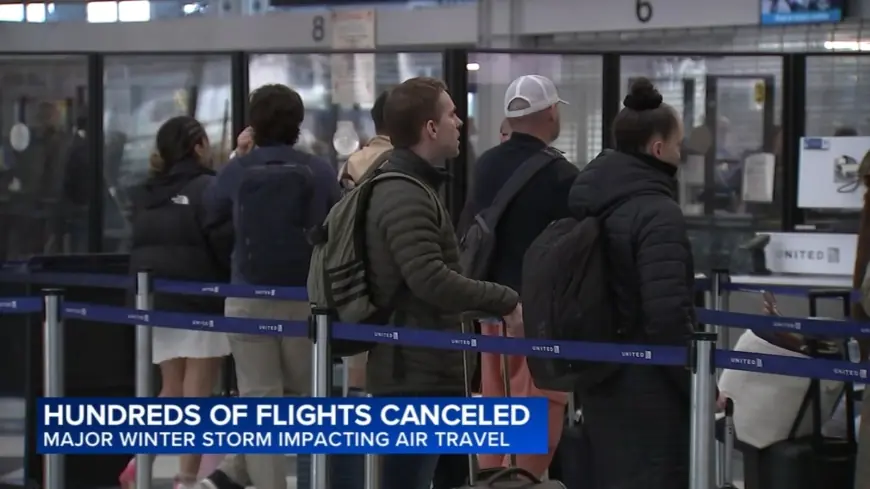
Department of Homeland Security action that temporarily closed Tsa Precheck and Global Entry on Sunday created long lines and traveler confusion at Chicago airports before both programs were reopened hours later. The episode overlapped with massive weather-related cancellations and raised fresh questions about operational priorities during a partial government shutdown.
Tsa Precheck suspension and rapid reversal
DHS announced Saturday night that it would suspend Tsa Precheck and Global Entry beginning at 5 a. m. local time Sunday. The suspension was meant to respond to staffing constraints tied to the partial government shutdown that took effect on Feb. 14. Travelers at Chicago airports encountered uncertainty the next morning: some moved through security without issue at 6 a. m., while others faced rerouting into general security lanes when PreCheck lanes were closed.
By 9: 30 a. m., the programs were reported to have been restored, with DHS saying operations would remain functional with no change for the traveling public and that staffing issues would be evaluated on a case-by-case basis and adjustments made as needed. Two DHS officials stated there were no changes to Global Entry.
What happened at Chicago airports
Airport staff described long lines and confusion when PreCheck lanes were closed, forcing those passengers through general security. Traveler Jason Hahn said he arrived 45 minutes earlier than usual at O'Hare on Sunday, noting that he travels weekly and adjusted his schedule in case he had to stand in the general line. Hahn said he felt the move was punitive and that staffing levels seemed unchanged.
The temporary interruption in trusted-traveler processing came as Chicago airports were also managing a crush of weather-related disruptions. As of 5: 30 p. m. Sunday, O'Hare had 133 cancellations with average delays of 16 minutes, while Midway had 23 cancellations with average delays of less than 15 minutes.
Scope and stakes: millions enrolled, agencies affected
About 20 million people are enrolled in TSA PreCheck and 12 million in Global Entry. The suspension notice said courtesy escorts, including those for members of Congress, would be suspended to allow officers to focus on securing the airspace and ports of entry. Homeland Security Secretary Kristi Noem said shutdowns have serious real-world consequences and noted that TSA and customs officers are prioritizing the general traveling population while suspending special privilege escorts.
The partial shutdown has broader agency effects: it is impacting FEMA and the Coast Guard. So far, TSA workers have missed one paycheck. Air traffic controllers are not impacted by the shutdown. The shutdown follows a prior 43-day closure, described as the longest in U. S. history, which ended back in November.
Political context and reactions
The partial government shutdown began after lawmakers failed to reach a funding agreement for DHS, with Democratic opposition tied to calls for changes in immigration operations following the deadly shootings of Renee Good and Alex Pretti in Minneapolis, Minnesota. Those events were cited by some lawmakers pushing for changes and to end the shutdown.
Travel expert Peter Greenberg criticized the temporary suspension as making little operational sense given the enrollment numbers in the programs, characterizing the move as more political than practical and warning it would only lengthen lines without resolving the underlying budget impasse.
Weather strain: major nor'easter compounds travel chaos
The brief suspension coincided with a major nor'easter moving up the East Coast, forecast to dump at least a foot of snow in places and prompting the first blizzard warning for New York City in nearly a decade. Authorities placed 40 million people under a blizzard warning and another 14 million under winter storm warnings. Governors in seven Northeast states—Connecticut, Delaware, Massachusetts, New Jersey, New York, Pennsylvania and Rhode Island—declared states of emergency, while Maryland Governor Wes Moore declared a state of preparedness. Several states, including New York, Connecticut and Rhode Island, issued travel bans and urged residents to stay off roadways as the storm intensified.
Next steps and lingering uncertainty
TSA will evaluate staffing and operational needs on a case-by-case basis and adjust operations accordingly. Travelers and airport employees said they hope Tsa Precheck remains stable after the reversal, but the overlap of a partial DHS shutdown and a powerful winter storm left many passengers dealing with cancellations, delays and heightened uncertainty. Details may evolve as agencies continue to assess staffing and weather impacts.