











John Davidson Tourette's Racial Slur at BAFTA 2026: What Happened, Jamie Foxx Controversy, and the Film Behind It All

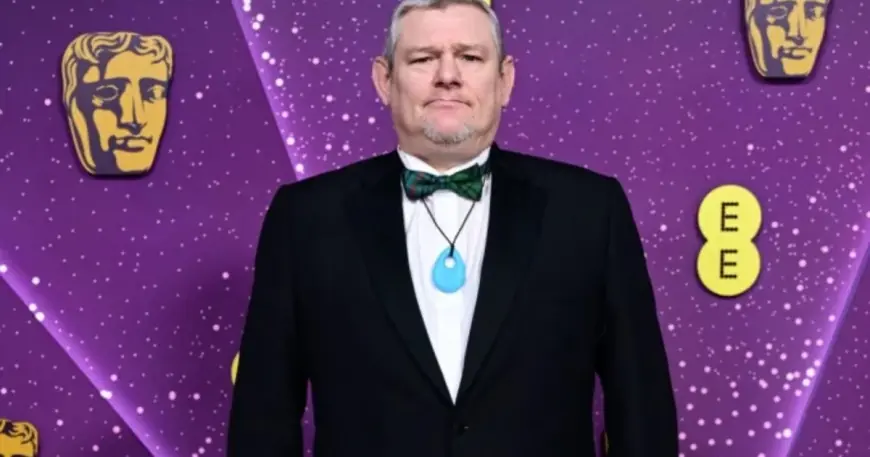
The 79th BAFTA Film Awards on Sunday, February 22, 2026, will be remembered as one of the most complex and debated ceremonies in the history of the event. At London's Royal Festival Hall, Scottish Tourette's campaigner John Davidson — the real-life inspiration behind the acclaimed film I Swear — was in the audience as an invited guest when his involuntary vocal tics disrupted the ceremony multiple times. The most shocking moment came when Davidson shouted the N-word as two celebrated Black actors, Michael B. Jordan and Delroy Lindo of Sinners, stood on stage presenting the award for Best Visual Effects. The incident immediately went viral worldwide, sparked a fierce debate about disability awareness, and drew a divisive response from Jamie Foxx.
What Happened at the 2026 BAFTAs — The John Davidson Tourette's Incident
Before the ceremony began, the floor manager formally introduced Davidson to the assembled audience, which included the Prince and Princess of Wales, warning attendees they might hear involuntary noises. Davidson, 54, was seated in the hall in connection with the film I Swear, which received five BAFTA nominations. His vocal tics were audible throughout the first 20 to 25 minutes of the show.
The outbursts escalated in severity as the evening progressed:
| Moment | Davidson's Involuntary Outburst |
|---|---|
| BAFTA chair Sara Putt's opening address | "Shut the f**k up" / "Boring" |
| Audience told not to curse | "Bullsh*t!" |
| Directors of children's film Boong accepted award | "F**k you" |
| Michael B. Jordan and Delroy Lindo on stage presenting visual effects award | The N-word — audible to the room and millions watching at home |
Delroy Lindo, in particular, visibly paused and appeared stunned before both actors composed themselves and continued the presentation. Neither Jordan nor Lindo issued immediate public statements.
Davidson left the Royal Festival Hall approximately 25 minutes into the ceremony. Multiple outlets confirmed the departure was entirely of his own accord — BAFTA did not ask him to leave and considered him an invited guest throughout.
Alan Cumming Addresses the BAFTA Audience — Twice
Host Alan Cumming interrupted proceedings multiple times with grace and clarity. He told the audience that what they had heard was a manifestation of Tourette's Syndrome — a disability — and that the tics are entirely involuntary. Later in the evening he made a second, more direct statement, apologizing to anyone offended and reiterating that the person involved had no control over the language.
The BBC, which broadcast the ceremony on a two-hour delay on BBC One in the UK, did not cut the outbursts from the broadcast. The U.S. broadcast on E! also aired the moment without bleeping the slur, which added further controversy about broadcaster responsibility. The BBC issued a formal apology, stating the language arose from involuntary vocal tics and was not intentional.
Who Is John Davidson? The Real Man Behind I Swear
John Davidson MBE, 54, is one of Britain's most prominent Tourette's Syndrome campaigners. Born and raised in Galashiels, Scotland, he first came to national attention in 1989 in the landmark BBC documentary John's Not Mad, which was one of the first major television portrayals of Tourette's Syndrome and introduced the condition to a generation of viewers. A follow-up documentary, The Boy Can't Help It, aired in 2002. Davidson began experiencing symptoms at age 12 but was not diagnosed until age 25, spending years of confusion and social isolation before understanding his condition.
His specific subtype, coprolalia, is a form of Tourette's affecting a minority of those with the syndrome. The charity Tourettes Action defines it as the involuntary utterance of socially unacceptable words — including slurs — with no intent or control from the individual. Davidson himself told CNN on the red carpet before the ceremony that he was already feeling heightened tic activity due to the crowd, the pressure, and the emotional weight of the evening.
I Swear: The BAFTA-Nominated Film About Davidson's Life
The biographical drama I Swear, written, directed, and produced by Kirk Jones, chronicles Davidson's journey from a confused teenager in 1980s Scotland to a nationally recognized disability campaigner. Actor Robert Aramayo (The Lord of the Rings: The Rings of Power) plays Davidson in the film and won the BAFTA for Best Leading Actor on the night — a shocking upset over Leonardo DiCaprio, Timothée Chalamet, Ethan Hawke, Michael B. Jordan, and Jesse Plemons. Aramayo also won the EE Rising Star Award. The film additionally won the BAFTA for Casting.
Accepting his Best Actor award, Aramayo said Davidson is "the most remarkable man I ever met" and called for continued understanding of those living with Tourette's.
Jamie Foxx Sparks Backlash With Response to Davidson
Actor Jamie Foxx waded into the controversy on Instagram, calling the outburst "unacceptable" and alleging that Davidson's use of the racial slur was intentional rather than a Tourette's tic. His post drew immediate and fierce pushback from Tourette's advocates, fans, and medical voices online, who called his comments dangerous, misinformed, and harmful to people living with the condition. Critics pointed out that Foxx's claim that the words were deliberate directly contradicts the established medical understanding of coprolalia and Tourette's Syndrome. Charities warned that this kind of public narrative contributes to stigma and, in severe cases, can drive those with Tourette's toward self-harm.
What Is Tourette's Syndrome With Coprolalia?
Tourette's Syndrome is a neurological condition characterized by sudden, repetitive, involuntary movements and sounds called tics. Coprolalia — the involuntary vocalization of offensive or taboo words — affects a minority of people with Tourette's. Tics are documented to worsen in high-pressure, emotionally charged, or crowded environments, precisely the conditions of a major live awards ceremony. Medical and disability organizations were united Monday morning in stating clearly that Davidson's outbursts were symptomatic, not intentional.