


















Ice Hockey final heightens national stakes as Verona hosts closing-night celebrations and Team GB’s best-ever Winter Games

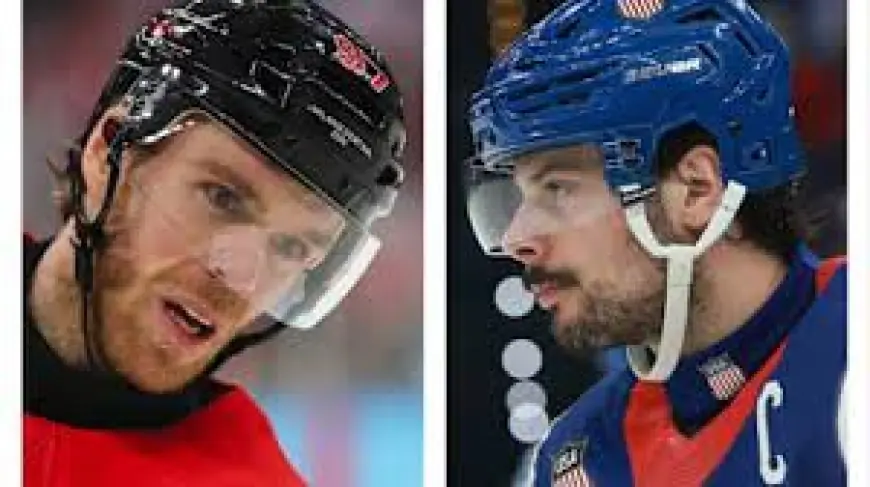
The close of these Winter Games matters because outcomes on and off the ice are sharpening national narratives: an Olympic men’s ice hockey final between long-time rivals promises a high-tension showcase, while Great Britain ends the event with an unexpectedly strong medal haul that will shape its winter-sport profile. Readers who care about national momentum and player availability feel the impact first.
Immediate impact: athletes, national pride and lingering questions
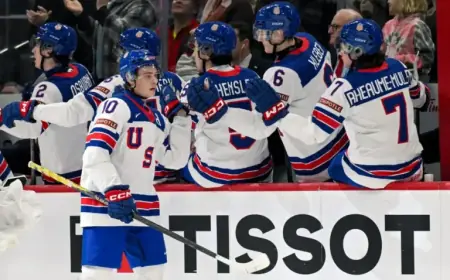
Here’s the part that matters: the Ice Hockey final between the United States and Canada is framed as not just a match but a flashpoint for national rivalry and momentum. If the US wins, it would complete a sweep of the hockey tournaments after the American women beat Canada on Thursday. For Canada, uncertainties around roster health could change the game plan and national expectations.
Event details and the tension-driving returns this year
The men’s final is set for Sunday at the Winter Games, where NHL players are competing at the Olympics for the first time since 2014 — a factor that raises the competitive level. Long-time rivals, the United States and Canada, are preparing for a heavily charged final: the matchup is being discussed as potentially stormy because of recent on-ice friction and off-ice tensions between the countries.
- Brady Tkachuk used the word "hatred" when describing the rivalry and suggested many players feel this could be the biggest game of their careers.
- At last year’s 4 Nations Face-Off tournament, Canadian fans booed the US anthem and multiple on-ice fights occurred, sharpening the rivalry.
- On Thursday, the US beat Canada to claim gold in the women’s tournament, a result the American men say has added motivation — a player noted that beating Canada in the men’s final could mean a clean sweep for the United States.
Ice Hockey final — injuries, legacy and historical hooks
The status of Canada’s captain, Sidney Crosby, is still uncertain: he did not play in Canada’s semi-final win over Finland because of a knee injury. Canada’s coach has said he will wait until the last minute before deciding on Crosby’s participation and emphasized that Crosby would not be put in harm’s way or risk the team. Crosby’s record in major tournaments was noted in coverage as including two Olympic golds and three Stanley Cups.
History adds context to stakes: the United States’ last Olympic men’s ice hockey gold came in 1980, while Canada’s most recent Olympic men’s gold was in 2014, when they retained the title they had won in 2010. The return of NHL players for the first time since 2014 raises expectations that many of the best players in the world will be on display on Sunday.
Verona closing ceremony and Team GB’s breakthrough Games
The closing ceremony will be held at the Verona Olympic Arena on Day 16, where Great Britain’s gold medallists Matt Weston and Charlotte Bankes are set to be Team GB’s flagbearers. Team GB leaves with five medals, including a record three golds — their best Winter Olympics performance and equalling the overall medal total from both 2014 and 2018.
Details tied to the medal run: Britain’s Zoe Atkin won bronze in the freeski halfpipe on the final day to secure Team GB’s fifth medal. Matt Weston won his first gold in the men’s skeleton, a performance described as dominant from start to finish; that win arrived on day seven, and it was said that it also started a momentum that carried through the Games. One commentator singled out a moment when Charlotte Bankes and Huw Nightingale won Britain’s first ever Winter Olympic gold on snow, and another source framed that second gold in the mixed team snowboard cross as sealing the nation’s most successful Games.
What’s easy to miss is that, before this edition, Great Britain had never won more than one gold medal at a single Winter Olympics; finishing with three golds alters how the nation’s winter programme will be talked about going forward. Tonight, flagbearers Matt Weston and Charlotte Bankes will lead Team GB into the closing ceremony in Verona as the curtains draw on what has been described as a historic Games for the nation.
- Phil Cartwright, Katie Stafford and Josh Lobley are credited contributors to the coverage that collected these details.
The real question now is how roster decisions and health — notably the uncertainty around Sidney Crosby — will influence tactics and whether the men’s Ice Hockey final will live up to the heightened stakes created by recent tournaments and off-ice tensions.
- US last men’s Olympic ice hockey gold: 1980
- Canada’s most recent men’s gold: 2014 (retained from 2010)
- Team GB waited until day seven for their first medal and finished with five medals and three golds on Day 16
- Brady Tkachuk’s comment that there is "hatred" in the rivalry
- Canadian captain Sidney Crosby’s participation is uncertain after missing a semi-final with a knee injury
- US women’s gold on Thursday has added extra motivation for the American men
- Closing ceremony venue: Verona Olympic Arena
- Team GB flagbearers: Matt Weston and Charlotte Bankes
Key takeaways:
- If Sidney Crosby is unavailable, Canada could adjust its lineup late, affecting preparation and matchups.
- The return of NHL players since 2014 raises the quality and unpredictability of the final.
- Team GB’s three golds and five medals mark its most successful Winter Olympics; that will shift expectations at home.
- Recent crowd and tournament tensions suggest the final could be unusually heated on and off the ice.
What to remember as you watch: engage with the closing-night coverage and, if you felt a personal highlight, use the event’s interactive option labelled 'Get Involved' to share your moment of the Games.
It’s easy to overlook, but the combined effect of marquee player returns, a key captain’s uncertain fitness and symbolic national moments means this final could influence perceptions of hockey programs for years rather than just deciding a single medal.