























Quinn Hughes’s quarterfinal winner keeps Hughes brothers in Olympic spotlight

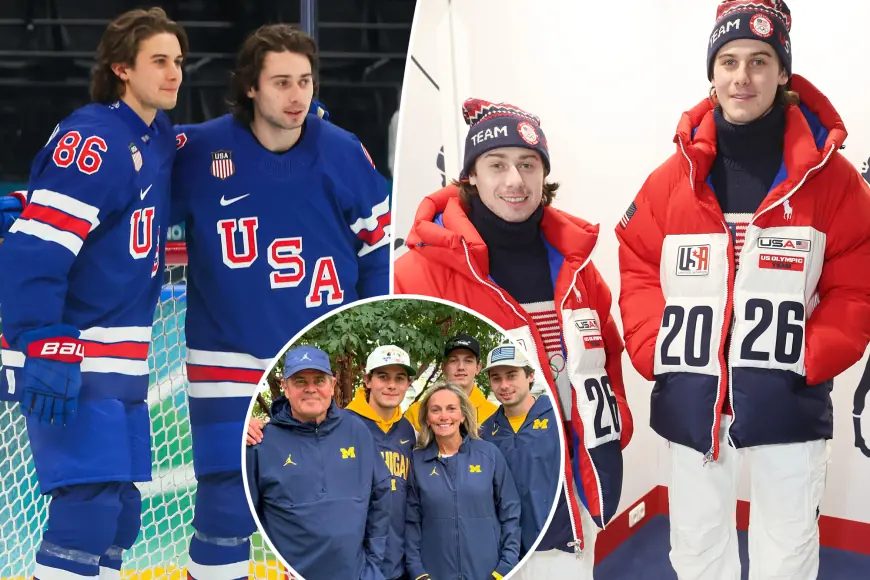
quinn hughes scored the game-winning goal against Sweden in the quarterfinals on Wednesday, sending the United States men’s hockey team into the semifinals at the 2026 Milan Cortina Winter Olympics and keeping the Hughes family at the center of the tournament.
The goal came in a run that saw the Americans notch wins over Latvia, Denmark, Germany and Sweden in the quarterfinals — results that moved Team USA into the knockout rounds. Quinn’s finish against Sweden sealed the quarterfinal victory and gave the U. S. a shot at playing for a medal as they advanced to the semifinals.
Quinn Hughes buries quarterfinal winner
Quinn, who was originally named to the Team USA roster last year but withdrew with a lower-body/oblique injury, returned for these Olympics and produced a defining moment in the quarterfinals. The eldest Hughes brother played college hockey at the University of Michigan from 2017 to 2019, was drafted seventh overall by the Vancouver Canucks in 2018 and finished out his season at Michigan before joining the NHL. The defenseman was traded to the Minnesota Wild this past season.
Jack Hughes lifts U. S. with semifinal push
Jack Hughes backed up his brother’s heroics with a potent performance in Milan. In the semifinals on Friday night, Jack scored twice — his second goal of the tournament came off an aggressive move earlier in the period, then he hammered home a rebound after a puck ricocheted off the end boards to put Team USA up by five in a 6-2 victory over Slovakia. The win came in Milan and was a semifinal game for the 2026 Olympics.
With three goals and three assists through six games, Jack has earned more responsibility. He began the tournament on the fourth line with Brock Nelson and J. T. Miller but moved up to the left wing of the third unit next to Dylan Larkin and Tage Thompson. Team USA head coach Mike Sullivan said the intention was to give Hughes more ice time so that he could impact the game more.
Family ties: an Olympic coach mom and three NHL sons
The Hughes hockey pedigree runs deep. Jack and Quinn are the sons of Jim and Ellen Hughes, who are both hockey coaches — Ellen even helped the U. S. Women’s hockey team win gold. Jim and Ellen are also parents to Luke Hughes, who plays on the New Jersey Devils alongside Jack. Unlike his older brothers, Luke did not score a spot in the 2026 Winter Olympics.
The middle Hughes brother was picked first overall in the 2019 NHL Draft and currently plays for the New Jersey Devils. He primarily plays forward but shifts to the wing at times, as he did during the 4 Nations Face-Off tournament. Unlike Quinn and Luke, who both skated for the University of Michigan, Jack did not play college hockey and went directly to the NHL.
Personality, praise and comeback narratives
Quinn has become known for his haunting, blank stares on the ice — a running meme about him "seeing Victorian ghosts. " He addressed the theory earlier this week, explaining to the Boston Globe that he is usually "pretty zoned in on what’s going on with myself and trying to get ready to do what I need to do, " adding that he’s focused on preparing for his role on the ice.
Jack praised Quinn after the whirlwind quarterfinal. "That’s unreal. That’s a massive goal, massive moment, " Jack said, calling Quinn "one of our best players" for taking over and winning the game. After the semifinal, Jack spoke about his recovery from past injuries, saying, "I’ve felt all the way back the last bunch of years, " and added that he’s happy with where he’s at as a player.
Quinn has a comeback arc of his own: he was originally on last year’s roster but withdrew with a lower-body/oblique injury, then returned to make the quarterfinal difference this year. Jack’s tournament form is a sharp contrast to a disappointing 4 Nations event, where he recorded one assist in four games.
The U. S. 6-2 semifinal win over Slovakia in Milan on Friday night puts the Americans into the medal rounds; the team now has a shot at a medal, while the exact opponent and schedule for the medal games are unclear in the provided context.