

























Sepsis Dog Lick: 56-Year-Old Woman Returns Home After 32-Week Fight and Quadruple Amputation — Who Is Affected and How

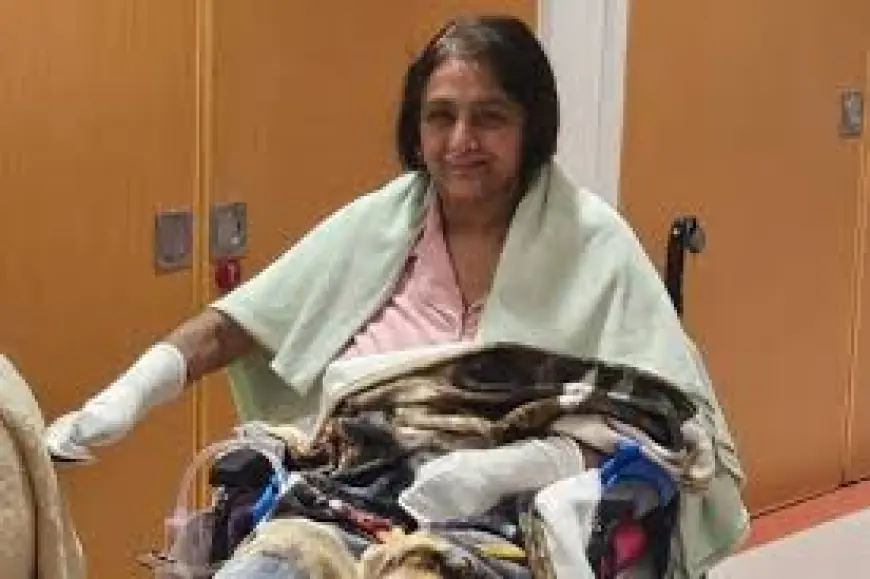
Here’s the part that matters: a single, ordinary moment with a pet has left a 56-year-old former pharmacy worker and her family rebuilding everything. The phrase sepsis dog lick appears in this account because doctors believe a dog’s lick on a small cut or scratch may have triggered a chain that ended in a quadruple amputation and a months-long hospital battle — and that immediate circle of caregivers, workplaces and close-knit communities feel the impact first.
Sepsis Dog Lick — immediate human impact and community response
Manjit Sangha returned home after 32 weeks in hospital, several cardiac arrests and the loss of both hands and both legs. Medics had thought she would almost certainly die; instead she left Ward 9 at Moseley Hall in Birmingham on a Wednesday and received a hero’s welcome from family in Penn on the Wolverhampton/Staffordshire border. Her husband, Kam Sangha, described the suddenness of the collapse and the shock felt at home and work — one weekend she was playing with the dog, the next week she was in a coma.
What unfolded: clinical events and the suspected trigger
Manjit had been working seven days a week before becoming unwell. She returned home on a Sunday afternoon in July last year feeling unwell; by the following morning she was unconscious, with hands and feet ice-cold, lips turned purple and severe difficulty breathing. Doctors believe her sepsis might have been caused by a lick from her dog on a small cut or scratch. Her heart stopped six times while she was in intensive care at New Cross Hospital in Wolverhampton.
Operations, complications and hospital care
Surgeons at Russells Hall Hospital in Dudley later amputated both legs below the knee and both hands after the condition spread. She also lost her spleen, battled pneumonia and developed gallstones that she was told might require further surgery. After intensive treatment and extended critical care, she was transferred to Moseley Hall, from which she eventually left Ward 9 to return home.
How sepsis presents and why the warning matters
Sepsis is described as a rare but serious medical condition in which the body’s immune system begins attacking its own tissues and organs. The NHS characterises it as life-threatening and hard to spot. A national sepsis charity estimates about 50, 000 sepsis-related deaths in the UK each year. In adults, symptoms can include slurred speech, extreme shivering or muscle pain, severe breathlessness and skin that is mottled or discoloured — signs that can appear rapidly.
- Returned home after 32 weeks in hospital and several cardiac arrests.
- Underwent quadruple amputation: both hands and both legs below the knee at Russells Hall Hospital in Dudley.
- Heart stopped six times in intensive care at New Cross Hospital in Wolverhampton.
- Also lost her spleen, fought pneumonia and developed gallstones that may need surgery.
- Sequence from feeling unwell to unconsciousness covered a single day in July last year.
It’s easy to overlook, but the speed of deterioration in this case is stark: one weekend playing with a dog, a day later at work, and within days in a coma. The family timeline — Saturday playing with the dog, Sunday at home feeling unwell, Monday night in a coma — underlines how quickly sepsis can escalate.
Recovery, warning and what comes next for the family
As she recovers and begins to rebuild her life, Manjit wants to warn others about the danger of sepsis, saying it could happen to anybody. Her husband Kam conveyed the family’s bewilderment at the rapid collapse: their reaction was disbelief that so much could change in less than 24 hours. Medics who treated her had expected she would almost certainly die, making her return home a moment of relief and challenge for the household and wider support network.
Key takeaways:
- Even minor skin breaks combined with routine pet contact are identified here as a possible trigger for severe infection.
- Rapid symptom progression — from feeling unwell to unconsciousness in roughly a day — emphasises urgency of early recognition.
- Critical care responses included multiple resuscitations, major surgery and prolonged hospitalisation totaling 32 weeks.
- The aftermath extends beyond medical treatment to prosthetic, social and surgical needs that may continue.
The real test now is how Manjit and her family adapt to long-term care and whether public awareness around fast-moving sepsis presentations increases. What’s easy to miss is how many layers of support — from immediate family to multiple hospital departments — are required to move from survival to daily life after such severe illness.
Warning: this account contains details some readers might find upsetting. Recent updates indicate Manjit has returned home; details about ongoing treatment and rehabilitation are unclear in the provided context.