





















Osasuna – Real Madrid: Late Winner Stuns Madrid as Osasuna Earns 2–1 Victory in Pamplona

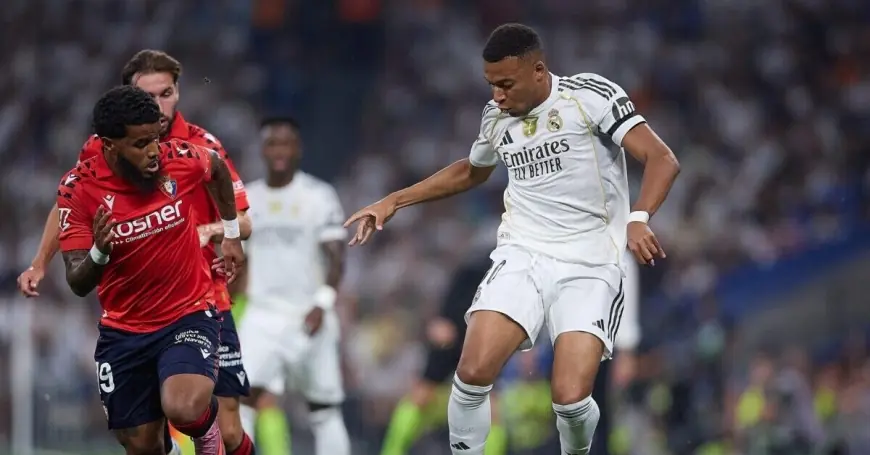
Real Madrid’s league momentum took a sharp hit Saturday, February 21, 2026, as Osasuna beat the leaders 2–1 at El Sadar in Pamplona in a match that flipped on a late twist. Osasuna went ahead through an Ante Budimir penalty before Vinícius Júnior equalized in the second half, only for Raúl García to strike in stoppage time and hand Madrid a costly defeat.
Kickoff was 12:30 PM ET, and by full time the result had turned what looked like a survivable away day into a reminder of how unforgiving the title race can be when points are dropped outside the traditional top-table clashes.
What happened in Osasuna vs Real Madrid today
Osasuna’s early plan was clear: defend compactly, contest second balls, and make Madrid’s progress into the box messy. The approach was rewarded in the first half when Budimir converted from the spot in the 38th minute, giving the home side a 1–0 lead and the stadium the kind of energy that can turn a close game into a psychological grind.
Madrid controlled more of the ball and generated more pressure, but their best passages still required patience and precision rather than the fast, open transitions they thrive on. The breakthrough finally arrived in the 73rd minute when Vinícius Júnior found the equalizer, seemingly rescuing a point and setting up a late push for a winner.
Instead, it was Osasuna who landed the final blow. Raúl García scored at the death, a gut-punch moment for Madrid and a statement finish for a team that refused to settle for a draw once it sensed the visitors’ late-game vulnerability.
Real Madrid hoy: why this loss is bigger than one bad night
This wasn’t just a slip; it was a stress test for Real Madrid’s current identity. When league leaders lose away, the post-match debate usually revolves around finishing or effort. The deeper issue here is rhythm and risk management.
Madrid’s best version overwhelms opponents with pace, width, and constant threat. But against a set, physical opponent, that same style can turn into sterile possession if the final pass is delayed by one touch or the last run arrives a half-second late. The equalizer showed Madrid can still unlock stubborn blocks. The late concession showed that controlling territory is not the same as controlling danger.
In the table context, Madrid remain first on 60 points after 24 matches, but the defeat keeps the gap tight with Barcelona close behind on 58. In practical terms, it turns the next run of fixtures into a pressure sequence rather than a comfortable runway.
Behind the headline: incentives, stakeholders, and what Osasuna exposed
Context matters. Osasuna’s season positioning means points against the top side can reshape their trajectory, not just their highlight reel. For a mid-table team, the incentive is straightforward: take maximum points at home, protect your defensive base, and capitalize on moments when elite teams rotate or lose focus.
For Real Madrid, incentives are more complicated. They’re balancing league control with European priorities, which often increases rotation and reduces continuity. That trade-off is rational, but it narrows margins. When the lineup changes, the chemistry that creates high-percentage chances can slip, and late-game defensive coordination can degrade just enough for an opponent to steal it.
Stakeholders feel this differently:
-
Madrid’s attackers are judged on whether dominance becomes goals, not just pressure.
-
Madrid’s defenders and midfield screen are judged on whether “one moment” is truly one moment, or a pattern of late-game exposure.
-
Osasuna’s coaching staff and leaders gain leverage and belief from a win like this, which can carry into tougher stretches.
-
The title race gains volatility, raising the cost of every upcoming draw.
Second-order effects are already visible. A late defeat changes next-week decision-making: heavier starters in league matches, more conservative in-game substitutions, and less willingness to chase a second goal if the first has not arrived cleanly.
What we still don’t know
Several key pieces remain unclear after the final whistle:
-
Whether Madrid’s late concession was a one-off breakdown or a warning sign about game management in tight away matches
-
How quickly Madrid can restore attacking fluidity against deep defensive shapes
-
Whether Osasuna can turn this into sustained form, or whether it stands as a peak performance
What happens next: realistic scenarios and triggers
-
Madrid respond with a controlled, low-drama win next match if they prioritize structure over spectacle and reduce transition risk.
-
Madrid drop more points soon if they keep needing late goals to escape compact defenses and the game stays emotionally frantic.
-
Osasuna climb toward the top half if this win becomes a confidence anchor, especially in home fixtures against similar-level opponents.
-
The title race tightens into a weekly swing if both Madrid and Barcelona continue trading narrow wins and sudden setbacks.
-
Tactical adjustments follow if Madrid shift to earlier shot creation and more direct entries to avoid long spells of harmless possession.
Osasuna earned the win; Madrid earned the warning. In February, this is how titles get complicated: not by the marquee matchups, but by the places where champions are expected to collect points and suddenly don’t.