























Nasa Boeing Starliner Test Declared ‘Type A’ Mishap After Thruster Failures Left Astronauts Stranded

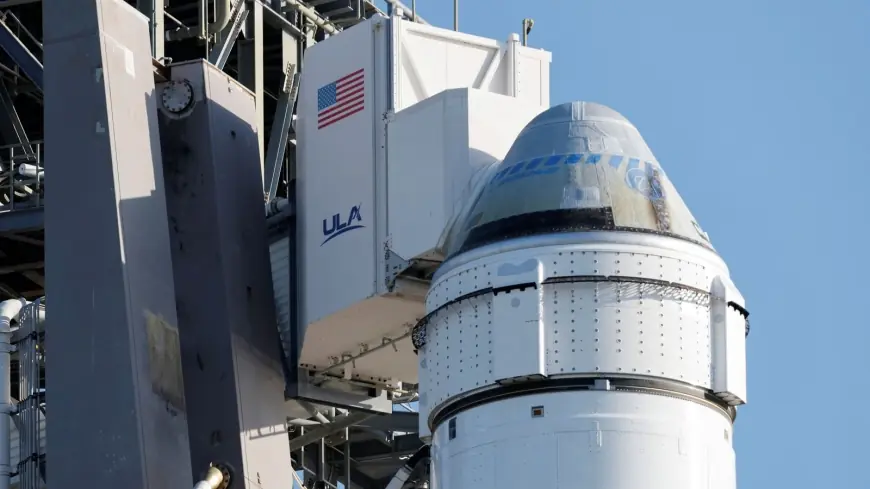
The Nasa Boeing Starliner crewed test has been formally designated a "Type A" mishap following an investigation that concluded hardware and leadership failures left two astronauts stranded in orbit for months. The agency's classification elevates the incident to its most serious level and sets in motion corrective measures intended to prevent a recurrence.
Development details — Nasa Boeing Starliner findings
The designation comes in a 312-page report that identifies the June 2024 crewed test flight as the first in which the capsule's thrusters failed and left the vehicle dangerously out of control. Pilots Suni Williams and Butch Wilmore were forced to restart the propulsion system and execute a manual docking with the International Space Station. What had been planned as an eight-to-14-day test instead stretched into an ordeal lasting roughly nine months before both astronauts returned to Earth on a separate vehicle in March 2025 and later retired.
The "Type A" grade — the agency's highest mishap classification — is reserved for incidents that cause more than $2 million in damage, the loss of a vehicle or its control, or fatalities. The report records hardware failures including repeated thruster problems, issues detected during re-entry, use of flammable tape on electrical systems and a malfunctioning parachute system. Investigators identified poor engineering, insufficient oversight at Boeing, leadership missteps and cultural breakdowns between the contractor and the agency as contributors that compounded the technical faults.
Agency leadership has accepted the investigation as the final report and announced corrective actions. The new agency administrator, Jared Isaacman, sharply criticized both Boeing and internal decision-making, saying the spacecraft had faced issues in prior missions yet was still accepted for a crewed test. Boeing has stated it has implemented cultural changes and made substantial progress on corrective actions for the technical challenges outlined in the report.
Context and escalation
The incident unfolded on what was intended to be a short-duration, crewed demonstration to the ISS. The thruster failures put the capsule out of control during the mission, prompting a manual recovery of propulsion and manual docking by the two astronauts. The scope of the investigation grew as reviewers traced faults not only to hardware but to systemic problems in how the program was managed and overseen.
The report frames the mishap alongside some of the agency's worst past accidents by assigning it the same classification used for historical shuttle disasters. The investigation team found that the combination of technical defects and leadership lapses transformed a relatively routine test into a protracted safety crisis that required external rescue logistics and extended on-orbit habitation by the crew.
Immediate impact
The most direct consequence was the prolonged orbital stay of Suni Williams and Butch Wilmore, whose planned days aboard the station expanded to months while the agency assessed the spacecraft's safety. The capsule itself was returned to Earth without those two crew members aboard. The report's findings have prompted formal acknowledgement of leadership accountability and a pledge to correct identified weaknesses across both contractor and agency teams.
Officials have stressed the near-miss nature of the failure: had propulsion not been restored or docking failed, the outcome could have been far worse. One senior official described the event as among the agency's most challenging in recent history. The agency's acceptance of the final report initiates mandated corrective steps meant to address engineering, oversight and cultural shortcomings.
Forward outlook
The investigation sets several concrete milestones: implementation of corrective actions identified in the 312-page report, formal accountability measures within program leadership, and further technical remediation by the spacecraft manufacturer. The agency has declared the report final and will move forward with the prescribed fixes rather than conducting additional inquiry phases.
The timing matters because the designation forces expedited attention to both technical reliability and program governance at a moment when crewed missions are under heightened scrutiny. What makes this notable is the coupling of specific engineering failings with systemic management breakdowns, which together converted a tested element into a life-threatening event and prompted the agency to invoke its most severe mishap classification.
Confirmed next steps focus on implementing the report's corrective actions and ensuring leadership accountability so that the specific failures identified—thrusters, parachute systems, electrical protections—and the broader oversight deficiencies are addressed before similar missions proceed.