

























Administration’s Family Policy Shift Centers on Trump Account For Kids, Not Direct Baby Bonuses

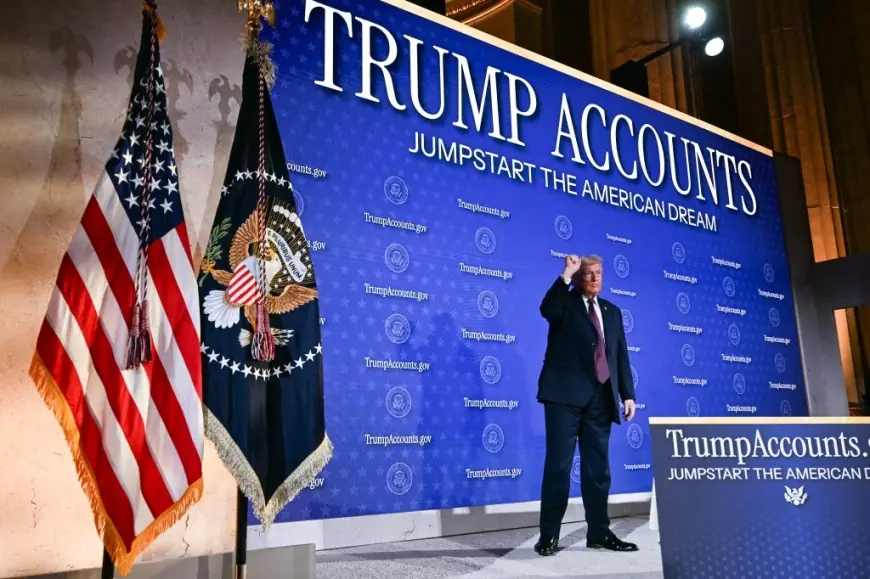
The administration has moved to deliver a program framed around savings or account-style benefits rather than the direct cash baby bonuses many family advocates hoped for, a development that has reshaped the policy debate over child support incentives. The change in emphasis — from upfront cash payments to account-based provisions — matters now because advocates’ window for broader reform narrowed as the new administration and the One Big Beautiful Bill Act took shape.
Trump Account For Kids — Development details
The policy conversation advanced publicly through a sequence of high-profile remarks and legislative action. In a speech on March 4, 2023, the president pledged support for "baby bonuses for a new baby boom, " a promise revisited in April 2025 when he said a $5, 000 baby bonus "sounds like a good idea to me. " Separately, a senior administration figure used a national appearance on January 24, 2025 to make family growth a clear public priority, urging government action to "make it easier for young moms and dads to afford to have kids. "
Those public commitments intersected with the legislative vehicle known as the One Big Beautiful Bill Act, described in available accounts as a tax-and-spending law the administration pushed through Congress. The final law contained elements that touched on the president's campaign language, but not the straightforward, recurring cash payments advocates labeled as baby bonuses. The resulting framework emphasized account-style provisions instead of the direct payments some had expected.
The phrase trump account for kids has entered the discussion as shorthand for that account-focused approach. Proponents and critics alike now debate how account-style benefits compare with outright cash incentives in terms of ease of access, long-term support and political durability.
Context and pressure points
Family policy proponents had seized on the early months of the administration as an opening to push a broad pro-natalist agenda. The effort built on long-standing Republican interest in expanding supports for families and on critique that recent tax changes had not kept pace with inflation for child-related benefits. The child tax credit, raised by earlier tax law changes to $2, 000 per child, suffered real-value erosion over time; observers noted that more than $2, 600 in later dollars would be needed to match the buying power of $2, 000 in the earlier reference year.
Advocates saw the One Big Beautiful Bill Act as the principal chance to enshrine larger family supports, but that opportunity produced only partial wins. A senior policy scholar studying family policy characterized the political environment this way: "It was going to be swimming upstream for this administration to be as pro-family as I would have wanted it to be. " That assessment captures the tension between public promises and the legislative compromises that followed.
Immediate impact and forward outlook
The immediate effect is a reorientation of expectations among families, advocates and lawmakers. Those who had pushed for recurring baby bonuses will find relief in limited provisions but not the broad, direct cash payments they advocated. The shift to account-style benefits changes the balance of near-term support versus long-term saving incentives, influencing how households experience any new aid.
What makes this notable is the way campaign rhetoric translated into a different policy vehicle: public pledges of immediate cash were reframed into account-based measures within a larger tax-and-spending bill. The timing matters because early administration commitments had created momentum for more ambitious measures, and the legislative outcome demonstrates how that momentum was constrained by broader fiscal and political calculations.
Available accounts do not specify additional, confirmed implementation milestones beyond the passage of the One Big Beautiful Bill Act and the public remarks that shaped expectations. The matter remains under review within policy and advocacy circles as stakeholders assess the enacted provisions' reach and how they compare with the promises that framed the debate. In the months ahead, attention will focus on administrative rules and any follow-up legislative steps that are formally announced, which will determine whether the account-oriented approach expands or is revised in response to public and political feedback.