




















Canada Hockey: MacKinnon's Late Winner Sends Canada to Olympic Gold Medal Game

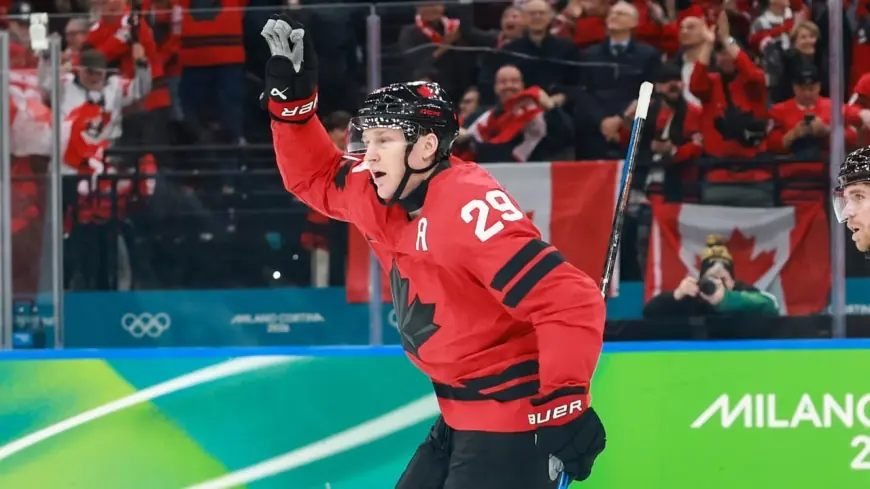
Nathan MacKinnon scored with 36 seconds remaining to give Canada a 3-2 semifinal victory over Finland, advancing the national squad to the Olympic gold medal game. The goal, and the path that produced it, matters now because it crystallizes months of power-play work and has immediate impact at home in Cole Harbour and across the country.
Development details: Canada Hockey semifinal clinched by MacKinnon
MacKinnon one-timed a pass from Connor McDavid past Juuse Saros to break a 2-2 tie late in the semifinal, sealing a comeback win. Sam Reinhart had earlier cut Finland's lead to 2-1 in the second period, and Canada completed the rally to reach the gold medal game scheduled for Sunday at 8: 10 a. m. ET. Sidney Crosby was ruled out of the Finland game with a lower-body injury suffered in the quarterfinal overtime victory over Czechia, but he has not been ruled out for the gold medal match. In Crosby's absence, McDavid wore the captain's C and recorded his 12th and 13th points of the tournament, becoming the highest-scoring NHL player in Olympic history.
Context and pressure points
The winning play was the product of deliberate preparation. Players involved in the power play had been working together since the 4 Nations Face-Off, and the finished product reflected conversations and repetitions that stretched across months. The move that produced the goal began with a hard, low-zone effort that kept the puck alive, a sequence of wall battles and a seam pass that McDavid delivered into MacKinnon's slot. Coaches and players had sought to turn that power-play chemistry into a decisive advantage on hockey's biggest stage.
At the same time, the team carried the pressure of key injuries. Crosby's absence altered personnel and minutes: a younger player stepped into the power-play unit and played a significant role in the semifinal, while veterans logged heavy shifts to compensate.
Immediate impact
The goal sent an immediate jolt through MacKinnon's hometown of Cole Harbour. Local banners honor both MacKinnon and Crosby, and community reaction ranged from packed viewing gatherings to stories of neighborhoods erupting in celebration. Longtime local coaches and fans framed the moment as a continuation of the town's Olympic lore, drawing a throughline from an earlier golden Olympic moment to the current run to the final.
On the ice, the win preserves Canada's path to a gold medal opportunity and reinforces the influence of its top-line stars and the depth pieces who absorbed extra responsibility in the quarterfinal and semifinal. The power play unit that was refined over the last year delivered in the game's defining moment.
Forward outlook
Canada will play for the Olympic gold medal on Sunday at 8: 10 a. m. ET. The roster heads into the final with confirmed timelines tied to player availability: Crosby remains a possible participant for the gold-medal game, though his status will be determined before puck drop. The semifinal result sets clear, verifiable milestones in the immediate schedule—the gold-medal game is the next event, and player medical updates and lineup decisions will be issued ahead of that game.
What makes this notable is that the decisive goal was not a one-off flash of individual brilliance but the conclusion of sustained, collective preparation on special teams and in-game execution. The timing matters because the tournament now pivots on a single game that will test whether that preparation and the roster's depth can convert a semifinal surge into Olympic gold.