























Olympic Hockey: MacKinnon's late one-timer sends Canada to gold-medal game

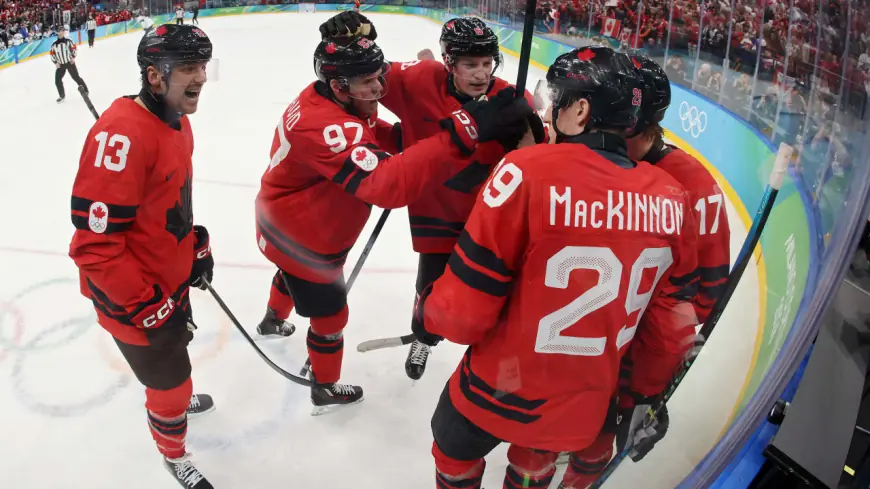
Nathan MacKinnon's power-play one-timer in the closing seconds lifted Team Canada past Finland and into the Olympic final, a finish that crystallized the value of a high-end special teams unit in olympic hockey. The goal, delivered in the waning moments of the semifinal in Milan, resolved a dramatic, momentum-heavy contest and put Canada into the gold-medal game on Sunday.
Olympic Hockey: Development details
The decisive sequence began with coach Jon Cooper deploying a star-laden power-play unit with 2: 35 remaining in the third period. On that advantage, MacKinnon scored what became the game-winner with two seconds remaining on the power play, a one-timer from the left face-off circle struck with 36 seconds left in regulation, producing a 3-2 victory at Santagiulia Arena.
The power-play grouping included Nathan MacKinnon, Connor McDavid, Macklin Celebrini, Sam Reinhart and Cale Makar. The unit generated a flurry of chances: Reinhart tested the Finland goalie early in the man-advantage, Makar and McDavid each threatened with point and circle one-timers, and Celebrini picked off a pass for another scoring opportunity. MacKinnon described the sequence as a collective effort, calling it “a five-man effort, ” and teammate Sam Bennett captured the group’s depth when he said, “It’s incredible. There are so many threats on that power play. ”
Context and pressure points
Canada had already rallied earlier in the game, mounting a comeback that set the stage for the tense final minutes. The power play was born of sustained offensive pressure and a strategic choice by the coaching staff to deploy top scorers together when the clock tightened. Cooper credited MacKinnon's work in the corner immediately before the goal, saying the score was a reward for that effort.
The sequence also featured a crucial turnover-altering touch from Finland forward Teuvo Teravainen, who just clipped a pass intended for MacKinnon and sent the puck into the corner rather than allowing an interception and a potential kill. Finland goalie Juuse Saros made several key saves during the power play, including turning aside an early Reinhart chance, helping to extend the moment of high anxiety that followed the burst of elite play.
Immediate impact
The net effect was clear and immediate: Canada advanced to the gold-medal game on Sunday, while Finland's bid for the final was ended by the late power-play strike. The closing phase of play was described in the match narrative as nearly two minutes of elite-level hockey followed by two minutes and ten seconds of intense anxiety, underscoring how fine the margins were between triumph and elimination in olympic hockey.
Beyond the scoreboard, the performance highlighted how assembling top talent in critical moments can translate into decisive outcomes. What makes this notable is the interplay between individual star power and coordinated team execution; the goal was the culmination of sustained puck movement, contested wall battles and rapid-fire attempts that forced the opposition into reactive coverage.
Forward outlook
With the semifinal settled, Canada will play in the gold-medal game on Sunday. The immediate confirmed milestone is that final matchup; both teams' short-term schedules now revolve around preparation for that game and recovery from the semifinal’s physical and emotional toll. The semifinal performance leaves a clear signal for opponents: Canada’s power play, when deployed with its top personnel, is a game-deciding weapon that will demand focused attention in the final.
The timing matters because the choice to concentrate elite playmakers in a single special-teams unit paid off in the highest-pressure moment available. For Canada, the next confirmed development is the gold-medal game itself, where the team’s ability to replicate the cohesion and finishing shown late in Milan will determine whether the semifinal’s reward becomes Olympic gold.