





















Hilary Knight Sparks Rally, Megan Keller's OT Finish Lifts U.S. Past Canada for Olympic Gold

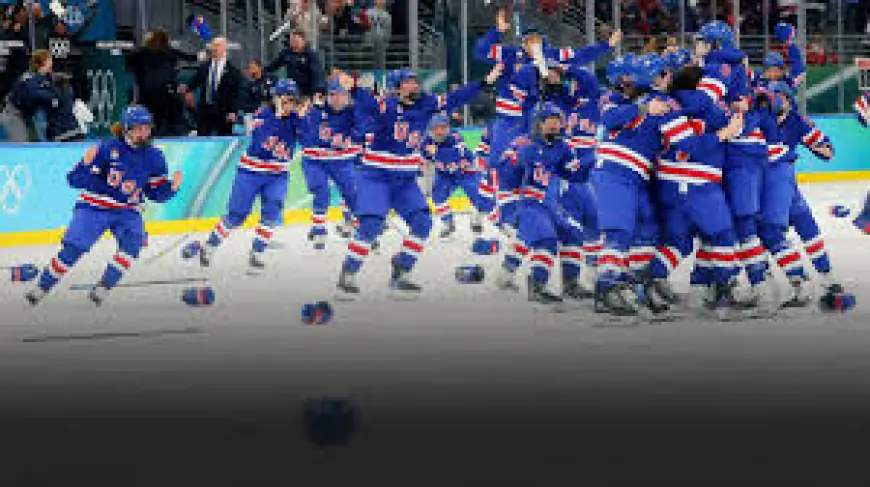
hilary knight delivered the pivotal moment that reignited the U. S. women's hockey team late in the gold-medal match at the 2026 Winter Olympics, setting the stage for Megan Keller's overtime finish that clinched a 2-1 comeback victory over Canada. The sequence of plays and the emotional lift that followed have already become a touchstone for youth players and coaches reacting to the triumph.
Hilary Knight's late equalizer changed the game's momentum
The American captain stepped up when her team was trailing by a goal and time was running out. After the coach pulled the goalie and the U. S. won a third-period faceoff in the attacking zone, a point shot from defender Laila Edwards found its way to the front of the net, where hilary knight redirected the puck past the Canadian goaltender to tie the game with just over two minutes remaining in regulation.
That tying goal was a landmark for Knight: it was her 15th Olympic goal and broke the U. S. Olympic scoring mark previously shared by two former American players. Knight has indicated these Games will be her final Olympics, and her late intervention changed the arc of the championship game, providing a surge of confidence the Americans carried into overtime.
Megan Keller's overtime play sealed a dramatic comeback
The contest remained tightly contested through regulation, with Canada applying sustained pressure and playing intensely. In the four-minute mark of overtime, the decisive sequence began when Taylor Heise sent a long pass up ice to Megan Keller. Keller executed a high-skill maneuver to evade a Canadian defender, creating space on a breakaway and finishing 1-on-1 by tucking the puck through the goaltender's legs to secure the gold-medal-clinching score.
The overtime winner combined audacity and precision: a daring individual move that converted momentum into the final result. The pairing of Knight’s late equalizer and Keller’s overtime completion defined a two-person rally that will be remembered in this rivalry.
Youth hockey team looks to Team USA for inspiration
Back home, a youth hockey coach and his team watched and reacted to the gold-medal win on live television, using the comeback as motivation. Their live reaction drew attention as a snapshot of how elite international moments filter down to the grassroots level. Coaches and young players are already pointing to the late sequence — Knight's determination to get to the front of the net and Keller's willingness to take a risk in overtime — as lessons in resilience and clutch play.
The immediate aftermath has produced two clear takeaways for developing players: the value of leadership when games tighten, and the payoff of aggressive, decisive play in critical moments. For a youth team seeking examples to emulate, the U. S. women's path to gold provides a compact syllabus in both.
What this means going forward
The gold-medal game underscored the importance of leadership and opportunism in high-stakes hockey. hilary knight’s choice to position herself in front of the net on a late point shot demonstrates situational awareness and poise under pressure. Megan Keller’s overtime finish highlights the potential impact of bold, creative play in sudden-death scenarios.
Teams at every level will study the sequence: how a tied locker-room response, quick decision-making on special situations, and willingness to take chances in overtime combined to reverse a deficit and claim the sport’s top prize. For coaches, the match offers concrete drills in puck retrieval, net-front positioning, and 3-on-3 transition offense that can be adapted for younger players while preserving the core lesson—momentum can pivot on a single inspired act.
The story remains framed by the late-game heroics and the way those moments resonated beyond the Olympic stage, inspiring a new generation of players and fueling conversation about leadership, legacy, and the mechanics of comeback victories. Recent updates indicate these reactions are still unfolding and that the impact on grassroots programs may continue to grow.