

























Flights To Denver Delayed as High Winds Trigger Ground Hold, More Than 1,100 Flights Impacted

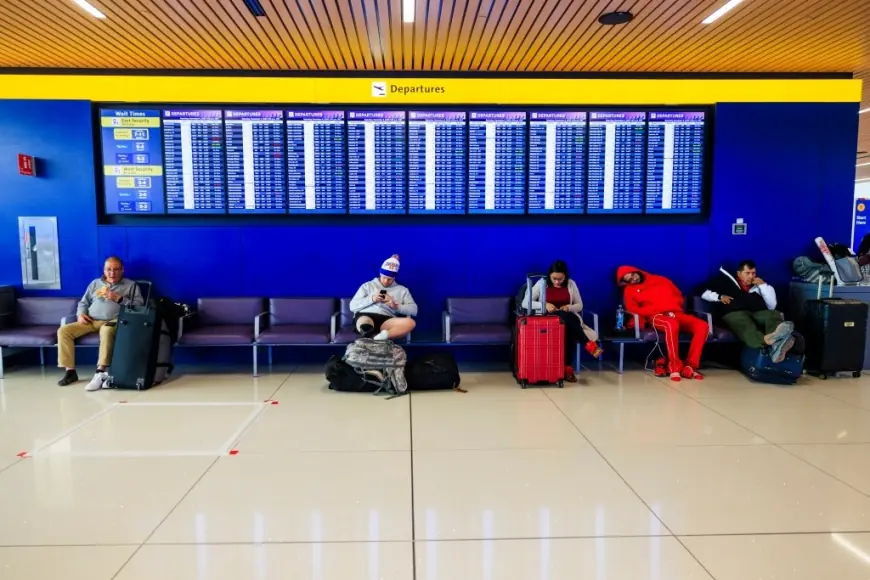
High winds at Denver International Airport prompted a wind-based ground delay that disrupted flights across the hub, leaving flights to denver delayed or canceled and forcing carriers to adjust schedules and customer policies. The disruption produced multi-hour delays and prompted at least one international carrier to issue travel warnings and flexible rebooking guidance.
Flights To Denver: Development details
The Federal Aviation Administration issued a wind-based ground delay at Denver International Airport early Tuesday, citing average arrival delays of roughly two hours. Tracking data through the day showed evolving totals: mid-afternoon figures indicated about 1, 000 delayed flights and 84 cancellations, while totals by the end of the day rose to 1, 120 delayed flights and 96 cancellations. The ground-delay notices included multiple bulletins that noted average delays of roughly two hours per arriving flight.
Airline-level effects were concentrated at several major carriers. Delays in the aggregate included more than 400 United Airlines flights, more than 300 Southwest flights, roughly 240 SkyWest flights and smaller tallies at Frontier, Delta, American and Key Lime Air. Cancellation tallies were concentrated at regional and low-cost operators, with SkyWest canceling dozens and other carriers carrying smaller cancellation counts. One international carrier issued travel warnings for affected U. S. hubs and announced flexible rebooking options for customers booked to impacted airports.
Context and pressure points
Strong winds across the region were the proximate cause cited in federal traffic-management notices, and a separate emergency weather advisory characterized the area as facing elevated wildfire and wind risk. The weather advisory was listed as remaining in effect into the evening. What makes this notable is that the same operational constraints that cause multi-hour arrival holds also ripple through airline networks, producing delayed departures, aircraft positioning problems and concentrated cancellations for carriers that rely on tight aircraft and crew connections at the hub.
The ground delay was issued as an explicit traffic management program aimed at controlling inbound traffic while conditions limited safe arrivals and departures. That program prompted successive operational statements that adjusted expectations for when normal operations could resume; one bulletin listed an expected end to the program later in the evening, while another notice noted the program had expired by 8 p. m. ET. Mid-day estimates for average delay length were put at roughly two hours, with other notices listing longer-average figures in the mid-afternoon window.
Immediate impact
Passengers on flights to denver faced long waits, rebookings and, for many, canceled segments. The cumulative effect hit travelers on both incoming and outgoing itineraries and placed pressure on airline customer-service operations and airport resources. Airlines revised customer options: some carriers adjusted schedules and canceled dozens of flights, and at least one carrier formally broadened its ticketing and rebooking policy to allow travelers bound for affected hubs to change flights without penalty for the day in question.
Airline rosters of delayed and canceled flights displayed concentration: several hundred delays at the largest carriers and dozens of cancellations at regional operators, magnifying challenges for passengers with tight connections or onward travel plans. Airport managers and airlines were left to manage gate and crew logistics as arrivals were held and departures slid later into the evening.
Forward outlook
Federal traffic-management notices and weather advisories set the next operational milestones for the airport. Bulletins issued during the day set expectations for the program’s expiration in the evening and listed average-delay figures that carriers will use to prioritize reassignments and crew rostering. The international carrier that issued travel warnings also announced flexible rebooking coverage for the affected hubs for the day highlighted in its travel guidance.
Confirmed follow-ups include continued monitoring of federal traffic-management notices and the standing weather advisory through the evening. Airlines and the airport have scheduled adjustments to recover operations once the ground-hold program is lifted. The broader implication is that a concentrated weather-triggered traffic-management action at a single hub can generate widespread network disruptions in a single day, and stakeholders will be tracking federal bulletins and carrier updates closely as the airport proceeds through the evening recovery period.