
























Scotusblog: Democrats Ask Supreme Court to Let Manhattan Ruling Stand and Force Redraw of Malliotakis' District

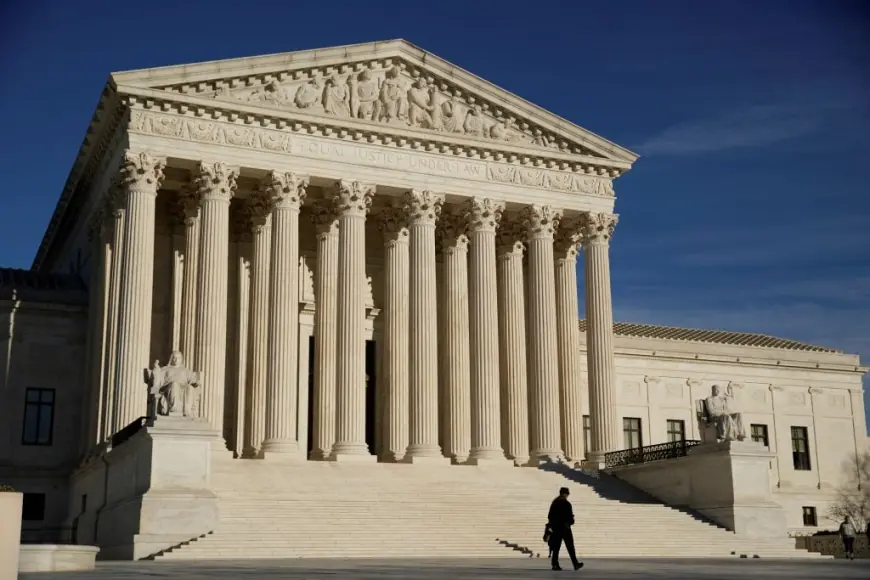
scotusblog: Democratic-aligned voters and state officials asked the Supreme Court to leave intact a Manhattan trial judge's order that would bar New York from using its existing congressional map in the 2026 elections and require a new plan, a development that could push a contested, racially charged redistricting fight toward the nation's highest court.
What happened and what’s new
Two separate groups of New York voters and elected officials urged the Supreme Court to decline intervention and allow a state trial judge’s ruling to remain in effect. In a ruling on Jan. 21, 2026, Justice Jeffrey Pearlman of the New York Supreme Court (a state trial court) concluded that the boundaries of New York’s 11th Congressional District diluted the votes of Black and Latino residents and barred the state from using the current map in upcoming elections.
Pearlman ordered the state’s independent redistricting commission to propose a new map by Feb. 6. The challenged district includes all of Staten Island and parts of southern Brooklyn, and the challengers contend the boundaries violated the state constitution by diluting the votes of Black and Latino voters—who make up roughly 30% of Staten Island’s population—and denying them an equal opportunity to elect their preferred representative.
Representative Nicole Malliotakis and several individual voters joined to defend the existing map and sought stays from state appeals courts. The New York Court of Appeals concluded it lacked authority to hear the case, and the state’s intermediate appellate court denied the request to put Pearlman’s ruling on hold on Feb. 19. The map’s defenders then asked the Supreme Court to step in and block the trial-court decision.
Malliotakis argued that the trial-court order conflicts with the Supreme Court’s Equal Protection Clause jurisprudence and would require the state to add Black and Latino voters from elsewhere until those voters controlled primaries and won general elections in the district. The Trump administration filed a friend-of-the-court brief characterizing the case as an unabashed racial gerrymander. The voters who challenged the old map countered that the dispute is outside the Supreme Court’s power to pause state-court proceedings because the only state judgments the Court can review on the merits are final rulings from a state’s highest court.
Scotusblog: Behind the headline
The immediate stake is whether the Jan. 21 trial-court decision will shape congressional maps used in the 2026 cycle. The core legal tension is procedural: whether the Supreme Court should intervene before New York’s state courts have issued a final decision on the federal questions raised by the map defenders. Strategically, each side is pressing a different route to resolution—the map’s challengers seeking state-court enforcement of state-constitutional protections for minority voters, and the map’s defenders pursuing rapid federal intervention that would preserve the existing boundaries.
Key actors include the trial judge who issued the order, the independent redistricting commission tasked with drawing a replacement by the ordered deadline, Representative Malliotakis and her co-plaintiffs defending the map, the groups of voters and officials challenging the map, and the federal actors who have filed briefs in support of one side’s position.
What we still don’t know
- Whether the Supreme Court will grant emergency relief or let the trial-court ruling stand.
- If the high court intervenes, whether any action will be limited to a procedural stay or will reach the merits of the federal constitutional claims.
- What alternative congressional map the state’s independent commission might propose by the ordered date, and whether it would withstand further challenge.
- How the pending filings will affect scheduling and ballot planning for the 2026 elections.
What happens next
- Supreme Court declines emergency relief: the state proceeds with the trial-court timeline and the independent commission must propose a new map by the court-ordered deadline, likely prompting further state-court review.
- Supreme Court grants a stay and pauses the trial-court order: the existing map would remain in place for now while federal review proceeds, changing election planning and campaign strategy.
- Supreme Court takes up the issue on the shadow docket and issues an expedited ruling on procedural grounds: the decision could clarify when the high court may step into state-court redistricting disputes.
- The independent commission submits a replacement map that becomes the focus of additional litigation, potentially restarting the appellate process in state courts.
Why it matters
The outcome will affect who appears on ballots and how voters in the 11th Congressional District are represented, with immediate implications for electoral logistics in the 2026 cycle. Beyond that, the dispute raises procedural questions about the Supreme Court’s role in state-court redistricting disputes and could determine whether federal review occurs before a state’s highest court has issued a final judgment. The case also puts in relief competing legal strategies over race, representation and election timing—issues that could influence future litigation and the conduct of redistricting bodies.
scotusblog