





















Princess Anne Mistook Joe Heyes for Joe Marler — Why the Mix-up Matters Beyond a Momentary Faux‑Pas

Here’s the part that matters: a short, public misidentification at Murrayfield underlined how a high-profile TV appearance can shift who players are recognised as — and how that recognition lands on teammates and matchday rituals. The exchange involved joe marler’s growing visibility from a reality TV appearance, the Princess Royal’s role meeting the England side, and Joe Heyes being left to navigate an awkward moment while preparing to play for his country.
How Joe Marler’s public profile reshaped a routine pre-match greeting
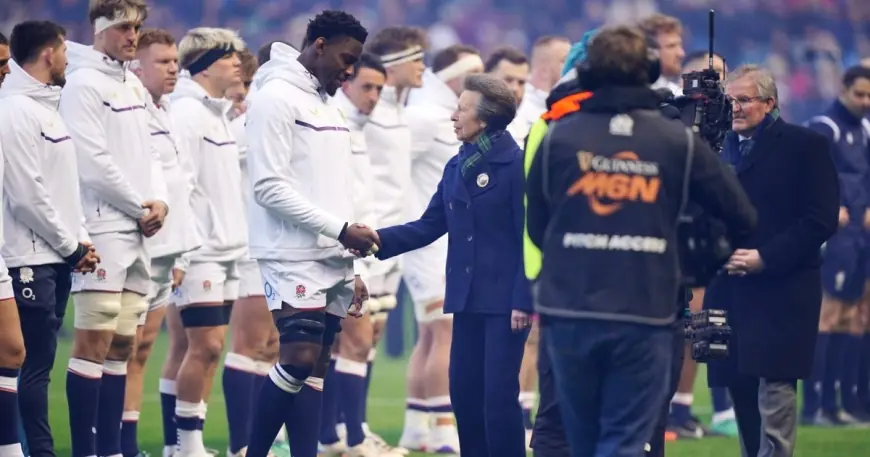
The impact was immediate for the on-the-pitch participant rather than the celebrity. Because joe marler had become a familiar face from a recent reality show, the Princess Royal assumed she was speaking with him during the customary introductions. That assumption redirected attention to Joe Heyes — a front-row player who found himself receiving credit meant for someone else. For Heyes, the incident was more than a funny anecdote: it briefly placed him in a cross-current of media visibility and royal protocol on one of rugby’s biggest stages.
It’s easy to overlook, but moments like this matter for squad dynamics and public perception. Meeting a patron is often framed as a special part of a player’s career; when recognition is misapplied it changes who benefits from that publicity in front of thousands of fans and wider audiences.
What happened at Murrayfield (the encounter, compressed)
Before the anthems, the Princess Royal stopped to speak with an England prop during the formal presentation. She believed she was talking with Joe Marler and complimented the player on his television appearance. The England tighthead, Joe Heyes, said he was taken aback, felt starstruck, and did not correct the mistake at the time — he admitted he almost went along with it. Heyes described the mix-up as upsetting but also called meeting the union’s patron a cool experience while he was winning his 19th cap for England.
Background context embedded in the moment: one player had recently become more visible off-field after reaching the final round of a celebrity reality game show, and had retired from the international game prior to this match. The royal patron involved has a long association with the union she represents, which is why she was performing that role at the stadium presentation.
- Heyes was surprised and chose not to correct the patron in the moment, prioritising decorum over clarification.
- joe marler’s TV profile has elevated his public recognition beyond the pitch, affecting how others identify England players at events.
- The encounter unfolded before a match where standard pre-game formalities put players and officials in close, visible proximity.
What’s easy to miss is that the exchange was handled to avoid an awkward diplomatic moment — not every player would react the same way when a high-profile figure misidentifies them.
Key takeaways:
- The visibility gained from mainstream entertainment can outlive a player’s on-field career and alter public recognition.
- Matchday rituals involving patrons and players are public stages where small errors are amplified.
- For younger or less-famous players, a royal greeting can be both a highlight and a delicate social moment.
- Confirmation that such mix-ups matter would come from similar public misidentifications or further remarks by those involved.
If you’re wondering why this keeps coming up: the story resonates because it combines celebrity culture, royal protocol and the very human awkwardness of being mistaken for someone else in public. The real question now is whether these kinds of moments change how teams prepare players for high-profile presentations — or whether they remain brief, amusing footnotes to a player’s day.
Overall, the incident at Murrayfield was brief and handled with restraint, but it highlights the overlapping worlds of sport, media and ceremonial roles that define modern matchdays.