






![Amber Glenn Withdraws From [Event] Citing Injury, Will Miss Upcoming Season — Update](https://www.filmogaz.com/uploads/images/202602/image_430x256_6994eca04b7cd.webp)


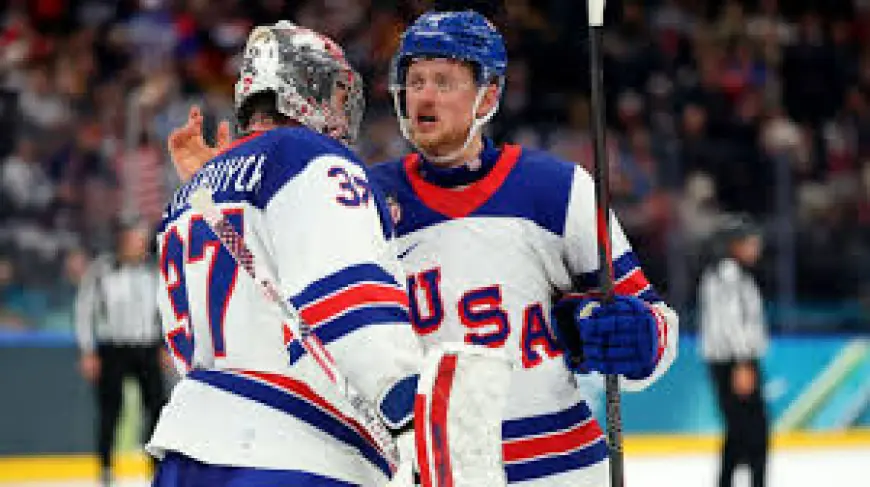
USA Hockey Olympics: U.S. Men Finalize Preliminary Plans as 2026 Games Near

With the 2026 Winter Olympics less than two years away, U. S. hockey officials have begun firming up plans for the men’s Olympic program — clarifying selection procedures, naming key staff and continuing to press for NHL player participation. The steps set the framework for a Team USA bid that will aim to reclaim Olympic gold amid lingering uncertainty about professional availability.
Selection timeline and roster approach
Officials have outlined a multi-stage selection timeline that begins with a broader pool of candidates drawn from NHL players, top American college standouts and professionals playing in European leagues. The plan calls for an initial 50–60-player long list compiled early in the upcoming NHL seasons, with a trimmed training camp roster to be announced in late 2025. The final Olympic roster is expected to be named in January or early February 2026, just ahead of the opening ceremony.
Sources within the program emphasize versatility: coaches will prioritize players with international experience, two-way forwards who can play special teams, and puck-moving defensemen. Forwards with size and speed who can pressure in the offensive zone and defenders capable of quick breakout passes figure to be at a premium. Goaltending decisions will hinge on both recent form and experience in high-pressure tournaments.
Coaching staff and strategic focus
The head coaching role remains a central piece of preparations. Team management has signaled interest in a leader with prior international tournament experience and a track record of integrating NHL talent with younger prospects. The staff will likely include an assistant coach specialized in special teams and another focused on defense transition — reflecting an emphasis on adaptability and disciplined structure in international ice rinks.
Strategically, the U. S. is planning to emphasize quick puck movement, aggressive forechecking and depth scoring. The coaching staff intends to leverage analytic scouting on opposing national teams, tailoring line combinations for matchups and relying on power-play units that can take advantage of an expected parity among top nations.
NHL participation and the uncertainty ahead
Perhaps the most consequential variable is NHL player availability. Talks between the NHL and Olympic organizers continue to evolve, and while both sides have conveyed interest in enabling NHL players to participate, no binding agreement was in place in the early planning stages. League schedules, insurance arrangements and collective bargaining considerations remain focal points in ongoing negotiations.
In parallel, the U. S. program is preparing contingency plans that would allow it to compete at a high level without full NHL participation. That approach would lean more heavily on U. S. college talent, American players flourishing in European pro leagues, and NHL veterans not under contract or otherwise available. The dual-path strategy is designed to keep momentum and public interest high regardless of the final decision on professional player release.
Officials have also reiterated outreach efforts to players' clubs and agents, aiming to build goodwill and clarify timelines. Messaging to prospective Olympians stresses the honor of wearing the national colors and the unique chance to compete on the global stage — an appeal meant to resonate even if logistical hurdles persist.
As the 2026 Winter Games approach, the U. S. hockey program’s public posture is one of cautious optimism: staff and administrators are putting structures in place now so that, once key decisions on NHL participation and final rosters are settled, Team USA can move quickly into intensive preparation with a clearly defined identity and mission.
Next milestones include the release of the long list of candidates, confirmation of the coaching staff, and any formal agreement on NHL player participation — all likely to shape headlines and fan expectations in the months ahead.