



















Rupert Lowe’s Restore Britain party tests Nigel Farage’s grip on the right

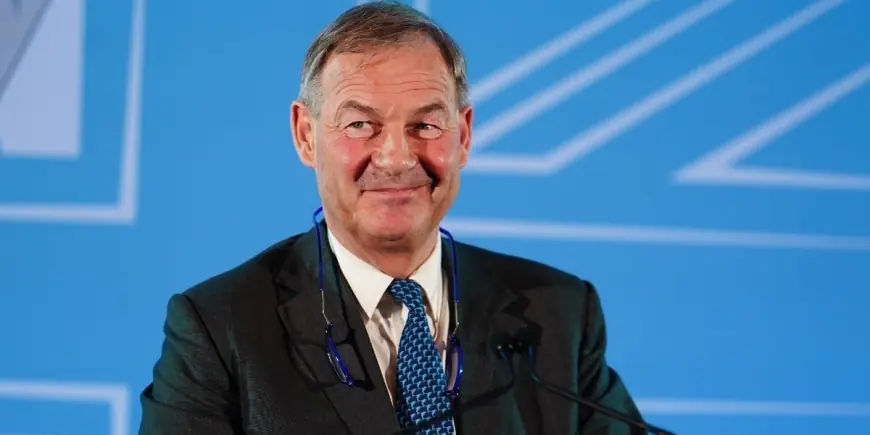
Rupert Lowe has formally turned “Restore Britain” from a political movement into a national party, opening a new front on the UK right just as Nigel Farage moves to professionalize his own operation with a newly announced frontbench-style team. The split matters because it could reshape candidate pipelines, donor interest, and the battle for anti-establishment voters ahead of the next general election.
Restore Britain party: what launched, and when
Restore Britain was unveiled as a political party on Friday, February 13, 2026 (ET), with Lowe—currently the MP for Great Yarmouth—positioning it as a tougher, more uncompromising alternative to his former party. Lowe has framed the project as a vehicle for large-scale candidate recruitment from outside Westminster, arguing that the existing political class is unable or unwilling to deliver on immigration enforcement and institutional reform.
Lowe previously sat under the Reform banner but has been operating as an independent MP since his break with the party. He has repeatedly rejected allegations connected to that split, and has presented Restore Britain as a “clean start” built around hardline border and cultural policies.
Rupert Lowe’s pitch and early claims
In early messaging, Restore Britain has emphasized:
-
stricter immigration controls and removals for people in the country unlawfully
-
an explicitly “patriotic” platform focused on national identity and institutional change
-
opposition to diversity and inclusion initiatives across the public sector
Supporters close to the launch have also circulated membership and support claims that are not publicly verifiable through official electoral reporting. Separately, a survey of 1,000 adults in Great Britain conducted on February 14, 2026 (ET) was promoted as evidence of early traction, though the broader durability of that support remains unclear at this time.
Nigel Farage’s response and Reform’s counter-move
Farage has moved in the opposite direction: presenting his party as ready for government rather than purely protest politics. On Tuesday, February 17, 2026 (ET), he unveiled a “shadow cabinet”-style lineup designed to show breadth beyond a leader-centric brand. The new team includes prominent figures drawn from across the right, with roles mapped to major policy portfolios.
In public remarks around the same moment, Farage dismissed Lowe’s new party as a serious threat and argued that discipline and organization—not fragmentation—are what converts polling into seats.
The contrast is stark: Restore Britain is arguing for purity and pressure; Reform is arguing for scale, professionalization, and a credible governing bench.
Where the two parties overlap—and where they differ
Both Lowe and Farage are competing for voters who want sharp reductions in immigration and a direct challenge to establishment politics. Their overlap is biggest on border control and cultural issues, and that is precisely why the rivalry is consequential: two parties fishing in the same pond can split votes even if their combined support is sizable.
Differences are emerging in emphasis and tone. Reform’s latest presentation is geared toward electoral credibility—named spokespeople, portfolio assignments, and a more conventional “government-in-waiting” posture. Restore Britain, by contrast, is leaning into outsider branding and maximalist messaging, portraying Reform as having softened or become absorbed into Westminster norms.
What to watch next
Key takeaways:
-
Candidate slates: If Restore Britain can field credible local candidates in large numbers, it becomes more than a social-media brand and starts affecting real contests.
-
Defections and endorsements: Any sitting councillors or MPs moving across—or even flirting with support—would be an early indicator of momentum.
-
By-elections and local elections: The first meaningful test is whether either party can translate attention into turnout and ground operations, not just headlines.
-
Policy scrutiny: As both platforms harden into manifestos, costings and legal feasibility will draw more attention—and could create openings for critics.
For now, the immediate political impact is less about Westminster arithmetic and more about narrative control: Farage is trying to demonstrate seriousness and unity, while Lowe is betting that a “clean break” to the right can attract activists, donors, and disillusioned voters. Whether that becomes a lasting realignment—or a short-lived schism—will depend on organization, candidates, and results at the ballot box.