
























Ramadan Mubarak 2026: Greetings, start date and what to expect

Following a national moon sighting, Saudi religious authorities have set the first day of Ramadan for Wednesday, February 18, 2026 ET. The announcement ushers in a month of fasting, spiritual reflection and community for nearly two billion Muslims around the globe, and prompts an annual exchange of well-wishes in dozens of languages and forms.
Moon sighting, calendar differences and the start date
Observers in Saudi Arabia reported a crescent sighting on Tuesday, February 17, 2026 ET, prompting officials to declare that the fast will begin at sundown on Wednesday, February 18, 2026 ET. The kingdom’s traditional practice of relying on direct visual sightings continues to determine the official start there, a system that some other countries follow.
Not every country will mark the first day on the same date. Astronomical calculations and local sighting practices mean some religious authorities expect Ramadan to begin a day later in parts of the Middle East and beyond. That divergence is familiar to many communities: while one country may gather for the first tarawih prayers and shared iftars on Wednesday evening, neighbors may wait until Thursday to make the same observances.
How people greet each other — words, signs and braille
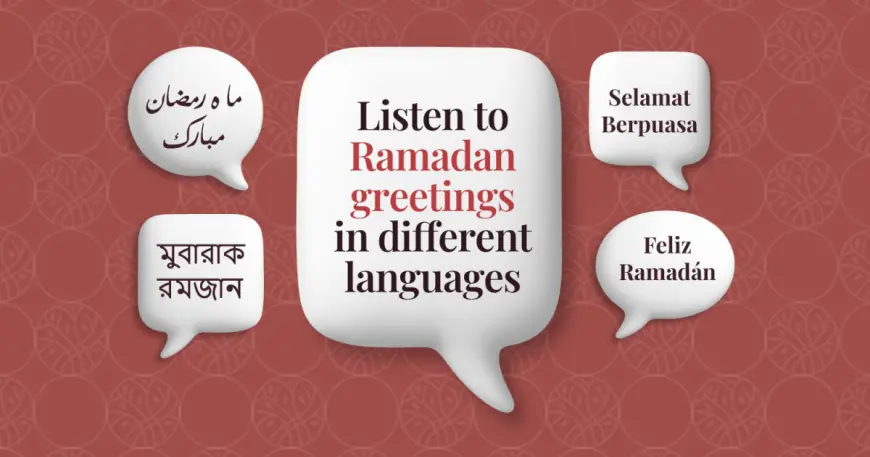
As the month begins, greetings travel quickly between families, friends and colleagues. Two of the most common phrases are "Ramadan Mubarak, " meaning "blessed Ramadan, " and "Ramadan Kareem, " often rendered as "generous Ramadan. " Both are used widely in spoken and written exchanges.
Languages and local traditions add variety. Communities often translate or adapt the sentiment into their native tongues and scripts, offering culturally familiar ways to wish others well. Sign language and tactile forms are part of that diversity: many sign-language users place one hand horizontally across the mouth to represent fasting, and braille versions of Ramadan cards and messages are available in some places to ensure inclusion.
Beyond greetings, people share images, cards and recipes to mark the start of the month. Mosques and community centers typically post schedules for suhoor (the pre-dawn meal) and iftar (the meal that breaks the fast), and many workplaces adjust hours to accommodate worship and family gatherings.
Practices, exemptions and key dates to watch
Fasting from dawn to sunset is one of the five pillars of Islam and is observed by healthy, adult Muslims. Exemptions are commonly granted to those who are ill, pregnant, nursing, traveling, elderly, or otherwise unable to fast; those who cannot make up missed days may offer charitable compensation in some traditions.
Daily life in Ramadan often centers on suhoor before dawn, daytime abstention from food and drink, and iftar at sunset. Many Muslims increase acts of worship, recitation of the Qur’an, and charitable giving during the month. The nightly taraweeh prayers, held after the evening prayer, are another hallmark of communal observance.
The month culminates in Eid al-Fitr, a festival of threefold significance: communal prayer, celebration and charity. Based on the lunar cycle, Eid is expected to begin on the night of Wednesday, March 18, 2026 ET, though the exact day will again depend on moon sightings and local rulings.
Whatever the precise calendar for each community, the opening of Ramadan prompts an outpouring of goodwill, with people exchanging greetings in local tongues, sign languages and tactile formats to ensure the message of blessing and togetherness reaches as many as possible.