























Europe Today Defies Trump’s Team’s Description

In Munich, a vibrant Afghan grocery store stands near the main train station. Halal food counters blend seamlessly with the city’s historic cathedrals and beer halls. Interestingly, nearly one-third of the city’s population is non-German. This diversity reflects the current landscape of many European cities, contrasting sharply with the Trump administration’s vision for Europe.
Rising Tensions at the Munich Security Conference
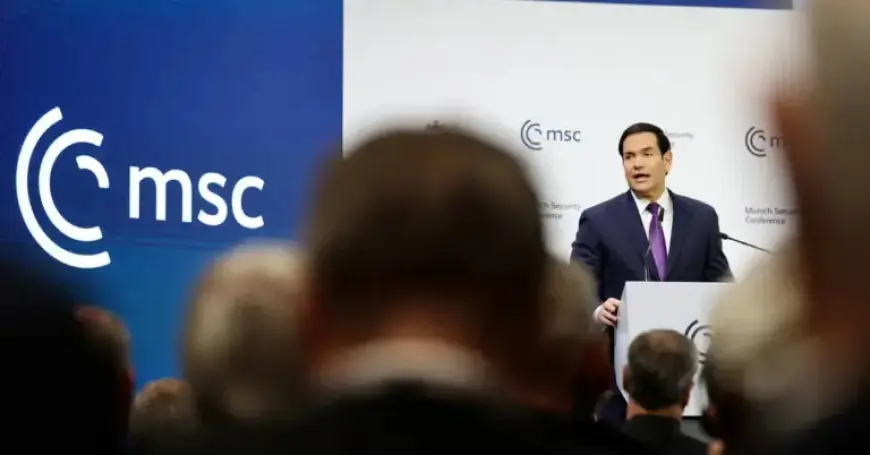
The Munich Security Conference recently hosted U.S. Secretary of State Marco Rubio. His speech aimed to mend ties with trans-Atlantic allies. He reiterated America’s commitment to Europe, but his remarks seemed to exclude significant portions of its current population.
Rubio proclaimed, “We are part of one civilization: Western civilization,” emphasizing deep historical and cultural ties. However, these assertions did not resonate with many European leaders.
Demographic Changes Challenge Historical Narratives
Europe’s modern demographic landscape is shifting. Increasing secularization and migration patterns have transformed the continent. Today, approximately half of the European Union speaks English as a second language, with the percentage rising to 70% among younger individuals.
- Christianity is in decline, with less than half of residents identifying as Christians in Britain, France, and Germany.
- About 6% of Europe’s population identified as Muslims in 2020, marking a rise due to recent migrations.
- The Jewish population remains below 1%.
In response to Rubio’s assertion that immigration poses a crisis, many leaders argued that migration is a strength. Germany’s Minister for Economic Cooperation and Development, Reem Alabali Radovan, commented, “People contribute to our society and economy regardless of their background.”
Contrasting Perspectives on Migration
German Chancellor Friedrich Merz has taken a harder stance towards immigration but remains cautious of extreme measures like mass deportations. During the security conference, he remarked that “the culture war of the MAGA movement is not ours.”
In a private meeting, Alabali Radovan shared her concerns over global solidarity. She emphasized the need for cooperation to address challenges such as climate change, poverty, and rising authoritarianism.
Cultural Connections Amidst Tension
The conference wrapped up with a lively evening at Munich’s Hofbräuhaus. Attendees included a diverse mix of Europeans and Americans, alongside protesters advocating for freedom in Iran. The atmosphere was energetic, filled with music and spirited conversations.
As Europe faces ongoing debates about immigration and cultural identity, the essence of solidarity and cooperation remains more important than ever. The continent’s future hinges on its ability to embrace diversity while addressing mutual challenges.