























Restaurants Near Me Is the New Comfort Search: Why Local Dining Is Boiling Over in 2026, and How to Spot the Best Places Tonight

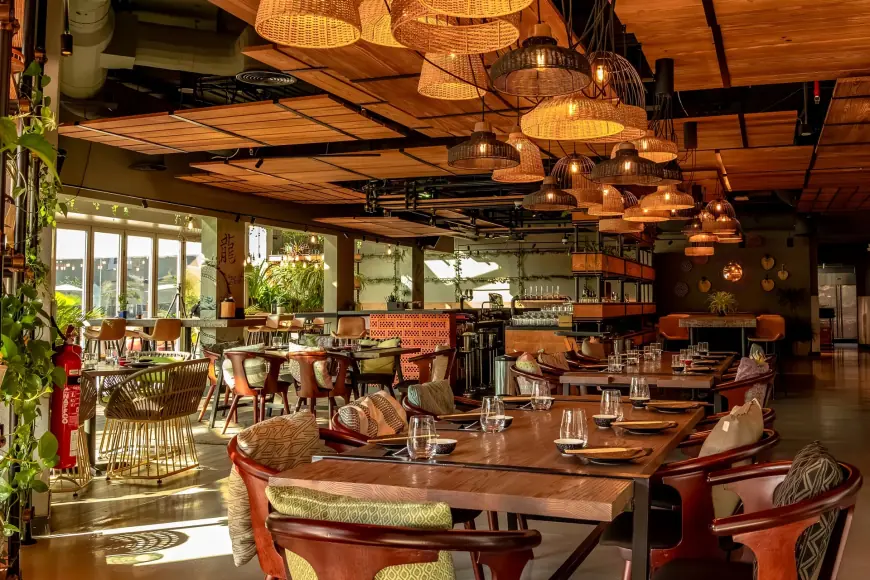
“Restaurants near me” has become one of the most telling everyday searches in America in early 2026. It’s not just hunger. It’s a quick pulse-check on what’s open, what’s busy, what’s worth the drive, and what fits the mood right now. On Saturday, February 14, 2026 ET, that search spikes for a predictable reason: Valentine’s Day. But the larger story is that people are relying on hyper-local discovery more than ever, and restaurants are changing how they compete because of it.
In practical terms, “near me” has turned local dining into a real-time marketplace. Menus, wait times, photos, neighborhood reputation, and last-week’s buzz can outweigh a long-standing legacy. The winner is often the place that looks reliable at 6:15 p.m. ET, not the place that was legendary five years ago.
What’s happening: the “near me” race is reshaping how restaurants win
Restaurants aren’t only competing on food anymore. They’re competing on certainty.
A customer searching “restaurants near me” is often trying to solve multiple problems at once:
-
Can I get in without a two-hour wait?
-
Is it good for a date, a family, or a solo meal?
-
Will the vibe match the occasion?
-
Is the food consistently solid, not just hyped?
Because those questions are immediate, restaurants that communicate clearly tend to climb. Clear hours, accurate menus, simple booking options, and consistent presentation now function like part of the product. If a place looks confusing or unreliable online, many diners never take the next step, even if the food is great.
Behind the headline: why diners search differently now
This shift has a few drivers, and each one changes restaurant behavior.
Context: diners are more planful about budgets and time than they were pre-2020. A meal out is still a treat, but it’s also a decision that competes with delivery, cooking at home, and entertainment spending.
Incentives: restaurants want predictable nights and fewer no-shows. Diners want fewer disappointments. That pushes both sides toward systems that reduce uncertainty: reservations, waitlist tools, fixed menus on high-demand nights, and faster table turns.
Stakeholders: it’s not just owners and customers. Servers, hosts, delivery drivers, and neighborhood businesses all feel the ripple effects. A packed dining corridor means more foot traffic, more parking pressure, and more competition for staff.
Second-order effects: as “near me” discovery rises, smaller neighborhoods can develop micro food scenes quickly. That can lift a local economy, but it can also raise rents, intensify competition, and make it harder for long-running independent spots to survive without modern marketing.
What you still don’t know from a “near me” search
Even the best listing can hide the details that actually determine a good night out. Three common blind spots:
-
Kitchen pacing: a restaurant can be popular and still struggle on peak nights.
-
Noise level: what feels lively to one person feels unbearable to another.
-
Consistency: one great photo doesn’t guarantee the same experience on a Saturday.
That’s why the smartest diners don’t just pick the top result. They cross-check a few signals that reveal how a restaurant performs under pressure.
How to pick the right restaurant near you tonight, fast
If you need a decision within five minutes, use a simple filter:
-
Match the moment
Date night usually means lighting, spacing, and pacing matter as much as flavor. For groups, menu breadth and shareable plates matter more. -
Look for recent patterns
The most useful feedback is specific: service timing, cleanliness, and what people ordered. Vague praise is less predictive than details. -
Use the menu as a truth test
A focused menu often signals a kitchen that knows what it can execute well, especially on a busy night. A huge menu can work, but it raises the odds of unevenness. -
Call once if it’s a peak night
A 30-second call can tell you more than scrolling. Ask one question: what’s the current wait for two, and is the kitchen still taking full orders right now? -
Build a backup plan
On February 14, 2026 ET, the best move is having a second option within ten minutes of the first. The fastest way to salvage the night is not needing to start over from scratch.
What happens next: realistic scenarios restaurants are preparing for
Expect restaurants to keep leaning into three strategies through 2026:
-
More defined experiences on high-demand nights, such as prix fixe menus or limited seatings that protect service quality.
-
More emphasis on small-format convenience, including walk-up windows and quick-service spinoffs that capture “near me” demand without stressing dining rooms.
-
More neighborhood-specific positioning, where restaurants sell themselves as the best choice for a specific mood, not the best at everything.
The trigger for each shift is the same: diners are voting with their thumbs first and their wallets second.
Why it matters
“Restaurants near me” is not just a search phrase. It’s a sign that local dining has become a live marketplace where trust and clarity are as valuable as cuisine. The restaurants that win in 2026 will be the ones that deliver a strong experience and make it easy for someone nearby to feel confident choosing them tonight.
If you tell me your city or neighborhood and what you’re craving, I can turn this into a local, publish-ready piece that names the top options and the trends shaping your area.