





















NBA 3-Point Contest 2026: Damian Lillard Chases a Third Title as a Loaded Field Turns All-Star Saturday Into a Pressure Test

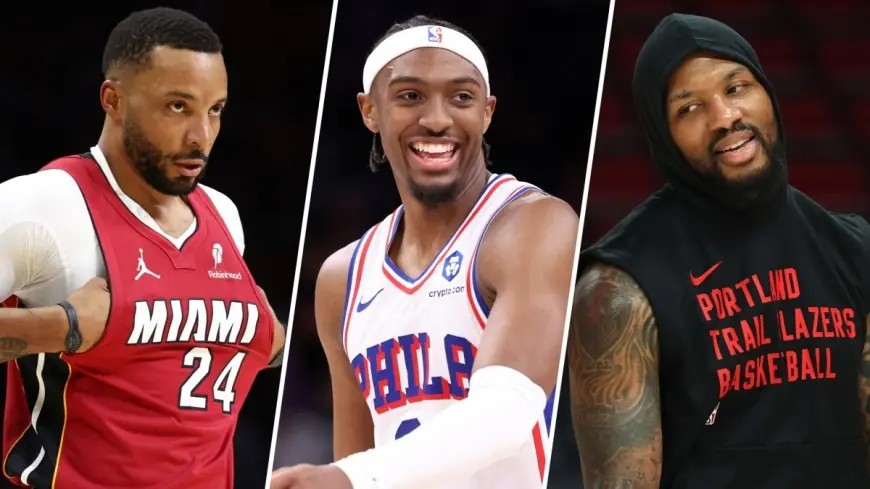
The NBA 3-Point Contest returns Saturday, February 14, 2026 (ET), with Damian Lillard stepping into one of the strangest high-stakes shooting situations of his career: a bid for a third crown while he has not played this season. The combination has turned the 3pt contest into the night’s first true referendum on rhythm, confidence, and whether “game shape” matters when the only job is to get hot for one minute at a time.
The contest begins during All-Star Saturday festivities at 5:00 p.m. ET from Inglewood, California, and the field reads like a playoff bracket for perimeter shot-making rather than a casual exhibition.
3 point contest 2026 field: stars, a rookie, and a few wild-card styles
Eight shooters are in the mix:
-
Damian Lillard
-
Devin Booker
-
Donovan Mitchell
-
Tyrese Maxey
-
Jamal Murray
-
Norman Powell
-
Bobby Portis
-
Kon Knueppel
On paper, it’s a clash of archetypes. Booker and Mitchell bring high-volume, self-created shooting reps. Maxey and Murray live on movement, quick decisions, and pace. Powell has a heater reputation that can erase slow starts. Portis is the outlier in role and shot profile, which sometimes helps when a player arrives with fewer expectations and a simpler plan. Knueppel, the rookie, is the curveball: young legs, quick release, and nothing to lose.
Why Damian Lillard is the headline in the NBA three point contest
Lillard’s angle is simple and enormous: a third championship would tie the contest’s all-time mark, putting him in rare air in an event that has produced some of the most memorable All-Star Weekend moments.
But this year’s intrigue is less about resume and more about circumstance. Lillard is entering without regular-season minutes behind him, which changes everything about preparation. In a game, conditioning and timing can be rebuilt over weeks. In the three point contest, you get a few warmups, then your mechanics are either there or they aren’t.
That makes Lillard’s run a live experiment in “muscle memory under spotlight.” If he starts fast, the narrative becomes inevitability. If he misses early, the noise in the building gets loud quickly, and the margins tighten into a sprint.
How the 3pt contest really gets won
The format has evolved into a rhythm challenge more than a pure shooting contest. The rack order, the money-ball cadence, and the need to bend, grab, load, and fire without breaking form turns the event into a mechanics stress test.
The most common reasons elite shooters lose are surprisingly basic:
-
They rush the first rack and spend the rest of the round chasing
-
They drift sideways between racks, changing their base and release point
-
They treat deep balls like normal shots instead of different shots
-
They panic after a miss and speed up, which usually creates more misses
The winners tend to look slow while scoring fast. They keep their feet under them, accept a miss without reacting, and let the rack deliver the tempo.
Behind the headline: incentives, stakeholders, and why this year feels sharper
Context: The league has increasingly treated Saturday night as appointment viewing, and the three point contest is often the cleanest, most replayable event. In an era of constant highlights, a single perfect round can define the weekend.
Incentives: For players, it’s legacy and branding. A 3-point title is a portable credential that follows you across teams and seasons. For the league, it’s a showcase of the sport’s modern identity: spacing, shot-making, and guard play.
Stakeholders:
-
The players, whose reputations can spike or wobble in a few minutes
-
Coaches and teammates, who benefit when a player’s confidence jumps
-
Fans, who treat the contest as a purity test for “real shooters”
-
The league, which wants a clean, dramatic first act before the dunk finale
Second-order effects: A win can change how a player is defended when games resume, because opponents remember the heater. A loss can also fuel lazy narratives about pressure, fatigue, or “empty-gym shooting,” even when the contest is uniquely random.
What we still don’t know heading into the round
-
How Lillard’s conditioning and timing will look in a full-speed sequence
-
Whether the rookie can keep mechanics steady with an arena watching every miss
-
Which of the high-usage stars can downshift into a pure repetition contest
-
Whether a dark-horse run forces favorites to press in the final rack
What happens next: realistic scenarios and triggers
-
Lillard wins a third title
Trigger: clean start, no rushed racks, one explosive money-ball sequence. -
A star like Booker, Mitchell, Maxey, or Murray takes it
Trigger: they settle into a repeatable cadence and avoid one catastrophic rack. -
A surprise winner breaks the script
Trigger: Powell catches fire, Portis rides a no-pressure groove, or Knueppel shoots like he’s still in an empty gym. -
The contest turns into a miss-fest
Trigger: players press early, mechanics tighten, and the deep shots become momentum killers.
No matter who wins, the NBA 3pt contest in 2026 is built around one central question: does the crown belong to the steadiest shooter, or the hottest shooter? With Lillard chasing history under unusual conditions, the answer is about to arrive in real time on Saturday night ET.