






















Carolyn Bessette Kennedy and JFK Jr Get a New Love Story Treatment as Sarah Pidgeon and Paul Anthony Kelly Lead a High Scrutiny Drama

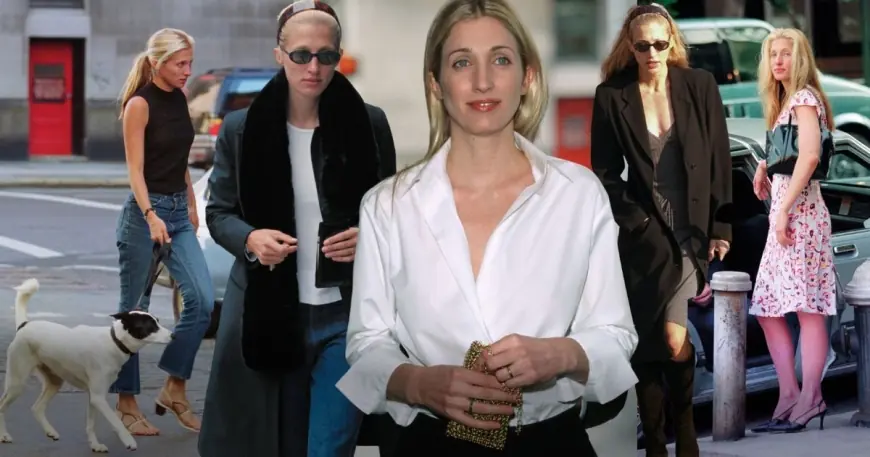
A new limited series centered on Carolyn Bessette Kennedy and John F. Kennedy Jr has arrived at a moment when audiences are primed to re-litigate every detail of a famous romance. The show, titled Love Story: John F. Kennedy Jr. and Carolyn Bessette, debuted on February 12, 2026 ET with an early batch of episodes, immediately igniting debate over casting choices, fashion accuracy, and how far dramatization can go when the ending is already written.
For viewers, the hook is obvious: an intimate, modern retelling of a relationship that lived under constant flashbulbs and ended in tragedy. For the people closest to the Kennedy legacy, the stakes are different. Any new portrayal becomes a proxy battle over privacy, memory, and who gets to profit from a public family story.
Love Story cast puts Sarah Pidgeon and Paul Anthony Kelly at the center
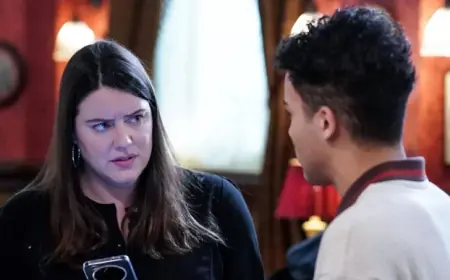
The show’s biggest swing is also its simplest: it lives or dies on whether its leads can make iconography feel human. Sarah Pidgeon plays Carolyn Bessette Kennedy, the fashion world professional turned reluctant celebrity. Paul Anthony Kelly plays JFK Jr, the magnetic public figure whose life was split between personal ambition and inherited symbolism.
Around them, the series builds a familiar orbit. Naomi Watts portrays Jacqueline Kennedy Onassis, while Grace Gummer plays Caroline Kennedy. The supporting cast includes portrayals of Carolyn’s sister Lauren Bessette and fashion industry figures linked to Carolyn’s career, as well as a depiction of actress Daryl Hannah, a notable part of JFK Jr’s pre marriage dating history.
What the series is trying to do with the Carolyn Bessette Kennedy and JFK Jr love story
The creative premise is not simply romance. It is pressure. The show treats celebrity as an environment that changes how love functions: where you live, how you argue, what you can wear, and whether you can ever be off duty. That is why the Carolyn Bessette Kennedy character often reads as the emotional center of the story. Her arc is about a person who did not seek a national spotlight but had to learn to survive it.
JFK Jr, by contrast, is portrayed as someone raised inside myth while trying to build something ordinary enough to belong to himself. In practice, the tension becomes structural: one partner is pulled toward the machine, the other is pushed into it.
Behind the headline: why this particular story keeps returning
This romance has been adapted and re-examined for decades because it sits at the intersection of three powerful forces.
Context
The relationship unfolded in a media era that was less curated than today but just as relentless, with constant pursuit and fewer tools for personal boundary setting. The couple became shorthand for style, status, and a version of American optimism that still sells.
Incentives
For entertainment companies, the incentive is recognizable intellectual property: names that drive attention without needing explanation. For creators, the incentive is the emotional contrast between glamour and claustrophobia. For audiences, the incentive is participation: the feeling that you can judge what was real and what was performance.
Stakeholders
The biggest stakeholders are the surviving families and friends who may see a new adaptation as intrusion. The fashion industry also has reputational exposure, because Carolyn is often framed as both muse and professional, and those frames shape public memory. Then there is the broader Kennedy brand, which can be reinforced or complicated by how Caroline Kennedy and Jacqueline Kennedy Onassis are written.
Second order effects
When a series like this hits, it tends to create a feedback loop: renewed tabloid style attention, resurrected dating timelines, and social media fashion reenactment. That can reshape public perception of real people who never agreed to become characters, and it can flatten complex lives into a handful of viral scenes.
What we still do not know and what viewers are arguing about
The loudest debates are less about the ending and more about authenticity.
How accurate is the origin story
Stories about how JFK Jr and Carolyn first connected have long been contested, and dramatizations often pick a single version to keep momentum. That choice can make a show feel confident while also making it vulnerable to criticism.
How the timeline is compressed
Limited series storytelling often rearranges timing to clarify themes. Viewers tend to accept compression until it changes responsibility, motivation, or the emotional temperature of key events.
How Daryl Hannah and other past relationships are handled
Depicting a famous ex can easily become a narrative tool rather than a person, and audiences increasingly push back when a show uses real relationships as shorthand for conflict.
What happens next: release cadence and realistic outcomes
New episodes are expected weekly on Thursdays ET, with the season structured as nine episodes total.
Here are the most realistic next steps, with triggers.
A steadier reception
Trigger: the show delivers emotionally credible performances and avoids big factual missteps.
A fact checking backlash cycle
Trigger: a single scene that appears to assign blame, invent an incident, or misrepresent a family relationship.
Cast breakout effect
Trigger: Sarah Pidgeon or Paul Anthony Kelly becomes the primary conversation, shifting attention from accuracy debates to performance acclaim.
Renewed privacy debate
Trigger: public criticism from people tied to the Kennedy family orbit, or a broader conversation about dramatizing tragedy for entertainment.
Why it matters is not just nostalgia. The series is a live test of how modern audiences want true story drama to behave: empathetic without being exploitative, stylish without being hollow, and faithful enough to respect real lives while still telling a coherent story.