






















Nick Castellanos Released by the Phillies Days Before Spring Workouts, Turning a $20 Million Final Year Into a Fresh Start

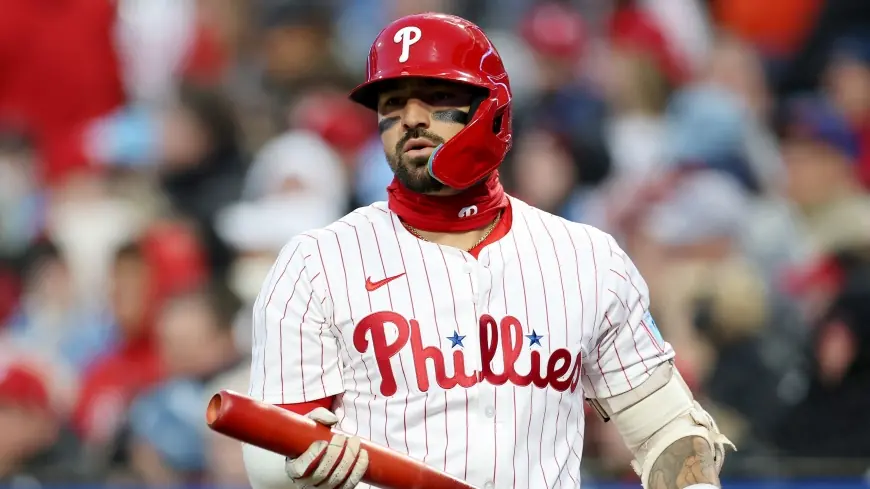
Nick Castellanos is no longer a member of the Philadelphia Phillies after the club released the veteran outfielder in mid-February 2026, eating the final season of his contract and sending one of the franchise’s most polarizing recent signings into free agency. The move landed just as spring training activity ramps up in Florida, and it immediately reshapes both the Phillies’ right-field plan and Castellanos’ path back to a roster spot elsewhere.
The timing matters: releases this close to camp tend to be less about pure performance and more about whether a player still fits a team’s direction, staff relationships, and clubhouse standards.
What happened with Nick Castellanos and the Phillies
The Phillies cut ties with Castellanos on Thursday, February 12, 2026, ET, with one year remaining on his deal and roughly $20 million still owed for the 2026 season. The organization had explored trade possibilities through the winter but could not find a workable match, leaving release as the cleanest, if most expensive, exit.
In the days around the decision, Castellanos publicly revisited a 2025 dugout incident in Miami involving alcohol and an ejection. The story became a symbol of a broader disconnect rather than the single reason for separation. Team leadership framed the decision as being in the club’s best interest, signaling that the issues extended beyond one moment.
Behind the headline: why this breakup happened now
This wasn’t a typical “bad year, move on” transaction. It was a roster and authority question.
Context: Castellanos arrived as a middle-of-the-order bat expected to lengthen a contending lineup. He delivered memorable hot streaks and postseason moments, but his overall value became harder to justify as defensive limitations and offensive inconsistency piled up. When a team feels it must “win on the margins,” a corner outfielder who is below-average defensively and streaky at the plate becomes an ongoing trade-off.
Incentives: For the Phillies, the incentive is clarity. Carrying a player through camp while openly seeking a trade can poison the vibe, sap a manager’s leverage, and force daily questions that distract from installing a roster. For Castellanos, the incentive is control. A release lets him choose his next stop instead of being shipped into a situation he dislikes or one that limits playing time.
Stakeholders: This involves more than player and team. Coaches and front-office leaders are judged on culture as much as wins, and teammates are affected by how standards are enforced. Agents and rival teams watch closely, too, because a release creates an opportunity: a proven hitter available for the league minimum while his former club pays most of the bill.
Second-order effects: Eating $20 million is expensive, but it can be cheaper than carrying the wrong fit. It opens roster flexibility, changes how at-bats are distributed, and can reduce clubhouse tension if there was ongoing friction about lineup roles and communication.
What it means for the Phillies’ 2026 roster
Philadelphia’s decision effectively declares a new right-field direction. Internally, it clears a lane for a different profile: either improved defense, a platoon advantage, or more athleticism in the corner. It also signals that the front office is willing to pay for subtraction to improve roster coherence.
The risk is obvious: if the offense slumps early, the absence of a veteran bat can be felt quickly. But the club appears to be betting that better run prevention, sharper matchups, and fewer off-field distractions will outweigh the lost production.
What it means for Castellanos in MLB free agency
For Castellanos, the release changes the market dynamics in his favor in one key way: cost. Any team that signs him now can do so at minimal salary while the Phillies cover the remainder, making him an unusually affordable veteran addition.
That doesn’t mean the fit is simple. Teams will evaluate:
-
Defensive alignment: whether he can be sheltered in right field, used as a designated hitter, or paired with a late-inning defender
-
Lineup usage: whether he accepts lower lineup spots or platoon protection
-
Clubhouse integration: whether staff relationships and communication style are a match
The most logical landing spots tend to be contenders seeking depth, teams with a clear designated-hitter rotation, or clubs that can promise regular at-bats without expecting him to be a two-way asset.
What we still don’t know
Several pieces will shape the next phase:
-
Whether Castellanos already has multiple offers or is waiting for injuries to create openings
-
How other teams interpret the dugout incident versus the broader relationship issues
-
Whether his next role is everyday starter, strong-side platoon bat, or rotating designated hitter
What happens next: realistic scenarios and triggers
-
Quick signing before games ramp up
Trigger: A team wants a veteran bat immediately and believes the low-cost structure is too good to pass up. -
Late-February or early-March deal after roster needs clarify
Trigger: Injuries, underperformance in camp, or a team deciding it needs right-handed power. -
A role change centered on designated hitter usage
Trigger: A club that can minimize defensive exposure while maximizing streaky power stretches. -
A prove-it stretch leading to a midseason trade
Trigger: Castellanos performs well on a short-term opportunity and becomes a movable piece for a contender.
Why it matters
This is a rare, loud move for a team with playoff ambitions: paying a significant sum to remove uncertainty and reset the roster’s direction. For Castellanos, it’s a second chance with the unusual advantage of being both a recognizable name and a bargain signing. The next few weeks will reveal whether MLB views him as a missing bat for a contender or as a veteran best suited for a carefully managed role.