Ukraine Warns Lifting Football Ban Risks Legitimizing Russia’s Invasion

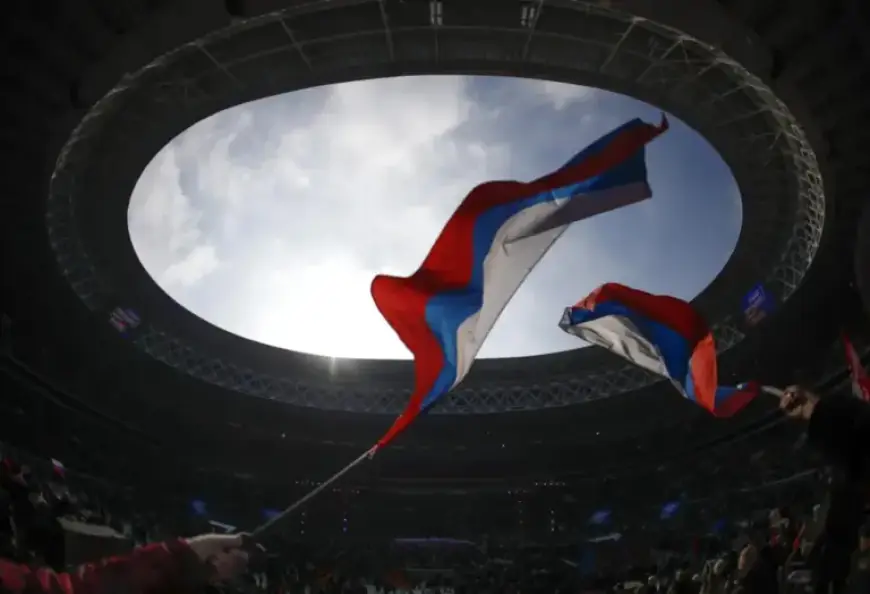
Ukraine’s Sports Minister, Matvii Bidnyi, has vocally opposed the potential reinstatement of Russian teams in international football. He argues that such a move could legitimize Russia’s invasion of Ukraine, a situation he warns is unacceptable. “The ban is an important part of international efforts to stop the aggressor,” he stated emphatically.
International Football Ban and its Significance
The discussion around lifting the ban on Russian football teams intensified following remarks by FIFA President Gianni Infantino. In an interview on February 2, he suggested that both FIFA and UEFA should rethink their stance on the ban. Infantino claimed, “This ban has not achieved anything. It has just created more frustration and hatred.”
Background on Restrictions
The ban on Russian football was initiated as a response to the full-scale invasion of Ukraine, which began in February 2022. Other major sports organizations followed suit, imposing similar sanctions on Russian athletes. This included:
- International Olympic Committee
- International Paralympic Committee
- World Athletics Council
Various sports, including biathlon, basketball, and ice hockey, enforced strict bans on Russian participation.
Recent Developments in Sports and Politics
As the situation evolved, some organizations began to reconsider restrictions on Russian athletes. Notably, tennis players returned to major tournaments, and some athletes participated under a neutral flag. Significant developments include:
- September 2025: International Paralympic Committee lifted the ban for the 2026 Winter Paralympics.
- November 2025: International Judo Federation and European Gymnastics removed restrictions on Russian athletes.
Advocates for easing restrictions argue for the separation of sports and politics. They claim the ongoing bans have not affected Kremlin policies and have unfairly impacted individual athletes. However, this overlooks Russia’s tactics of using sports for propaganda.
Russia’s Historical Exploitation of Sports
Historically, the Kremlin has leveraged sporting success to bolster its political image. Major events like the 2014 Winter Olympics and the 2018 FIFA World Cup were used to enhance Russia’s reputation globally. The recent achievements of Russian athletes have also been highlighted as national victories.
Consequences for Ukraine and International Responses
The prospect of allowing Russian athletes to compete again is painful for many Ukrainians. The ongoing war has claimed many Ukrainian athletes and disrupted the training of countless others. The idea of reinstating Russian teams during such turmoil is viewed as deeply unethical.
Further attempts to normalize Russia’s presence in international sports could have wider implications. It risks suggesting that the international community is unwilling to hold aggressor nations accountable for their actions, undermining global stability. The situation remains sensitive as Ukraine continues to face significant challenges due to the invasion.
In summary, the discussion around lifting the football ban on Russia involves complex intersections of sports, politics, and ethics. The ongoing conflict impacts not only Ukraine but also global diplomatic relations.