

























SpaceX Sends Crew-12 Astronauts to Reinforce Understaffed International Space Station

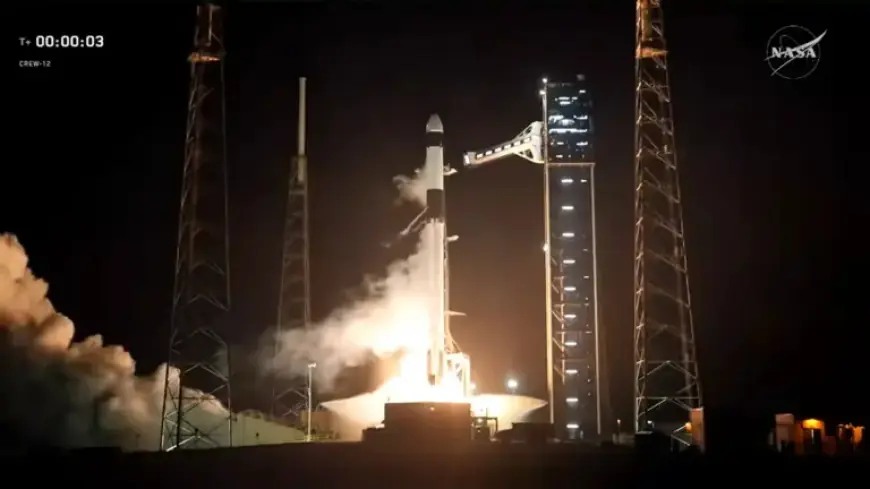
A mission to bolster the International Space Station (ISS) has successfully launched, sending a group of astronauts to support the station’s reduced crew. The SpaceX Crew-12 mission lifted off from Cape Canaveral Space Force Station on February 13, 2026, featuring a diverse team of four astronauts. Their stay at the ISS is expected to last approximately eight months.
Crew-12 Mission Details
The Crew Dragon spacecraft, named “Freedom,” launched at 5:15 a.m. EST aboard a Falcon 9 rocket from Space Launch Complex-40. The crew includes:
- Jessica Meir (NASA)
- Jack Hathaway (NASA)
- Sophie Adenot (European Space Agency)
- Andrey Fedyaev (Roscosmos)
Upon reaching orbit, Meir communicated with Mission Control, expressing her excitement about the journey. The mission comes at a critical time, as the ISS has been operating with a minimal crew since a medical evacuation earlier in the year.
Launch Context and Delays
The launch was initially scheduled for February 15 but was advanced due to the early return of the Crew-11 mission, which faced a medical issue. Bad weather had previously delayed the launch by two days, but the Crew-12 mission proceeded as planned, unaffected by the preceding challenges with other Falcon 9 launches.
Significance of Crew-12 Flight
This mission is significant for a number of reasons. It marks:
- The second crewed flight from Launch Complex-40
- The first use of SpaceX’s new landing zone, LZ-40
- Hathaway and Adenot’s inaugural journey to space
During a pre-launch briefing, Bill Gerstenmaier, Vice President of SpaceX, emphasized that the previous launch issues were not a concern for Crew-12. The Falcon 9 rocket performed flawlessly, executing a main engine cutoff shortly after launch.
Future Plans and Research Agenda
Once the astronauts arrive at the ISS, they will engage in significant research, focusing on the effects of microgravity on human health. They will also conduct maintenance on the station, including two scheduled spacewalks that follow the Crew-11 medical situation.
As the Crew Dragon “Freedom” orbits, it will take approximately 32 hours to rendezvous with the ISS, aiming to dock on February 14, 2026. This mission signifies an important advancement in maintaining a fully staffed ISS, further fostering international collaboration in space exploration.
For real-time updates on the Crew-12 mission, including docking coverage, visit Filmogaz.com on February 14.