

























SpaceX, NASA Launch Astronauts to Relieve Minimal ISS Crew

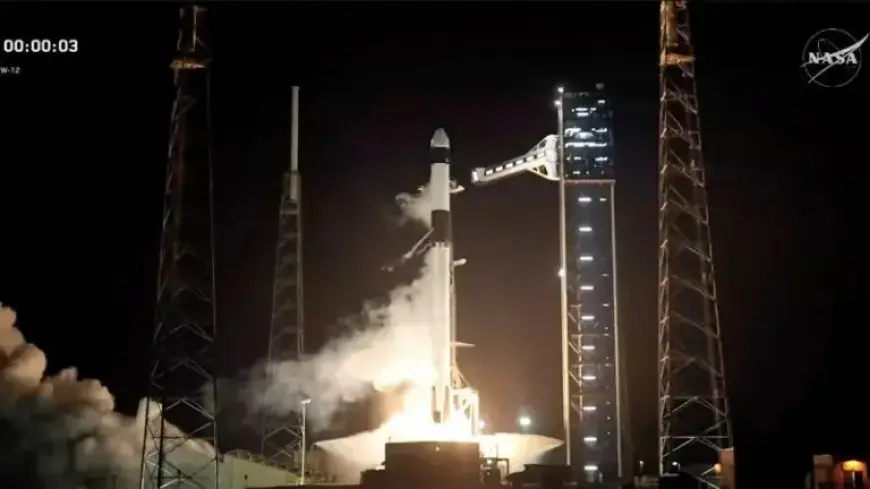
A SpaceX capsule has launched with four astronauts on board to the International Space Station (ISS). This mission, known as Crew-12, commenced on Friday at approximately 5:17 a.m. ET from Cape Canaveral Space Force Station in Florida. The launch aims to restore full staffing at the ISS after a month of operations with a significantly reduced crew.
Mission Details and Objectives
The Crew-12 launch was expedited by NASA due to an urgent need for more personnel on the station. Since mid-January, the ISS has been operating with only three crew members, which is below the optimal seven-person staff. The previous mission, Crew-11, had an early return due to a medical issue affecting one of the astronauts.
- Launch Time: 5:17 a.m. ET
- Launch Site: Cape Canaveral Space Force Station, Florida
- Current ISS Crew: 3 astronauts
- Optimal ISS Crew: 7 astronauts
Previous Crew-11 Mission
The Crew-11 astronauts faced an emergency, leading to their early return to Earth. NASA Administrator Jared Isaacman commended the team’s quick response. All four Crew-11 astronauts were later treated at Scripps Memorial Hospital due to the unnamed medical incident.
The Crew-11 team included:
- Zena Cardman (NASA)
- Mike Fincke (NASA)
- Kimiya Yui (Japan Aerospace Exploration Agency)
- Oleg Platonov (Roscosmos)
Upcoming Crew-12 Members
The Crew-12 mission features:
- Jessica Meir (NASA)
- Jack Hathaway (NASA)
- Sophie Adenot (European Space Agency)
- Andrey Fedyaev (Roscosmos)
Unlike typical missions where crews overlap for knowledge transfer, Crew-12 will have to begin without a direct handover with Crew-11 due to the latter’s abrupt exit. However, Crew-12 astronauts had some ground-level exchanges with their predecessors.
Significance for NASA and Future Space Missions
Maintaining a full crew on the ISS is crucial for maximizing research productivity and sustaining its $3 billion annual operation costs. NASA’s goal is to ensure that research output continues to be high, especially as they prepare for future commercial space stations in low-Earth orbit.
During their eight-month mission, Crew-12 astronauts will participate in various scientific initiatives, including:
- Ultrasound scans of blood vessels for circulation research
- Pharmaceutical studies related to pneumonia-causing bacteria
- A simulated lunar landing to study gravitational effects on human health
NASA envisions that maximizing the ISS’s operational life will be pivotal as they transition toward deeper space exploration and new commercial partnerships.