

























NASA Telescope Discovers Life’s Building Blocks Emitted by Comet 3I/ATLAS

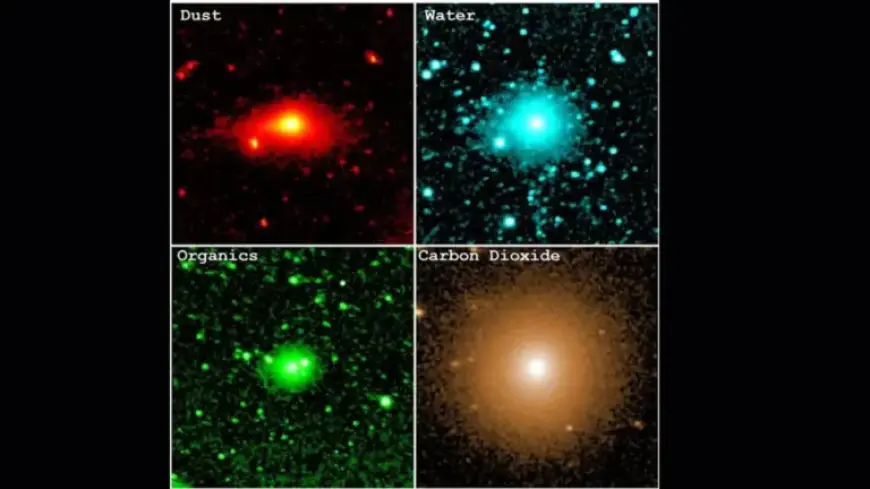
NASA’s SPHEREx space telescope has made a significant discovery regarding comet 3I/ATLAS, revealing that it emitted essential building blocks of life while passing Earth. This interstellar comet, which approached within approximately 168 million miles of our planet in December 2025, was the subject of intense observation as it swung around the sun.
Key Findings from SPHEREx
The SPHEREx telescope detected vital organic molecules such as methanol, cyanide, and methane emanating from comet 3I/ATLAS. While these compounds are crucial for biological functions on Earth, they can also be produced through non-biological means. This emphasizes that the presence of organic molecules does not necessarily indicate extraterrestrial life.
Publication and Research Context
The findings regarding comet 3I/ATLAS were published in the February issue of the Research Notes of the American Astronomical Society (AAS). The study highlights that 3I/ATLAS is one of only three recognized interstellar visitors and is believed to be the oldest comet observed to date.
About Comet 3I/ATLAS
- Discovery Date: July 2025
- Speed: Approximately 137,000 mph (221,000 km/h)
- Closest Approach to Earth: December 2025
- Distance from Earth: About 168 million miles (270 million kilometers)
As comets approach stars, heat causes their icy surfaces to sublimate, releasing gases that contribute to their brightness and behavior. Carey Lisse, the lead author of the study from the Johns Hopkins Applied Physics Laboratory, noted that this process was particularly evident in December 2025, when 3I/ATLAS experienced a notable eruption of material.
The Role of SPHEREx
Launched in March 2025, SPHEREx is equipped with 102 infrared color sensors designed to explore the night sky. Its unexpected observation of comet 3I/ATLAS shortly after its launch provided unique insights into the characteristics of interstellar comets and the fundamental ingredients of life.
Yoonsoo Bach, the deputy lead author, emphasized the fortunate timing of the comet’s flyby, describing it as an example of serendipitous scientific discovery. Researchers anticipate that as 3I/ATLAS approaches Jupiter, further observations will be conducted by NASA’s Juno spacecraft, allowing for one last in-depth study before the comet exits our solar system permanently.
Conclusion
The passage of comet 3I/ATLAS not only sheds light on the chemical composition of interstellar objects but also fuels ongoing discussions about the origins of life in the universe. Its findings emphasize the importance of continued exploration and observation of celestial phenomena with tools like SPHEREx.