

























US Prepares Aircraft Carrier Deployment Amid Rising Iran Tensions

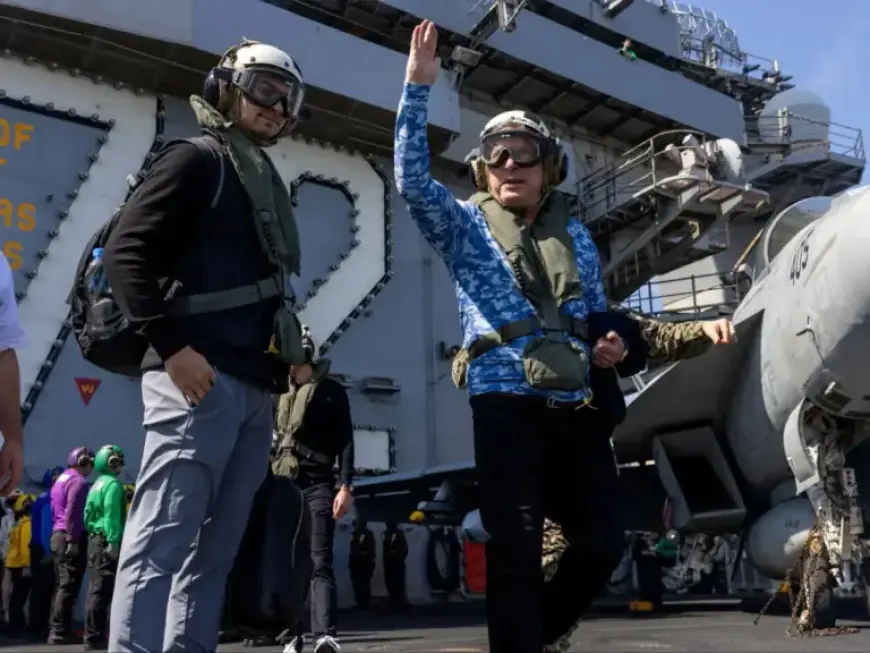
As tensions escalate between the United States and Iran, military measures are being heightened in the Middle East. Recent reports indicate the Pentagon is preparing to deploy an additional aircraft carrier to the region amid ongoing diplomatic efforts.
US Aircraft Carrier Deployment Explained
President Donald Trump recently acknowledged the military buildup. He shared a Wall Street Journal article highlighting the Pentagon’s decision to ready a second aircraft carrier strike group for deployment. This move aims to bolster the presence of U.S. naval power in the Middle East, where the USS Abraham Lincoln is already stationed.
The second carrier, the USS Gerald R. Ford, is set to sail from the Caribbean Sea to join its counterpart in the Middle East. This deployment aims to increase pressure on Iran while negotiations regarding the country’s nuclear program remain ongoing.
Current Military Presence
The USS Abraham Lincoln and three guided-missile destroyers have been in the region for over two weeks. The recent preparations come on the heels of a White House meeting between President Trump and Israeli Prime Minister Benjamin Netanyahu, who advocates for a strong stance against Tehran.
- USS Abraham Lincoln: Deployed over two weeks ago.
- USS Gerald R. Ford: Leaving the Caribbean to join operations.
- Israeli Prime Minister: Benjamin Netanyahu encourages tough policies towards Iran.
Diplomatic Developments with Iran
The U.S. and Iran held indirect talks recently in Oman, marking the first engagement since the previous year. Both nations have expressed commitment to diplomacy but have not announced any future discussions yet.
Iran’s security chief, Ali Larijani, emphasized that their negotiations strictly involve the United States and warned against Israel’s influence, stating, “Israel has inserted itself into this process.”
Trump’s Position on Negotiations
While Trump has committed to engaging in talks, he also indicated a timeline for reaching an agreement. He believes a deal could be finalized as soon as next month. The U.S. aims to ensure that Iran does not develop nuclear weapons or missiles.
However, Iran has firmly rejected compromising its missile program, stating it is a matter of defense. Foreign Minister Abbas Araghchi has been clear that the missile issue is “never negotiable.”
Potential Military Action
Trump’s administration has warned Iran of possible military responses should negotiations fail. In past actions, Iran has faced significant military responses from Israel and the U.S., including strikes on nuclear facilities.
- Prior Israeli Offensive: Targeted Iranian military officials and nuclear scientists.
- U.S. Involvement: Bombed three Iranian nuclear sites following the Israeli military action.
- Ceasefire: Reached after military escalations, but tensions remain high.
As the situation unfolds, the balancing act between military readiness and diplomatic dialogue continues. The deployment of another aircraft carrier signifies the seriousness with which the U.S. perceives the situation involving Iran and its nuclear ambitions.