

























Trump’s Moves Challenge Stability in Global Air Travel Industry

The global air travel industry is facing unprecedented challenges, largely influenced by recent actions from the Trump administration. Uncertainty stemming from sudden policy shifts has raised concerns among travelers and industry stakeholders alike.
Recent Disruptions in Air Travel
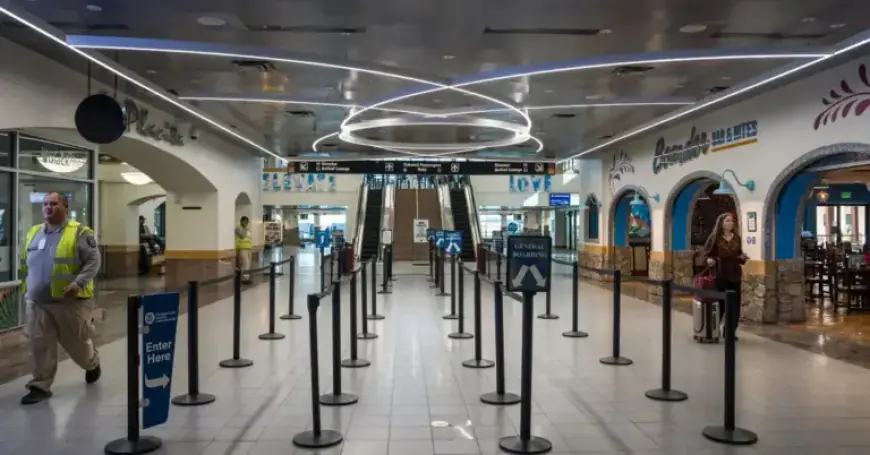
Last week, the Federal Aviation Administration (FAA) announced a suspension of all flights in the El Paso area for ten days. This abrupt decision, made without prior notice, led to significant frustration among local officials, businesses, and travelers.
- The FAA reversed its decision just a day later.
- The shutdown was reportedly linked to drone incursions from Mexican drug cartels.
- Confusion arose after immigration officials deployed an anti-drone laser system without proper FAA assessment.
Impact on Travelers and Airlines
Bob Mann, an aviation consultant, remarked, “This situation isn’t promoting air travel.” The industry has faced challenges before, but the recent string of abrupt announcements from Washington exacerbates existing problems.
| Date | Event |
|---|---|
| Last fall | FAA announced a 10% reduction of flights at 40 busy airports. |
| Recent weeks | Trump announced the “decertification” of Canadian-made aircraft. |
These announcements often catch airlines off guard, forcing them to cancel flights and rebook passengers with little time to respond adequately.
Government Policies Affecting Aviation Stability
Despite these challenges, the Trump administration has initiated positive changes in air traffic management. They have allocated $12.5 billion for modernizing air traffic control systems and have increased hiring and training for air traffic controllers.
Airlines for America, a major trade group, has praised these initiatives as the most significant improvements the industry has seen in decades. However, significant regulatory changes that favor airlines over consumer protection concerns have raised alarms.
Concerns About Consumer Protection
Regulatory rollbacks, including reduced airline compensation requirements and diminished transparency regarding hidden fees, concern many consumer advocacy groups. A coalition of these groups urged the Department of Transportation (DOT) to enforce stricter regulations instead of relaxing them.
- Recent shifts include reduced penalties for airlines.
- Consumer protections from the previous administration are being re-evaluated.
Critics argue that deregulation may jeopardize passenger safety and rights, with former Transportation Secretary Pete Buttigieg emphasizing the need for stronger consumer protections.
A Changing Landscape for Air Travel
Traveling has also become less predictable due to changes in airport security protocols. For instance, the Transportation Security Administration (TSA) recently enforced a fee for processing travelers with non-compliant IDs.
Moreover, procedural changes, such as no longer requiring shoes to be removed during security screening, have taken effect without significant public notice, leading to confusion during peak travel times.
As the air travel industry navigates these tumultuous waters, stakeholders hope for clarity and stability in policy-making to ensure a more predictable and secure travel experience for all. The recent moves from Washington certainly challenge that stability.