
























Tumbler Ridge Secondary School shooting: what happened in British Columbia, who police identified, and why the Canada school shooting is reverberating nationwide

A deadly school shooting in Tumbler Ridge, British Columbia has become one of the most severe acts of violence at a Canadian school in decades, leaving a small community of roughly a few thousand people grappling with grief, shock, and urgent questions about prevention. The attack unfolded Tuesday, February 10, 2026, with police later identifying an 18-year-old suspect, Jesse van Rootselaar, who authorities say died at the scene from a self-inflicted gunshot wound. The investigation remains active, with officials still working to establish a clear motive.
The immediate impact is stark: multiple people were killed across two locations, including at Tumbler Ridge Secondary School, and more than two dozen were injured, some seriously. In the first 48 hours, the focus has shifted from emergency response to evidence gathering, victim support, and the painstaking task of reconstructing a minute-by-minute timeline.
What happened in Tumbler Ridge, and what police have confirmed so far
Police say the violence began at a residence linked to the suspect, where two people were killed. The suspect then went to Tumbler Ridge Secondary School and opened fire, killing additional victims and injuring many others before being found dead.
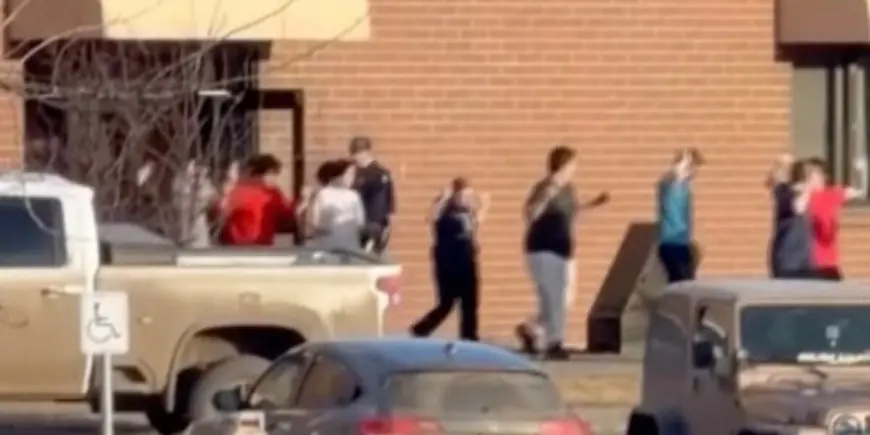
The initial emergency calls came in during the afternoon, and authorities said officers arrived within minutes. Students and staff described extended lockdown conditions, with classrooms barricaded and people sheltering in place while police moved through the building.
Officials have not publicly released a full list of victims, but they have confirmed that those killed include students and at least one staff member, along with the two people killed at the residence. The number of wounded reported publicly has hovered in the mid-to-high twenties, with at least two injuries described as serious.
Because Tumbler Ridge is in the Pacific time zone, the first wave of reported timings translate to late afternoon in USA Eastern Time. The initial reports place the start of the attack at roughly around 4:20 p.m. ET on February 10, though investigators have not locked in an exact public timeline for every movement.
Canada shooting suspect: Jesse van Rootselaar, and the confusion around the name “Jesse Strang”
Authorities have identified the suspect as Jesse van Rootselaar, 18. Police have not announced any additional suspects and have said the primary suspect is deceased.
The name “Jesse Strang” has circulated widely online and in some secondary retellings, but it has not been confirmed by official statements tied to the investigation. In fast-moving cases like this, mismatched names often spread through misread documents, reposts, or early rumor. The practical takeaway is simple: the confirmed suspect name is the one police have used, and anything else should be treated as unverified until investigators state otherwise.
Behind the headline: why this British Columbia school shooting is hitting so hard
The emotional force of this story comes partly from scale and partly from setting. Tumbler Ridge is remote and tight-knit; many residents are only a degree or two away from one another through family, work, and school. When violence hits a place like that, the community impact is total: classrooms, sports teams, volunteer groups, and workplaces feel it all at once.
There are also institutional incentives that shape what the public is hearing right now. Investigators have a strong reason to limit detail early, especially around weapons, entry routes, and sequencing, because premature specifics can prompt false confessions, encourage copycat threats, or contaminate witness memory. Families and local leaders, meanwhile, have an incentive to share enough to keep attention and support flowing to victims without adding noise that could slow the inquiry.
Stakeholders: who is affected and what is at stake
-
Students, families, and school staff face immediate trauma needs, long-term mental health support, and difficult decisions about reopening and security.
-
Local health services and counselors are under sudden strain, particularly in a smaller, rural catchment area where resources can be limited.
-
Provincial and federal leaders face pressure to respond quickly, both with practical help and with policy signals.
-
Law enforcement must balance transparency with investigation integrity, while also managing a flood of tips and misinformation.
What we still don’t know about the Tumbler Ridge active shooter case
Several key questions remain unresolved:
-
Motive: investigators have not provided a confirmed explanation for why the suspect allegedly targeted the victims and the school.
-
Pathway: the precise sequence between the residence and the school, including how long the suspect was in each location.
-
Weapons access: what firearms were used, how they were obtained, and whether any legal or procedural gaps were involved.
-
Warning signs: whether there were prior threats, concerning behavior reported to authorities or the school, or missed intervention opportunities.
Those missing pieces matter because they will determine which prevention lessons are realistic and which are not.
Second-order effects: what this could change in Canada next
Large-scale school violence often triggers policy motion even when the facts are still settling. In the near term, Canadian communities may see accelerated school security reviews, expanded threat-assessment training, and a surge in demand for youth mental health services. There is also likely to be renewed scrutiny of firearm access in rural areas, where gun ownership and use can be more common, and where enforcement and storage practices vary widely.
A less visible ripple effect is reputational and institutional: schools may face pressure to show they can keep students safe, while police and health systems may be judged on whether earlier interventions were attempted or possible.
What happens next: realistic scenarios and triggers to watch
-
Investigators release a clearer timeline once interviews and digital forensics stabilize key facts.
-
Authorities provide more detail on weapons and acquisition if it becomes central to prevention lessons.
-
Public identification of victims may follow once families are notified and ready.
-
Schools across British Columbia announce near-term security adjustments and mental health support plans.
-
Broader political debate intensifies if evidence suggests systemic gaps in prevention, reporting, or firearm controls.
For now, what happened in Canada is clear in its most painful essentials: a mass shooting spanning a home and a school, a young suspect identified and deceased, and a community facing the long work of healing while investigators assemble the full truth behind the attack.