

























United States at the Winter Olympics: Team USA surges into top three after historic haul in Italy

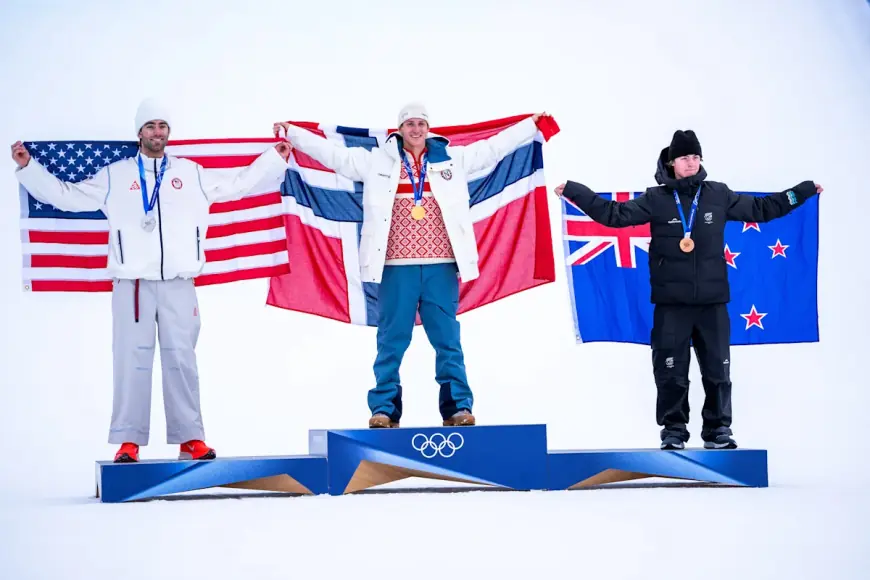
Team USA powered into the heart of the medal race by midweek, riding a record-setting Tuesday (ET) and a new wave of podiums on Wednesday (ET) that brought fresh champions and key momentum. Norway still leads the standings, while host Italy remains close in pursuit.
A five-sport medal day rewrites U.S. history
Tuesday marked a landmark for the United States: for the first time, American athletes collected five medals across five different sports in a single day. The unprecedented haul featured three silvers and two bronzes across a wide range of disciplines.
Ben Ogden set the tone with a breakthrough in cross-country skiing, taking silver in a race that ended with a time of 3:40.61. In doing so, he became the first U.S. male cross-country skier to earn an Olympic medal since 1976, finishing just behind Norwegian great Johannes Hosflot Klaebo.
On the curling sheet, the mixed doubles final went to the last ends before Sweden’s sibling team of Rasmus and Isabella Wranå edged Americans Korey Dropkin and Cory Thiesse 6–5, leaving the U.S. with silver after a tight, high-quality battle.
In the park, Alex Hall added another silver in the men’s freeski slopestyle final, narrowly missing a title defense and finishing just behind Norway’s Birk Ruud. The podium added to Hall’s Olympic legacy while underscoring the fierce depth of the field.
The U.S. rounded out Tuesday’s medals with two bronzes. Ashley Farquharson delivered a milestone third-place finish in women’s luge singles, becoming just the third American to medal in singles luge at the Games. And in alpine, Jackie Wiles and Paula Moltzan teamed up to secure bronze in the women’s team combined slalom—finishing one spot ahead of fellow Americans Mikaela Shiffrin and Breezy Johnson.
Gold rush resumes: Johnson, team skaters, Lemley and Stolz headline
The U.S. medal wave this week was rooted in a golden Sunday (ET) and gathered steam into Wednesday (ET). Breezy Johnson captured women’s downhill gold on Sunday, becoming only the second American woman to win the event and earning the first Olympic medal of her career. Later that day, the U.S. triumphed in the figure skating team event after Ilia Manlin—nicknamed the “Quad god”—delivered under pressure to clinch the title.
Midweek brought more atop the podium. On Wednesday, 20-year-old Elizabeth Lemley won gold in her Olympic debut in women’s moguls, while her teammate Jaelin Kauf secured silver to complete a powerful one-two punch for the U.S. Not long after, speedskater Jordan Stolz captured gold in the men’s 1,000 meters, setting an Olympic record and reinforcing the American surge on the ice.
Standings snapshot heading into Thursday (ET)
Despite the U.S. surge, the overall table still runs through Norway. The winter sports powerhouse sits on top with seven golds and a total of 13 medals. Host nation Italy is next in the chase with 11. The United States has moved into third place in the total-medals race, closing the gap on the leaders on the back of its broad-based success across Nordic skiing, freestyle, curling, luge and alpine, and complemented by titles in downhill, figure skating, moguls and speedskating.
Why Tuesday will be remembered
Five medals in five different sports within a single day speaks to the scope of the U.S. program in Italy. The distribution—spanning endurance, precision, technical skill and pure speed—underscored a balanced approach that historically has been difficult to achieve in a single session. The achievement provided not just points on the board, but also a momentum bump for athletes facing finals in the coming days.
What it means for the road ahead
With pressure events stacked through the weekend (ET), the Americans have positioned themselves for a sustained run at the table’s upper tier. The mix of breakthrough stars and seasoned Olympians—exemplified by Johnson’s long-awaited downhill title, Manlin’s clutch skate, Lemley’s standout debut and Stolz’s record speed—gives Team USA multiple paths to add hardware as the program shifts from its historic midweek to the next wave of medal opportunities.