






















Savannah Guthrie update: How the FBI and local detectives work together—and what typically comes next

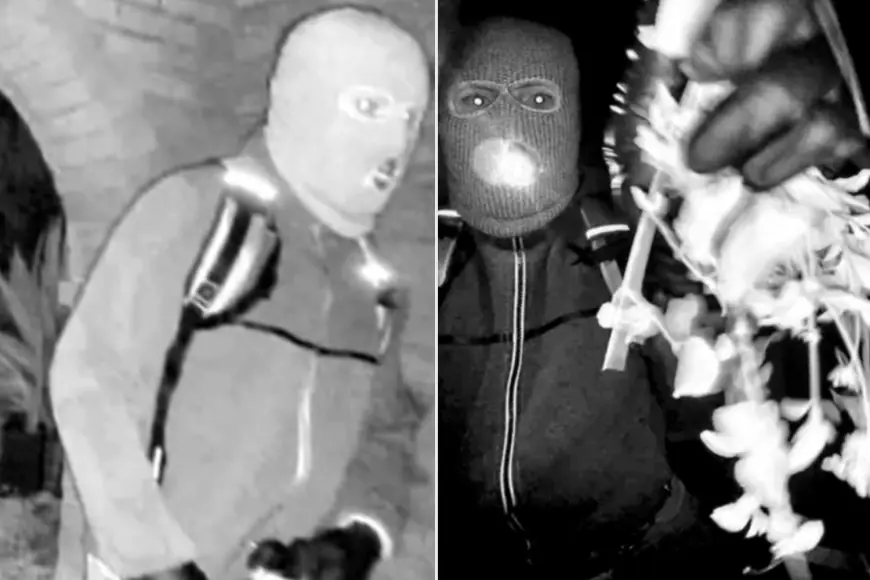
The disappearance of Nancy Guthrie, the 84-year-old mother of television host Savannah Guthrie, has entered a more public phase after federal investigators released new images of a masked porch figure and urged the public to help identify the person. With the case treated as an abduction, the presence of both federal agents and local detectives near the home has raised a common question: who leads, who supports, and what usually happens next in a high-profile missing-person investigation.
Who is in charge when the FBI joins
In most missing-person cases, the local agency with primary jurisdiction remains the lead investigative body. The FBI typically joins when there is an apparent kidnapping, evidence of interstate activity, a credible federal crime angle, or when local officials request specialized support. That support can be extensive without changing who “owns” the case.
Practically, “lead agency” often means: one sheriff’s office or police department controls the core case file, authorizes major investigative steps in its jurisdiction, and handles day-to-day decisions. The FBI adds people, tools, and reach—especially when time windows are tight and the case benefits from rapid technical and analytical work.
What federal support looks like on the ground
When the FBI becomes actively involved, the coordination usually concentrates into a single structure: a unified command post or around-the-clock operations hub where investigators from multiple agencies share updates and assign tasks. This doesn’t just avoid duplicated work—it helps prevent critical details from being siloed across agencies.
Federal resources commonly brought in include:
-
Digital and technical assistance to recover or interpret device, camera, and account data
-
Analysts to map timelines, routes, and phone or vehicle patterns
-
Specialized teams experienced in abductions and violent-crime investigations
-
Laboratory and identification resources that can process evidence and compare it to national systems
In many cases, federal agents also help expand tip intake beyond a single county or state and help coordinate follow-up on leads that cross jurisdictional boundaries.
How the “masked porch figure” fits the coordination model
The newly released images of a masked person on the porch highlight a classic reason federal partners matter: the investigative value of technical recovery work and cross-area video canvassing.
Local detectives may handle the immediate neighborhood canvas—door-to-door outreach, warrants tied to local addresses, and interviews. Federal partners often amplify that by:
-
pushing image distribution to a wider geographic area,
-
requesting broader video review by businesses and agencies,
-
and running the lead through national investigative channels to see whether similar behavior has appeared elsewhere.
Officials have not publicly labeled the porch figure as a suspect, and the images alone do not establish identity. Even so, a clear visual can become the backbone of a coordinated effort: a shared reference that helps investigators compare tips, check other camera angles, and narrow the time window around the disappearance.
How tips are processed in high-profile cases
When a case is widely covered, tip volume can surge into the thousands. Managing that flood is one of the most important coordination tasks because tip overload can bury the best leads.
A common division of labor looks like this:
-
A centralized tip unit logs every call or message, assigns a tracking number, and tags it by theme (vehicle, sighting, ransom contact, camera footage).
-
Analysts cluster tips that point to the same location, person, or vehicle so investigators can prioritize patterns rather than chase isolated fragments.
-
Field teams are dispatched in parallel: one group works time-sensitive video retrieval, another interviews witnesses, another focuses on financial or communications leads.
This is also where public-facing image releases matter: they sharpen the kind of tip investigators want. Instead of “I saw something weird,” the ask becomes “Do you recognize this person, clothing, backpack, or gait?”
What typically happens next in the investigation
After the first wave of scene processing and public appeals, investigations like this usually move into a set of overlapping next steps. Not every case follows the same path, but the sequence often includes:
-
A tighter timeline: investigators lock down the last confirmed sighting, the most likely abduction window, and any “quiet period” where data goes dark.
-
Expanded video mapping: teams build a minute-by-minute route hypothesis using home cameras, traffic cameras, and business systems.
-
Focused warrant work: once a time window is established, warrants and subpoenas concentrate on a smaller set of devices, accounts, and locations.
-
Ground searches based on evidence: broader searches often narrow into targeted areas once the timeline and route theory are more defined.
-
Public requests become more specific: the messaging shifts from “any information” to “this vehicle,” “this clothing,” “this route,” or “this exact hour.”
What the public can do that actually helps
In an abduction investigation, the most valuable public help is usually concrete and time-stamped. That includes:
-
unedited exterior video from the relevant overnight window,
-
sightings tied to a precise time and location,
-
and recognition of distinctive items (a backpack shape, a jacket logo, a repeated gait, or a consistent pattern of movement).
If someone thinks they recognize a person from the images, investigators typically want the “why” (where you’ve seen them, what you recognize) and any supporting context (dates, places, vehicles). Uncertainty is still useful if it’s paired with specifics.
Sources consulted: Federal Bureau of Investigation, U.S. Department of Justice (Criminal Resource Manual), Associated Press, The Washington Post