























Clemency, the Fifth Amendment, and Ghislaine Maxwell’s pitch to Donald Trump

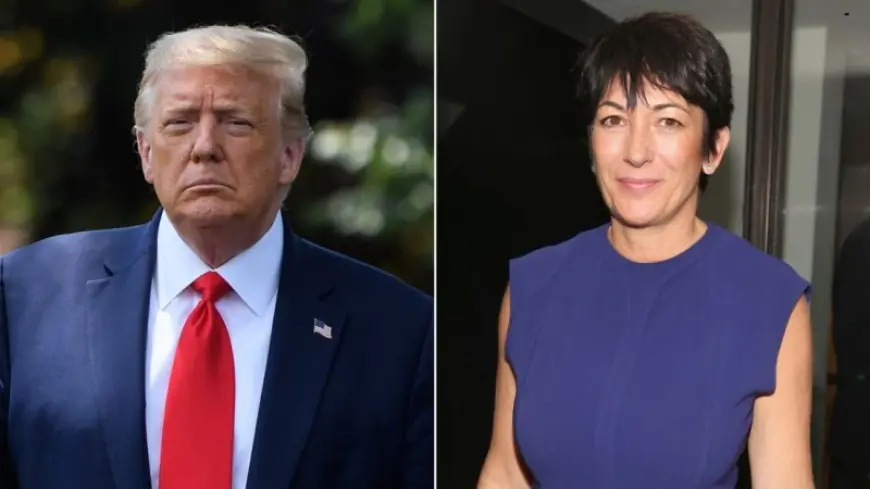
A renewed debate over presidential clemency flared this week after Ghislaine Maxwell, imprisoned for her role in Jeffrey Epstein’s sex-trafficking operation, declined to answer questions in a congressional deposition while her lawyer publicly floated a deal: she would give full testimony if President Donald Trump grants clemency. The move has pulled two legal concepts into the spotlight at once—what clemency is, and why someone might invoke the Fifth Amendment even while offering to talk later.
Maxwell was convicted in 2021 and is serving a 20-year federal sentence. The deposition took place Monday, February 9, 2026.
What is clemency, in plain terms
“Clemency” is an umbrella term for executive mercy that can reduce or erase federal criminal penalties. It is broader than a pardon and can take several forms:
-
Pardon: official forgiveness for a federal offense.
-
Commutation: reduces a sentence (for example, cutting prison time) without erasing the conviction.
-
Reprieve: delays the start or continuation of punishment.
-
Remission: reduces financial penalties such as fines or forfeitures.
In the United States, presidential clemency applies to federal offenses. It does not wipe away state charges, and it cannot be used to block impeachment consequences. While clemency is often framed as mercy, it is also a powerful political tool because it can reshape incentives for cooperation, testimony, and settlement.
Why Maxwell invoked the Fifth Amendment
The Fifth Amendment protects people from being forced to provide testimony that could be used to incriminate them. In practice, that means a witness can refuse to answer specific questions if truthful answers could expose them to criminal jeopardy.
Even for someone already convicted, the risk can remain real:
-
A witness might face exposure to additional federal charges not covered by an existing conviction.
-
A witness might face state-level charges tied to overlapping conduct.
-
A witness might face perjury or false-statement risk if prior accounts conflict with new testimony.
-
Ongoing appeals or collateral litigation can make defense lawyers advise silence to avoid creating new evidence.
In Maxwell’s case, her lawyer has publicly linked her silence to ongoing legal proceedings challenging her conviction, framing the refusal as a strategy to avoid complicating current litigation.
The clemency-for-testimony proposal and what it implies
The public pitch has been straightforward: Maxwell would answer questions fully if Trump grants clemency. Her lawyer has also suggested she could “clear” certain prominent figures from wrongdoing tied to Epstein, a claim that is not publicly verifiable from the limited information available.
A clemency-for-cooperation concept raises immediate questions:
-
What form of clemency is being sought? A commutation could shorten prison time without erasing guilt, while a pardon is broader symbolic forgiveness and can remove certain legal disabilities.
-
Would clemency be conditioned? Presidents can sometimes attach conditions—such as cooperation requirements—though the legal and practical boundaries can be contested in court and politics.
-
Would it actually eliminate Fifth Amendment exposure? Not necessarily. Even a pardon for specific federal offenses may not protect against state prosecutions or unrelated federal exposure.
This is why someone might offer to talk “if granted clemency” while refusing to speak now: the offer is leverage, and the present silence is risk management.
What Trump can and cannot do
As president, Trump has constitutional authority to grant clemency for federal crimes. That authority is broad, but it has structural limits and political constraints:
-
Federal only: a presidential act does not eliminate state criminal exposure.
-
No impeachment shield: clemency cannot undo impeachment consequences.
-
Political blowback: high-profile grants often draw scrutiny from Congress, victims’ advocates, and the public.
-
Process vs. discretion: while there is an established clemency process in the executive branch, the president can act even outside routine recommendations.
Trump has not publicly committed to granting clemency to Maxwell, and no official decision has been announced as of Tuesday, February 10, 2026.
What happens next
The practical next steps hinge on two tracks moving in parallel: Congress’s investigation and any clemency review inside the executive branch. If Maxwell continues to invoke the Fifth Amendment, lawmakers may shift toward document-driven lines of inquiry and testimony from other witnesses. If clemency discussions become more formal, attention will turn to the scope of any potential grant—pardon versus commutation, whether conditions are attached, and whether any agreement could meaningfully change Maxwell’s legal exposure.
One key point will remain: invoking the Fifth Amendment is not, by itself, proof of guilt or innocence. It is a constitutional protection against compelled self-incrimination. Clemency, meanwhile, is not a finding of innocence either—it is an act of executive relief that can be granted for many reasons.
Sources consulted: Time; ABC News; The Guardian; U.S. Constitution Annotated