
























Scottish Island Quarry: The Secret Behind Curling Stone Production

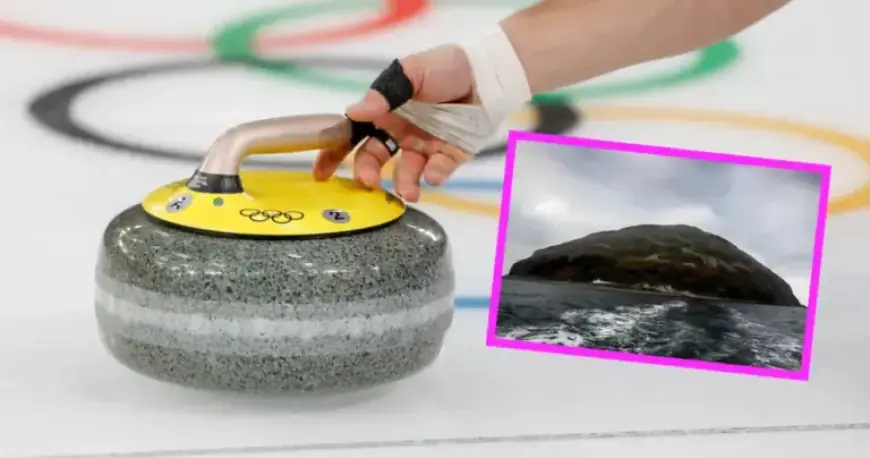
Curling has captured the attention of sports fans during the Milano Cortina Olympic Winter Games. Many may ponder the origins of the stones used in the competition. Understanding the composition and craftsmanship behind these vital pieces of equipment reveals the dedication involved in the sport.
Scottish Island Quarry: The Secret Behind Curling Stone Production
Curling stones are primarily made from two unique types of granite sourced from the remote Ailsa Craig, a small uninhabited island located off the west coast of Scotland. This island, roughly 16 kilometers (10 miles) from the mainland, has supplied granite for curling stones for about 200 years.
Granite Composition
- Ailsa Craig Common Green Granite: This granite forms the main body of the curling stones. It is known for its excellent impact absorption properties.
- Ailsa Craig Blue Hone: This specialized granite is used on the bottom of the stones and is waterproof, making it ideal for sliding on ice.
The blue hone is the only part of the stone that contacts the ice, contributing to the precise nature of the game. Mark Callan, head of ice services at the World Curling Federation, emphasizes the importance of maintaining consistency in weight and design across all stones.
Production Process
Producing a curling stone is a meticulous process. Each stone takes about one hour to create, ensuring that detailed measurements and balance meet Olympic standards. The craftsmanship involved guarantees that every stone is identical, which is crucial for fair play in competitions.
Team GB’s Journey in Curling
During the Milano Cortina Games, the mixed doubles curling event has shown great popularity. Team GB’s duo of Jen Dodds and Bruce Mouat demonstrated exceptional skill, finishing first in the round-robin stage with an impressive record of eight wins against one loss.
Despite their strong performance, the pair faced disappointment in the semi-finals after a 9-3 defeat to Sweden. This loss dashed their hopes for a gold medal. The duo had previously sought redemption after succumbing to Norway in the semi-finals last year and narrowly missing a bronze in another match against Sweden.
Looking ahead, they still have the chance to compete for a bronze medal against Italy. This decisive match is set for Tuesday at 13:00 and will be broadcast live on TNT Sports and discovery+.
Viewing Options for the Olympic Games
Fans eager to catch all the action from the Milano Cortina 2026 Olympic Winter Games can turn to TNT Sports and discovery+. The extensive coverage promises over 850 hours of live events, accessible to viewers across various subscription plans starting at £3.99 per month in the UK and €4.99 in Ireland.
TNT Sports 2 will serve as the primary station for Olympic broadcasts, featuring studio programming, highlights, and live event feeds to provide a comprehensive viewing experience throughout the 17 days of competition.